
There are concert openings that rely on lights, sound, and anticipation—but every once in a while, an entrance reframes what a live show can even mean. Dallas witnessed one of those rare moments when Kid Rock turned arrival itself into part of the performance, blurring the line between spectacle and statement.
Before a single song echoed through the venue, the atmosphere was already charged with expectation. Fans didn’t just see a performer preparing backstage; they watched a narrative unfold in real time. A jet touchdown, a meeting with Pete Hegseth, and then a transition into an Apache helicopter created a sequence that felt more like a cinematic introduction than a standard tour kickoff.
What made it land differently wasn’t just the scale of the entrance, but the confidence behind it. This wasn’t improvised showmanship. It was something promised. Weeks earlier, he told audiences he would be arriving at each stop in an Apache helicopter—and in Dallas, that promise took physical form in front of thousands.
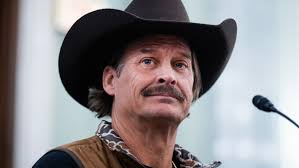
Consistency like that changes perception. In entertainment, declarations are often louder than execution. But here, the execution matched the statement exactly, reinforcing a persona built on directness and refusal to dilute intent for convenience or expectation.
The tour itself is positioned around a larger national theme tied to America’s 250th anniversary, which adds another layer to the presentation. Whether audiences interpret it as tribute, branding, or bold symbolism, the framing is unmistakably intentional and deeply woven into the experience.
What stood out most, however, was not just the machinery or staging, but the reaction it produced. Fans weren’t simply waiting for music to begin; they were witnessing a moment that already felt like part of the setlist before a single chord was played.
In an era where attention is fragmented and fleeting, creating shared, undeniable moments has become increasingly rare. Yet this entrance managed to pause that fragmentation, even if briefly, pulling thousands of individuals into a single, synchronized experience of anticipation.
There is also something to be said about artistic identity here. Some performers rely on reinvention, others on consistency. In this case, the identity is anchored in intensity—an approach that refuses to separate personality from performance, turning both into one continuous expression.
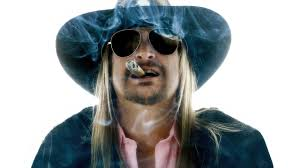
That blend of spectacle and conviction is what gives the moment its weight. It doesn’t ask for agreement or approval; it simply asserts itself and lets reaction follow. Whether viewed as bold artistry or deliberate provocation, it achieves its primary goal: it is impossible to ignore.
As the crowd waited for the first note, the silence before the music carried its own energy. It was the kind of silence that feels louder than sound, charged with everything that had already happened in the sky above Dallas.
And just as anticipation reached its peak, the night was still only beginning—leaving one lingering question hanging in the air: if this was how the show started, what exactly was still to come once the music finally began?