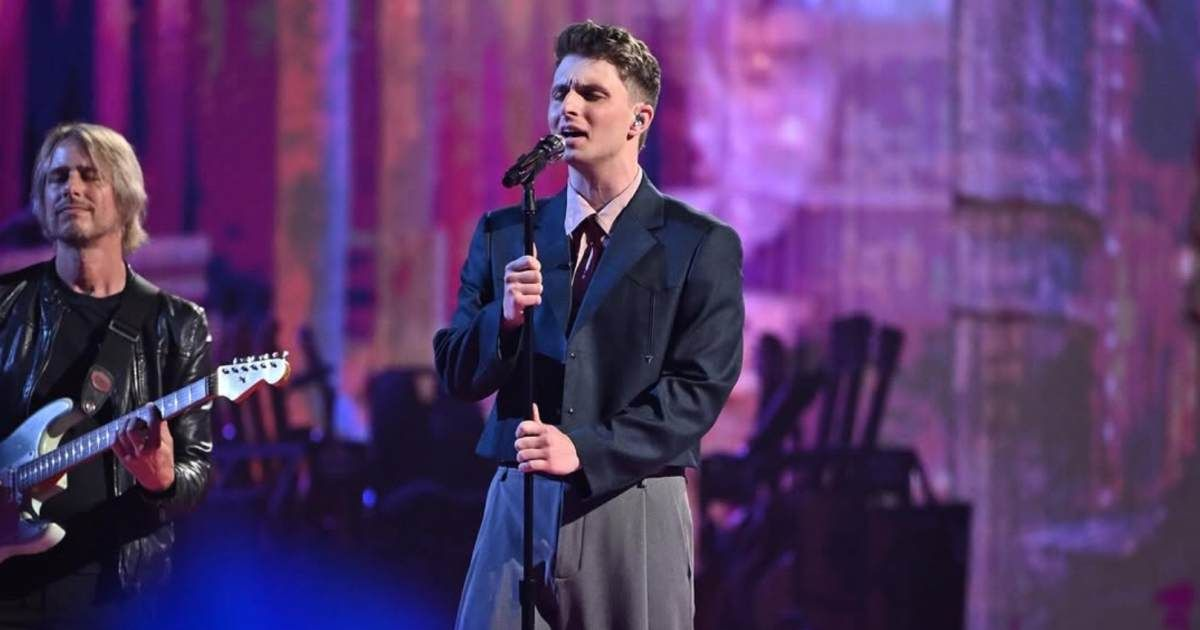
When a cover song starts circulating online, it usually earns a few comments, a handful of shares, and then fades into the endless stream of content. But every so often, a performance breaks that pattern entirely—stopping the scroll, sparking debate, and forcing listeners to replay it just to confirm what they just heard. Braden Rumfelt’s rendition of Alicia Keys’ “Lesson Learned” is quickly becoming one of those rare moments.
From the very first note, there’s a noticeable shift in tone—something raw, yet controlled, that immediately signals this is not an ordinary cover. Listeners expected familiarity; instead, they were met with interpretation, restraint, and unexpected vocal precision that reframed the entire song within seconds.
What truly sent the performance into viral territory, however, were the high, controlled vocal runs woven throughout the track. They weren’t just technically impressive—they were deliberate, measured, and placed with a confidence that caught even casual listeners off guard. It’s the kind of execution that doesn’t just decorate a song; it redefines it.

Online reaction has been swift and divided in the best possible way. Some viewers are calling it one of the most surprising vocal displays they’ve heard from an emerging artist, while others are revisiting the clip repeatedly, trying to break down exactly how those runs were executed so cleanly under pressure.
Vocal coaches and musicians have also entered the conversation, pointing out the difficulty of maintaining pitch stability and breath control during those transitions. The consensus forming across discussions is not just admiration, but genuine analysis—something that usually only happens when a performance crosses into professional-level territory.
Part of what makes this moment resonate is the contrast between expectation and delivery. Covers often rely on safe interpretation, staying close to the original. Rumfelt, however, chose to lean into complexity, subtly reshaping the emotional architecture of the song without losing its core identity.
That balance between respect and reinvention is difficult to achieve, especially on a track as emotionally grounded as Alicia Keys’ “Lesson Learned.” The original carries its own weight, but this version adds another layer—less about imitation, more about perspective.
As the clip continues to circulate across social platforms, it’s becoming less about a single performance and more about recognition. Audiences are beginning to reassess what they assumed they knew about the artist behind it, shifting the conversation from curiosity to evaluation.
In today’s digital landscape, where attention spans are short and content is endless, breaking through requires more than visibility—it requires impact. This cover has managed to create exactly that, not through theatrics, but through technical clarity and emotional control.

What’s particularly striking is how quickly perception has changed. A single performance has turned into a reference point, a moment people are using to measure vocal ability and artistic potential. That kind of shift doesn’t happen often, and when it does, it usually signals the beginning of a larger conversation.
Whether this becomes a defining breakthrough or simply a standout viral moment remains to be seen, but one thing is already clear: audiences are no longer just listening passively. They are paying attention, replaying, analyzing, and asking a question that now lingers beyond the clip itself—how far can this voice actually go from here?