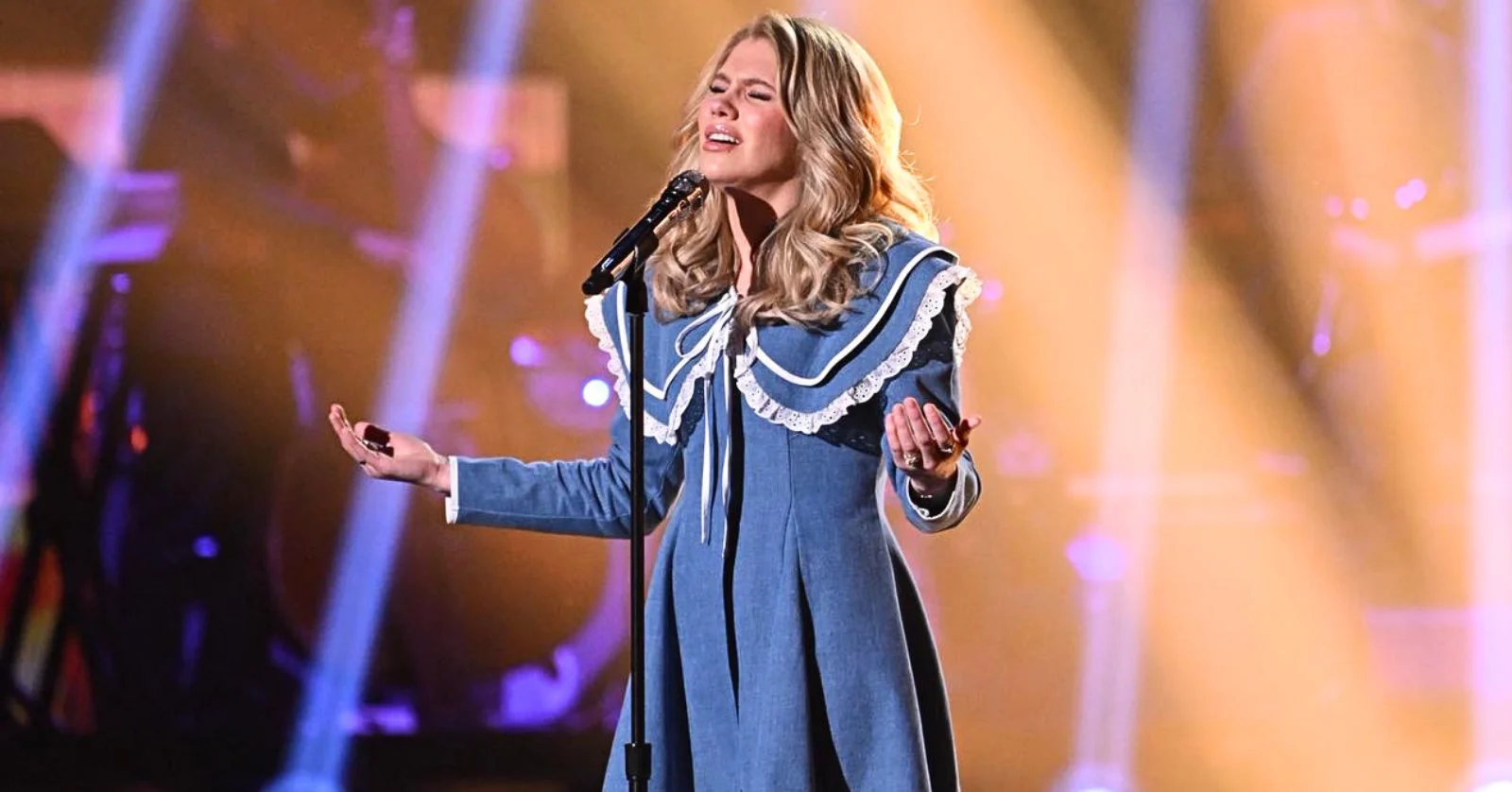
There are performances that arrive quietly, long before the spotlight ever finds them. A simple chair, a guitar, and a voice carrying nothing but honesty can sometimes outlive the moment they were recorded in. That is exactly what is happening now as an early clip of Hannah Harper singing Trace Adkins’ “Every Light in the House” resurfaces and finds a new audience.
The timing feels almost poetic.
Long before winning the Idol trophy or stepping onto larger stages, Hannah Harper sat with just her guitar and delivered a stripped-down version of the 90s country classic. There were no production layers, no studio enhancements—only a voice shaped by instinct, emotion, and an unfiltered connection to the song itself.
And that simplicity is what makes it resonate again today.
In an era where music is often layered, polished, and engineered for maximum impact, a raw performance like this stands out. It reminds listeners that country music, at its core, is built on storytelling rather than spectacle. Hannah’s interpretation of the song feels less like a cover and more like a personal memory being shared out loud.
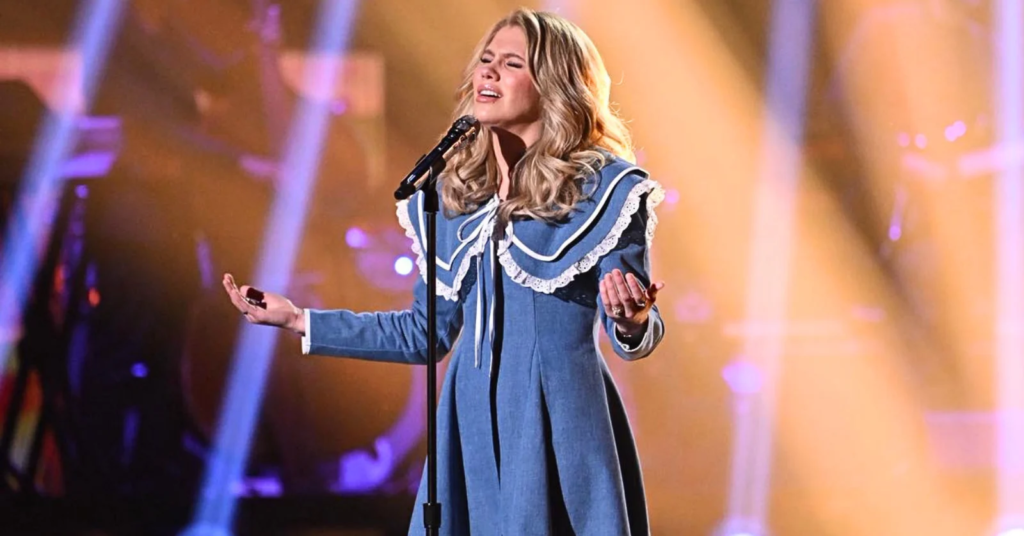
That emotional authenticity is what fans are responding to.
As the clip circulates again across social platforms, viewers are noticing something they may not have fully appreciated the first time. There is a maturity in her phrasing, a quiet control in her delivery, and a sense of emotional understanding that goes beyond her age at the time of recording.
It is not imitation.
It is interpretation.
Trace Adkins’ original version of “Every Light in the House” carries its own legacy, rooted in longing and persistence. It is a song about holding onto love through absence, about maintaining hope even when distance becomes the defining factor. It is a theme that has connected with listeners for decades.
Hannah Harper does not replace that legacy.
Instead, she reframes it.
Her version does not attempt to outshine the original. Instead, it leans into intimacy, giving the lyrics a softer emotional texture that feels almost conversational. It is as if the song is not being performed for an audience, but quietly spoken to someone who understands its meaning firsthand.
That distinction is what gives the clip renewed relevance.
Fans often describe the performance as “pure country,” a term that in this context refers not just to genre, but to emotional clarity. There is no attempt to overextend or dramatize. Every note feels intentional, every pause carrying weight rather than emptiness.
And that restraint is powerful.
It allows the listener to project their own experiences into the song, turning a familiar classic into something newly personal. That is one of the rarest qualities in music—a performance that does not overwrite the original meaning, but expands it.
What makes this resurgence particularly interesting is the contrast between then and now.
At the time of the recording, Hannah was still unknown to most audiences, performing without expectation or industry pressure. Today, she is recognized in a very different context, with fans revisiting her earlier work through the lens of her later success.
That shift changes perception.
What once felt like a simple acoustic cover now reads as an early indicator of artistic identity. Listeners are no longer just hearing a young singer performing a classic—they are hearing the foundation of a voice that would later find a much larger stage.
It also speaks to the enduring power of country classics themselves.
Songs like “Every Light in the House” are built to survive reinterpretation. They are structured around emotional universality, allowing new voices to step into them without losing their core meaning. Each generation brings a slightly different emotional perspective to the same lyrics.
Hannah’s version fits into that tradition seamlessly.
There is also something quietly compelling about how minimalism shapes perception. Without production distractions, the listener is left with only voice and lyric. In that space, even subtle emotional shifts become amplified, making the performance feel more intimate than it might in a studio setting.
That intimacy is what lingers.

It is what turns a resurfaced clip into a renewed conversation. It is what encourages fans to revisit not just the performance itself, but the emotional memory it triggers. And it is what keeps the moment alive long after the original recording was made.
As the clip continues to circulate, one thing becomes clear.
Hannah Harper’s early performance is not being rediscovered because it is new. It is being rediscovered because it feels timeless in a way that quietly demands attention again.
And in that quiet return, a simple question emerges:
How many other voices, recorded in moments like this, are still waiting to be heard all over again?