
The Hannah Harper “problem” country music didn’t know it needed began the moment her American Idol victory stopped feeling like a fairytale and started looking like a question the industry couldn’t easily answer. She wasn’t the typical Nashville breakout, nor the polished pop-country crossover executives prefer to package. Instead, she arrived as something more unsettled—raw, emotionally exposed, and shaped by a life that still had homework schedules, dinner routines, and quiet exhaustion behind the spotlight.
Her stage name, “String Cheese,” once treated as a quirky footnote during the competition, became symbolic in hindsight. It represented elasticity—something that stretches under pressure but doesn’t break. Industry executives initially loved the branding simplicity, but soon realized Hannah didn’t fit neatly into any category they could monetize without friction. She wasn’t fully traditional country, nor comfortably pop. She was something in between, and that “in-between” made strategists nervous.

The night she won American Idol should have marked a clean transition into mainstream country success. Instead, it opened a complicated chapter. Radio stations debated how to categorize her sound. Streaming playlists shuffled her between emotional ballads and crossover experiments. Yet listeners kept responding—not to the label, but to the honesty in her voice, which felt lived-in rather than manufactured.
What made Hannah different wasn’t just her sound, but her story. She wasn’t emerging from the typical Nashville pipeline. She was a stay-at-home mom who had stepped into a televised competition almost casually, only to find herself transformed into a national figure. That contrast between domestic life and public fame became central to her identity, and country music didn’t quite know what to do with it.
Inside her new life, the contradictions multiplied. At home, she was still managing school routines and family schedules. In the industry, she was being discussed as a “new voice of emotional country storytelling.” The distance between those two realities created a tension she carried everywhere—one that no award or chart position could simplify.
Producers began approaching her with expectations shaped by predictability. They wanted heartbreak anthems, road songs, and radio-friendly narratives. But Hannah’s instincts leaned toward something more fragmented—songs about identity shifts, quiet motherhood, sudden visibility, and the strange emotional cost of being seen by millions while still feeling invisible in your own kitchen.
Her next chapter didn’t unfold as a straightforward album cycle. Instead, it became a negotiation between authenticity and industry structure. Meetings stretched longer than expected. Creative disagreements emerged not from conflict, but from misalignment—what the industry thought she should represent versus what she actually lived every day.
Meanwhile, her audience was evolving in a different direction. Fans weren’t just listening to her voice; they were connecting to her contradictions. They saw someone balancing two realities without fully resolving either. That unresolved space—between fame and family, expectation and reality—became the emotional core of her appeal.
Country music has always thrived on storytelling, but Hannah Harper introduced a narrative that felt less like a polished arc and more like an ongoing conversation. There was no clean resolution, no neatly packaged transformation. Instead, there was continuity—life continuing even after a national victory, with all its messiness intact.
As months passed after her American Idol win, Hannah began to understand that her real challenge wasn’t proving herself to the industry—it was resisting the pressure to simplify her own story. The “problem” she represented wasn’t failure to fit in; it was refusal to flatten her experience into something easily marketed.
Her household remained unchanged in structure, but not in perception. Her children still saw her as Mom, yet slowly began to recognize the emotional weight behind her absences, rehearsals, and late-night recording sessions. That gradual awareness created a bridge between her two worlds, not by merging them, but by acknowledging their coexistence.
Industry insiders started calling her “unclassifiable,” a term that was meant as both praise and frustration. But what they missed was that her strength lay precisely in that resistance to classification. She wasn’t trying to redefine country music on purpose—it was simply being reshaped by the reality she brought into it.
Her next project, still quietly developing, carried that tension forward. Songs were less about resolution and more about observation. Instead of dramatic narratives, she leaned into emotional snapshots—moments of exhaustion, clarity, doubt, and unexpected humor in everyday life.
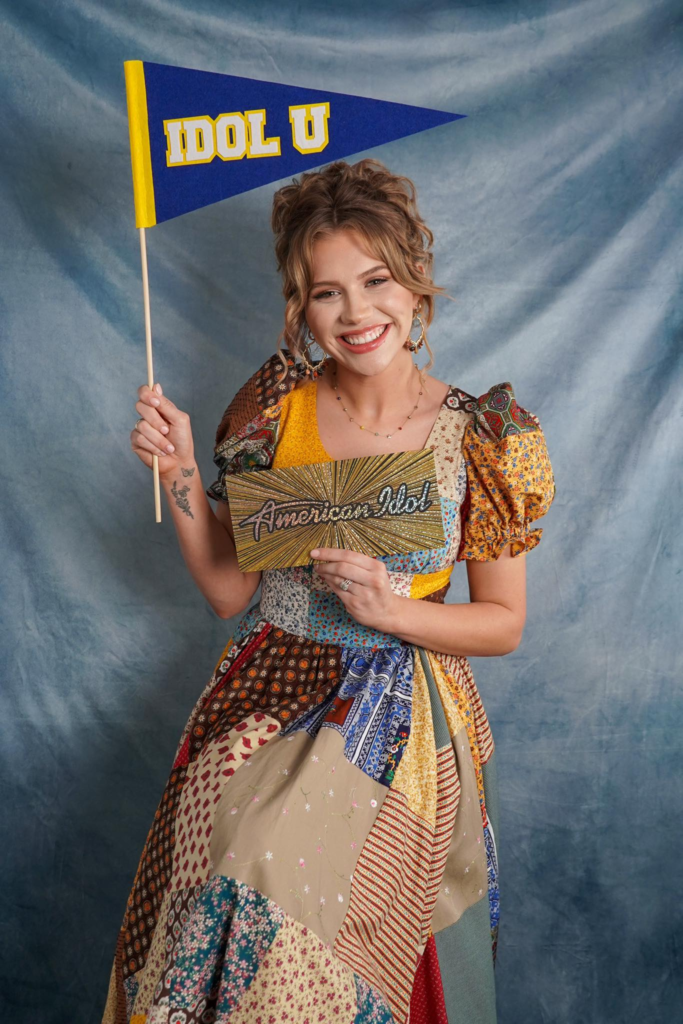
What country music didn’t initially understand about Hannah Harper was that she wasn’t offering a reinvention of the genre in the traditional sense. She was offering a reminder: that real life doesn’t pause for fame, and emotional truth doesn’t become simpler just because more people are listening.
And just as she prepared to step into the studio for what everyone assumed would be her defining record, a call came in that threatened to shift everything she thought she was building once again.