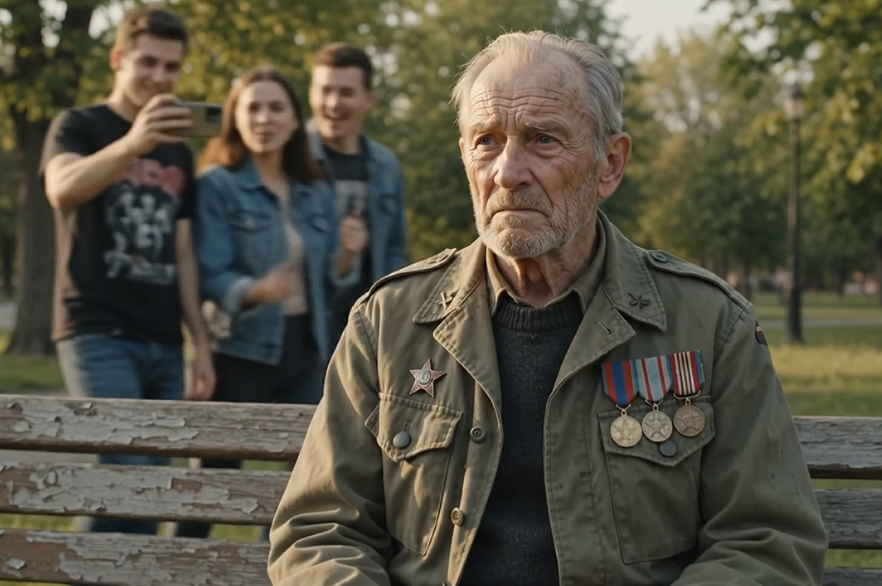
The park was alive with laughter, music, and the familiar rhythm of people rushing through another ordinary afternoon. Children chased pigeons across the pathways while joggers passed beneath rows of towering trees. Amid the cheerful energy sat an elderly man on a weathered wooden bench, almost invisible to the world around him. His faded military jacket, carefully buttoned despite its age, displayed medals that had long lost their shine. In his lap rested an old military cap, held gently by hands that trembled with time rather than fear. His face carried the quiet weight of decades that few could ever understand.
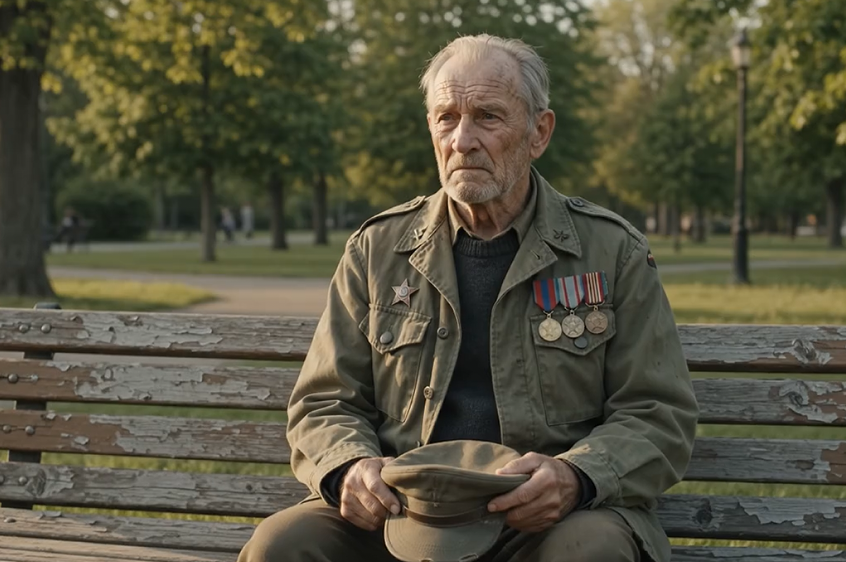
To most people, he looked like just another lonely retiree. His clothes were worn, his posture slightly bent, and his eyes seemed fixed somewhere beyond the horizon. No one stopped to ask his story. No one wondered what those medals represented or how many memories were stitched into every thread of that aging jacket. The world often rushes past people whose greatest achievements are no longer visible beneath wrinkles and gray hair.
Then came a group of fashionable young adults, full of confidence and surrounded by the loud excitement of youth. Their conversations echoed through the park as they noticed the elderly veteran sitting alone. One smirked. Another whispered something that triggered laughter from the rest. Before long, a smartphone was raised, its camera pointed directly toward the old soldier. The jokes became louder, mocking his appearance, his outdated clothing, and even the medals resting proudly against his chest.
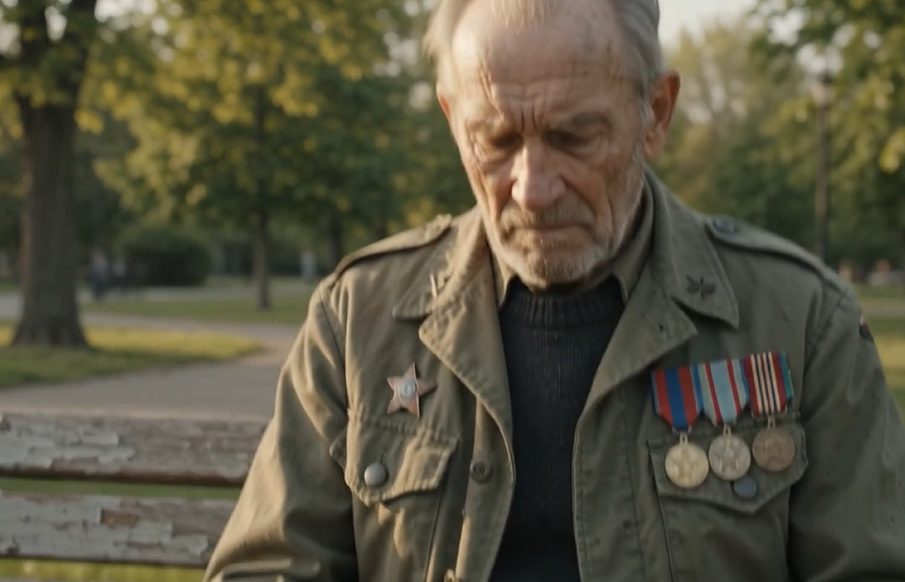
The veteran did not respond. He simply lowered his head, tightening his grip around the military cap he had carried for years. His expression remained calm, but silence often hides emotions words cannot describe. A single tear slowly formed in the corner of his eye before rolling gently down his weathered cheek. It wasn’t the laughter that hurt the most. It was the realization that the values he had once risked everything to defend had become so easily forgotten.
Those medals were never meant to impress strangers. They were reminders of friends who never came home. They represented nights filled with uncertainty, letters sent to worried families, impossible decisions, and sacrifices that could never truly be repaid. Every scratch on the metal carried a memory. Every ribbon represented moments where courage had outweighed fear. Yet to those recording him, they were simply old decorations attached to an old man.
Modern society often celebrates what is new while overlooking those who helped build the present. Social media rewards instant entertainment, encouraging people to capture moments before understanding them. A quick video can gather thousands of views, but it rarely captures the truth behind the image. What appears amusing in a few seconds may conceal a lifetime of service, resilience, and unimaginable loss.
It is easy to judge someone by their appearance. It takes far more character to pause, ask questions, and genuinely listen. The elderly veteran did not wear expensive clothes because his greatest treasures could never be purchased. They existed in memories of comrades, in promises kept under impossible circumstances, and in the quiet pride of having served something greater than himself. While fashion fades and trends disappear, integrity has a way of surviving long after applause ends.
Imagine if even one member of that group had chosen compassion over ridicule. A simple greeting. A handshake. A sincere question about one of the medals. That single conversation could have revealed stories of courage that no history textbook could fully capture. Instead of creating content for strangers online, they might have gained wisdom that would remain with them for the rest of their lives. Sometimes the greatest lessons come from people whose voices have grown quieter, not louder.
Respect is not reserved for those who are famous or successful today. It belongs equally to those whose sacrifices created opportunities for future generations to live freely, dream boldly, and criticize openly. Whether someone served in the military, worked tirelessly to support a family, or dedicated decades to helping others, every elderly person carries experiences that deserve dignity rather than mockery. Age should never become a reason for someone to feel invisible.
The most heartbreaking part of moments like these is that they rarely begin with cruelty alone. They begin with indifference. When people stop seeing the humanity in others, empathy slowly fades. Laughter becomes easier than understanding, recording becomes easier than helping, and judgment becomes faster than compassion. Reversing that pattern begins with small choices made every single day—choosing kindness before assumptions, curiosity before criticism, and respect before entertainment.
This story is entirely fictional, but its message reflects a truth that reaches far beyond one park bench. Every stranger has a history that cannot be seen at first glance. Every wrinkle, scar, and faded photograph may represent battles the world never witnessed. Before laughing at someone’s appearance, consider the possibility that they have already endured hardships most people could never imagine. A few moments of empathy can leave a far greater legacy than millions of views online.
Perhaps the next time you notice an elderly person sitting quietly alone, you won’t see loneliness first. Maybe you’ll see resilience. Maybe you’ll wonder about the life they’ve lived instead of the clothes they wear. And maybe, instead of walking past with a phone pointed toward them, you’ll offer the one thing that never grows old: genuine respect. Sometimes, the strongest heroes are not standing in the spotlight—they are sitting quietly on a park bench, carrying stories that deserve to be remembered.