There are certain songs that become hits, dominate the charts, and then slowly fade into memory. Then there are songs that never truly leave. They linger quietly in the hearts of listeners, waiting for the right moment to be rediscovered. One of those songs belongs to Kim Richey.
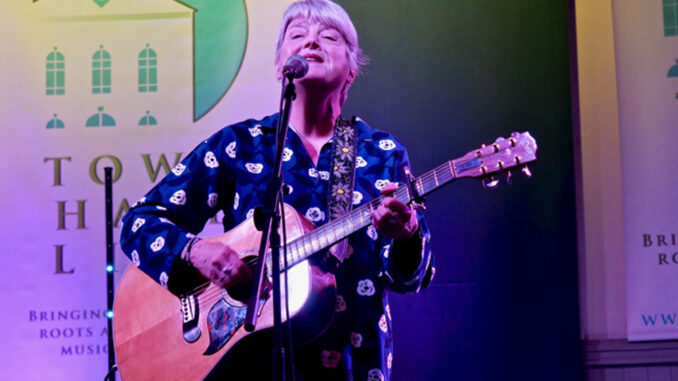
Back in the mid-to-late 1990s, country music was overflowing with larger-than-life personalities and radio giants. Every station seemed to have its favorite stars, every playlist had its predictable rotation, and every label was chasing the next commercial success. Yet somehow, amid all that noise, one of the most gifted singer-songwriters of her generation never received the embrace many believe she deserved.
Kim Richey possessed something that cannot be manufactured. Her voice did not demand attention with theatrics. Instead, it invited listeners closer. There was a softness to it, but also a confidence. She sang the way people tell stories on a front porch after sunset—honest, unhurried, and impossible to fake.
When she sang, “I got a house in the country… I got a garden that grows,” it felt less like a lyric and more like a glimpse into a life many people secretly dreamed about. Not a life of fame or fortune, but a life of freedom. A place where the radio could play as loud as you wanted, where nobody was telling you what to do, and where peace came from simplicity rather than success.
That was Kim Richey’s gift. She understood that the most powerful stories are often the smallest ones.
While many artists chased dramatic heartbreaks or larger-than-life anthems, Richey excelled at capturing everyday emotions. She could turn a quiet moment into something unforgettable. Her songwriting wasn’t built around spectacle. It was built around truth. Listeners didn’t just hear her songs—they recognized themselves inside them.
The frustrating part for many longtime country fans is that the industry seemed to overlook what made her special. Critics admired her. Fellow songwriters respected her. Musicians praised her craftsmanship. Yet country radio never seemed fully committed to putting her in the spotlight she had earned.

Perhaps that’s because Kim Richey arrived at a time when radio increasingly favored formulas. Songs needed instant hooks, bigger production, and broader appeal. Richey’s music often asked listeners to slow down. It rewarded patience. The emotions revealed themselves gradually, like turning the pages of a favorite book rather than watching a fireworks show.
Ironically, that very quality may be why her music has aged so well.
Many chart-toppers from the 1990s are remembered as products of their era. Kim Richey’s songs, however, feel timeless. Listen to them today and they still sound fresh because they were never trying to chase trends. They were rooted in real experiences, real feelings, and real observations about life.
There is also something comforting about discovering that thousands of listeners continue to revisit these songs decades later. Every time a clip resurfaces online or a fan shares a favorite lyric, a new generation gets introduced to an artist who perhaps should have been much bigger than she was. The comments are often remarkably similar. People don’t ask why they loved the song. They ask why everyone else seemed to miss it.
That question has become part of Kim Richey’s legacy.
Sometimes the music industry gets things right. Sometimes it doesn’t. Commercial success and artistic greatness do not always travel together. History is filled with remarkable artists who were appreciated more deeply by listeners than by the charts. Kim Richey belongs comfortably in that conversation.
What remains today is the music itself. And maybe that’s enough.
Because long after chart positions are forgotten and radio playlists have changed a thousand times over, songs built on honesty continue to find their audience. They travel from one listener to another, from one generation to the next, carrying the same emotions they carried decades earlier.
So when someone asks, “Who remembers this great song from 1996 or 1997?” the answer is simple.
The people who heard it never really forgot.
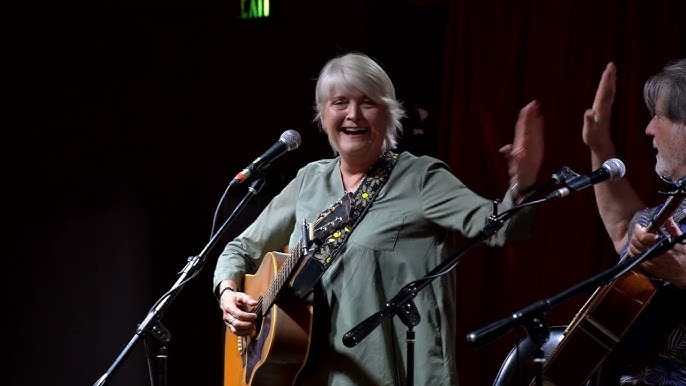
And perhaps that’s the greatest measure of a song’s success—not how loudly it was celebrated at the time, but how quietly it continues to live on years later, still finding a home in the hearts of those who listen.