
For most of American Idol Season 24, Hannah Harper has been known as the contestant who brought warmth, honesty, and classic country storytelling back to the stage. Week after week, audiences connected with her emotional delivery, stripped-back authenticity, and unmistakable Southern charm. Fans knew what a Hannah Harper performance felt like.
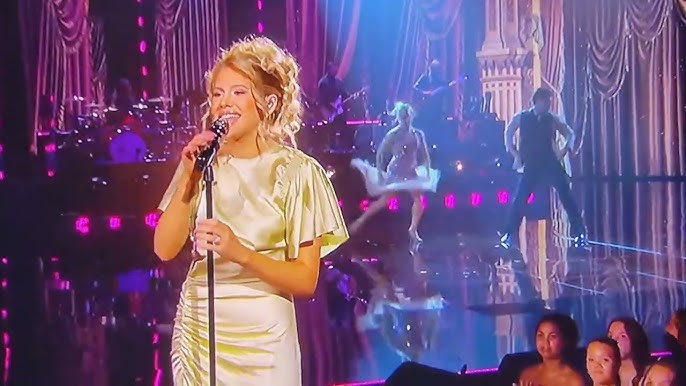
Then came “Fever.”
And suddenly, nobody in the room knew what to expect anymore.
The moment Hannah announced she would be performing Peggy Lee’s legendary classic, the reaction online was immediate skepticism mixed with curiosity. “Fever” is not a safe song. It demands confidence, restraint, sensuality, timing, and complete control over atmosphere. More importantly, it sits miles away from the grounded country image audiences had attached to Hannah throughout the season.
That is exactly why the decision felt dangerous.
Heading into one of the most important nights of the competition — with the pressure of the Top 3 announcement hanging heavily over the stage — many viewers questioned whether Hannah was making the biggest mistake of her Idol journey. Social media quickly filled with debates about whether stepping so far outside her comfort zone could backfire at the worst possible moment.
But the second the performance began, something shifted instantly.
The lighting darkened.
The room quieted.
And Hannah Harper walked onto that stage with an energy audiences had never seen from her before.
Gone was the soft-spoken country sweetheart viewers had grown familiar with. In her place stood an artist completely locked into the tension and mood of the song. Every movement felt calculated. Every pause carried intention. Instead of trying to overpower “Fever” vocally, Hannah approached it with restraint — allowing the atmosphere itself to become part of the performance.
That choice changed everything.
From the first verse onward, the audience seemed stunned into silence. People were not merely listening anymore; they were watching carefully, almost trying to process the transformation happening in front of them in real time. Hannah did not simply sing the song — she stepped fully inside its world.
And then came the reaction.
As the performance built toward its final moments, the live crowd erupted so loudly that the judges struggled to speak clearly afterward. The cheers became overwhelming, creating a chaotic atmosphere where excitement, surprise, and disbelief all collided at once. It no longer felt like a standard post-performance critique session. It felt like the room itself was still trying to recover from what had just happened.
That chaos is exactly what made one unexpected judge comment stand out so strongly.
Amid the noise and applause, a reaction from the panel immediately caught fans’ attention because it carried something unusual: genuine shock. The judges did not sound like they were politely complimenting a contestant anymore. They sounded like people recalibrating their entire understanding of Hannah Harper as an artist.
That distinction mattered.
Throughout the season, Hannah had often been praised for authenticity, emotional connection, and traditional country appeal. But “Fever” forced everyone — including the judges — to confront another possibility entirely: what if Hannah Harper was capable of much more artistic range than anyone originally assumed?
That question instantly ignited debate online.
Some fans celebrated the performance as the exact breakthrough moment Hannah needed before the finale stretch. They argued the performance proved she could move beyond the “safe country girl” label and command a stage with sophistication, danger, and theatrical control. Others admitted they were completely blindsided by how naturally she handled the song’s intensity.
But not everyone agreed.
For some longtime supporters, the performance felt almost too different. Part of Hannah’s appeal throughout the season had been her emotional simplicity and grounded sincerity. Watching her embrace a smokier, more dramatic performance style created mixed emotions among fans who worried she might drift too far from the identity that made audiences fall in love with her in the first place.
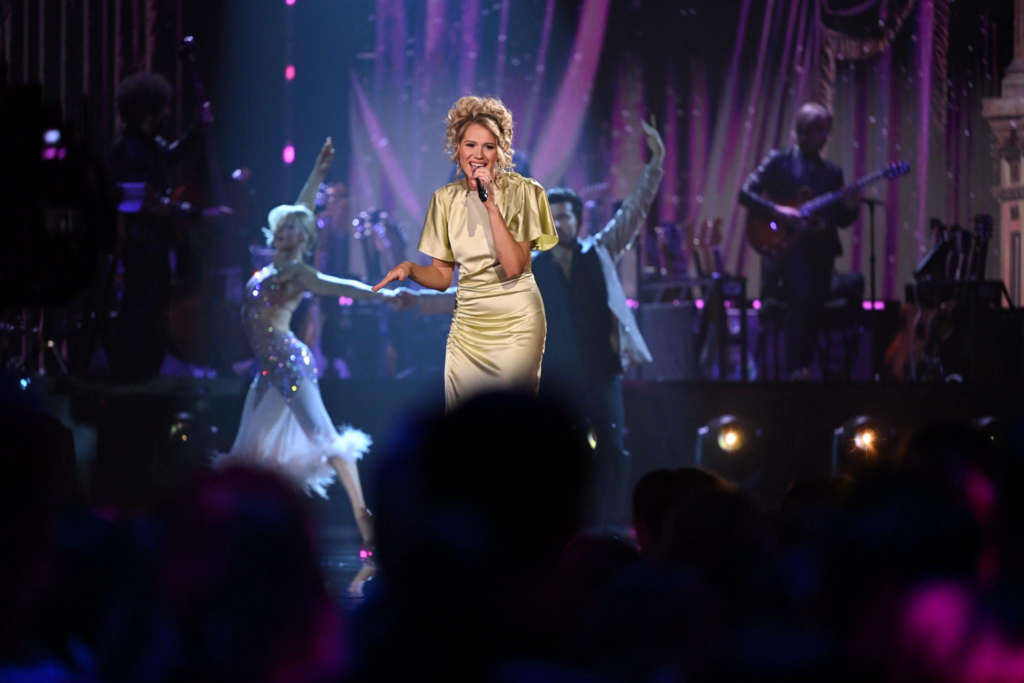
And honestly, that tension may be exactly why the performance became unforgettable.
Great performances are not always universally comfortable. Sometimes the moments people remember most are the ones that disrupt expectations completely. Hannah Harper’s “Fever” performance shattered predictability in the most public way possible — live, under pressure, with millions watching.
That takes enormous confidence.
Especially considering the timing.
This was not an early-round experiment where mistakes could easily be forgotten. This happened with the Top 3 looming directly overhead, where every decision carried enormous consequences. One wrong move could have damaged weeks of carefully built momentum.
Instead, the gamble appeared to do the opposite.
The louder the audience reacted, the more obvious it became that Hannah had created one of the defining moments of the season. Whether viewers loved the performance or questioned it, they were emotionally invested in discussing it afterward. Clips spread rapidly online. Fans dissected every glance, every vocal choice, every judge reaction.
For a contestant, that level of conversation is powerful.
Because in modern entertainment, the artists who last are rarely the ones who play everything safely. The artists who endure are often the ones willing to risk discomfort in pursuit of something memorable.
Hannah Harper did exactly that with “Fever.”
What makes the moment even more fascinating is that the performance never felt artificial or desperate for shock value. Hannah did not appear interested in abandoning her identity completely. Instead, she seemed determined to prove she contained more layers than audiences expected.
And perhaps that was the true success of the performance.
It expanded the conversation around her.
Before “Fever,” many viewers already admired Hannah Harper as a sincere country vocalist with emotional depth. After “Fever,” audiences suddenly began discussing her as a performer capable of unpredictability, tension, and dramatic stage command too.
That evolution changes perception.
As the competition continues narrowing and the finale approaches, performances like this become incredibly important because they force viewers to imagine contestants beyond the competition itself. Hannah no longer looks like someone simply trying to survive another week.
She looks like an artist testing how far she can push herself creatively.
And judging by the explosion of reactions surrounding “Fever,” that risk may have changed the trajectory of her season entirely.
Because by the end of the night, one truth became impossible to ignore:
The performance that looked most dangerous on paper may have been the exact moment Hannah Harper proved she was no longer afraid to challenge the image everyone built around her.