
The American Idol 2026 Grand Finale delivered plenty of unforgettable moments, but none carried the emotional weight of Hannah Harper’s breathtaking performance of her original song, “Married Into This Town.” Long after the lights dimmed and the crowd stopped cheering, viewers across the country were still talking about the raw honesty she brought to the stage. In a season filled with powerhouse vocals and dramatic performances, Hannah created something far more difficult to achieve — a deeply human moment that felt real.
From the second she stepped into the spotlight, the atmosphere inside the arena noticeably changed. There were no overwhelming visual effects, no elaborate choreography, and no distractions competing for attention. Hannah stood alone beneath the lights with only her voice, her lyrics, and the quiet confidence of someone who had truly lived every word she was about to sing. That simplicity became the performance’s greatest strength.
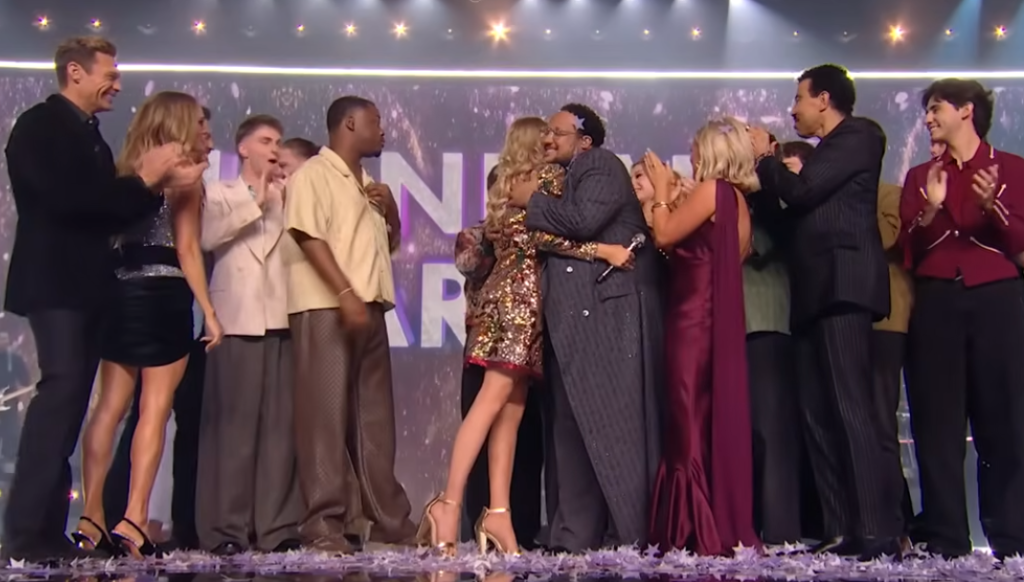
“Married Into This Town” unfolded less like a competition song and more like a personal confession shared with millions of strangers. Every lyric painted vivid pictures of sacrifice, family expectations, heartbreak, and the emotional weight of growing up in a small-town environment where roots run deep. Hannah didn’t simply perform the song — she invited listeners directly into her memories, allowing them to feel every ounce of vulnerability behind the words.
The audience reaction was immediate. As she moved through the opening verse, the once roaring arena slowly fell silent. It wasn’t the silence of boredom or anticipation. It was the kind of silence that only happens when people become emotionally locked into a moment too powerful to interrupt. Even the judges appeared visibly captivated, hanging onto every lyric as if they already knew they were witnessing one of the defining performances of the entire season.
Then came the moment that truly elevated the performance into something unforgettable. Cameras shifted toward the audience and captured Hannah’s father visibly emotional while watching his daughter sing. His expression alone told an entire story — pride, heartbreak, admiration, and disbelief all colliding at once. The emotional reaction instantly deepened the connection viewers felt with the performance because suddenly the lyrics no longer sounded fictional. They felt deeply personal.
As the song built toward its emotional climax, another reaction caught viewers’ attention. Carrie Underwood, a former Idol champion herself and someone known for maintaining composure under pressure, appeared overcome with emotion during the final chorus. Cameras briefly showed her wiping away tears as Hannah delivered the song’s final lines with trembling conviction. The image spread rapidly across social media within minutes of airing live.
Fans online immediately began calling the performance one of the most emotional moments in recent American Idol history. Thousands of viewers praised Hannah for bringing authenticity back to a television landscape often dominated by polished perfection and calculated performances. Many admitted the performance reminded them why music matters in the first place — not because of technical perfection, but because of emotional truth.
What made the moment even more impactful was Hannah’s refusal to over-sing the song. In an era where many contestants attempt to impress audiences with vocal gymnastics, Hannah leaned fully into restraint. She allowed the lyrics to breathe naturally, trusting the story to carry the performance rather than relying on dramatic vocal runs or theatrical staging. That decision ultimately made every line feel more intimate and believable.
Throughout the season, Hannah Harper quietly built a reputation as one of the competition’s strongest storytellers. While other contestants often chased explosive moments designed for viral clips, Hannah consistently focused on emotional connection. Week after week, audiences responded to that sincerity. By the time she stepped onto the finale stage, viewers already felt emotionally invested in her journey — and “Married Into This Town” became the perfect culmination of everything she represented as an artist.
There’s also something culturally significant about the response to Hannah’s performance. Modern audiences are increasingly craving authenticity in entertainment. People want stories that reflect real life, real pain, and real emotion instead of carefully manufactured moments. Hannah delivered exactly that. Her performance felt unfiltered in the best possible way, proving that vulnerability can still command a room more effectively than spectacle ever could.
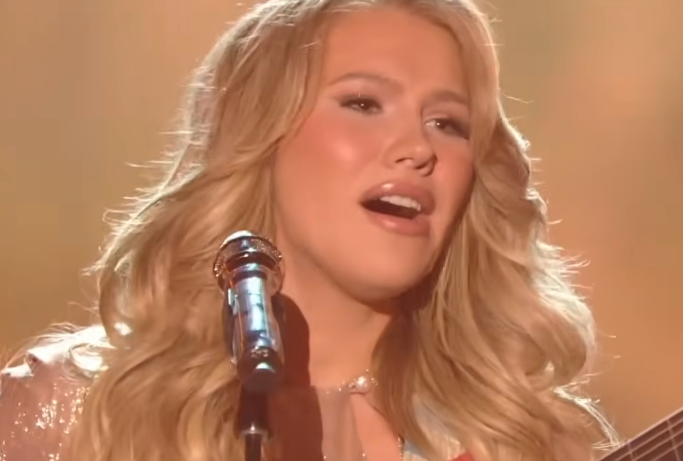
As the final note echoed throughout the arena, Hannah stood motionless for a brief second before the crowd erupted into thunderous applause. Yet even amid the cheering, there remained a lingering emotional heaviness in the room — the unmistakable sign of a performance that reached people on a deeply personal level. It wasn’t just another finale appearance. It was a moment audiences genuinely felt.
Months from now, viewers may forget certain performances, dramatic eliminations, or viral backstage moments from this season. But many fans already believe Hannah Harper’s haunting rendition of “Married Into This Town” will endure long after the competition fades away. In a single performance, she reminded millions that music still has the power to stop time, open old wounds, heal hearts, and bring an entire room to silence with nothing more than honesty.