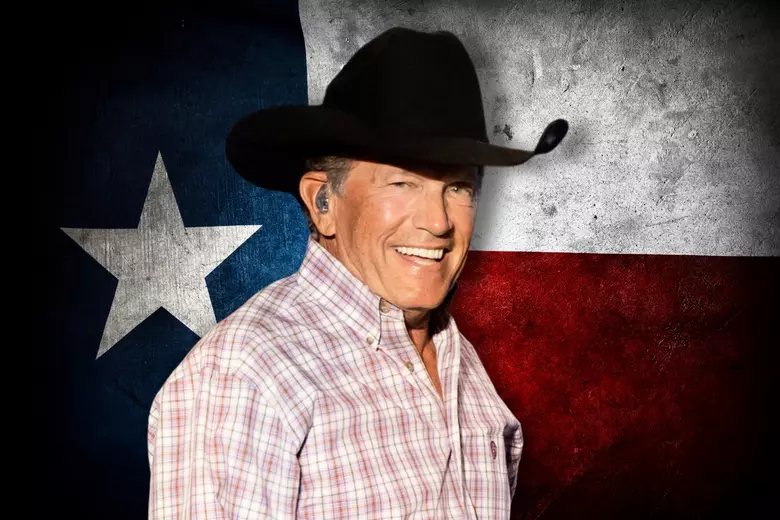
Recently, George Strait once again reminded the world why his title as the King of Country remains untouched, delivering a powerful performance of his 1985 classic “The Chair” at a sold-out show inside the Moody Center in Austin, Texas.
What made the moment unforgettable was not just the song itself, but the way it carried across a modern arena with the same ease and sincerity it held four decades ago.
Captured on camera, the performance quickly spread across social media platforms, turning a single live moment into a global reminder of enduring musical legacy.
Fans watching online were struck not by spectacle, but by simplicity.
No overproduction.
No unnecessary embellishment.
Just a voice, a stage, and a song that still knows exactly who it is.
That kind of consistency is rare in any era of music, especially one defined by constant reinvention.
Yet George Strait has built a career on doing the opposite of reinvention for its own sake.
He refines instead of replaces.
He preserves instead of performs for trend.
Exactly 45 years ago, Strait released his debut album, stepping into a music landscape that would soon be reshaped by his presence.
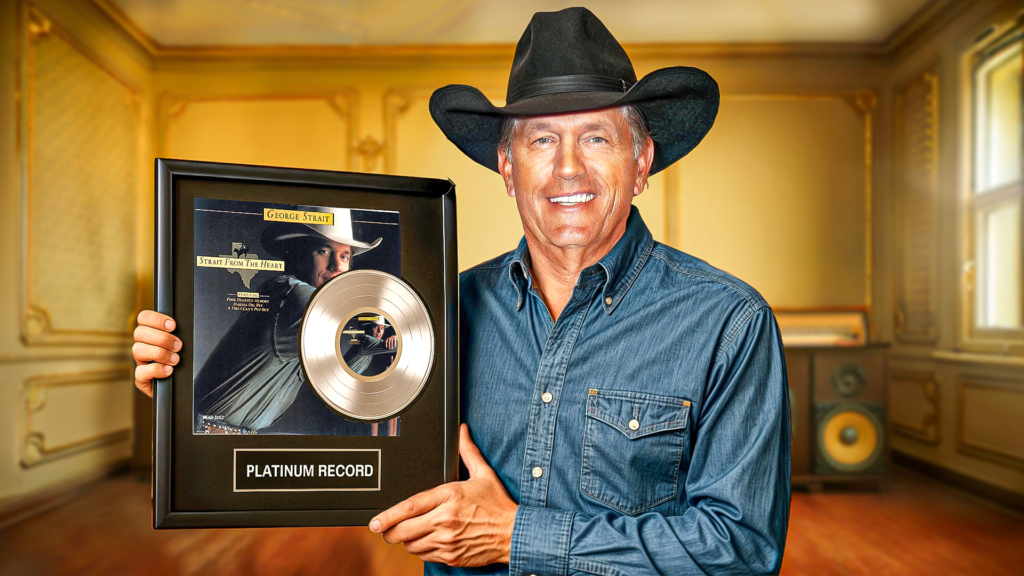
Since then, his career has grown into one of the most decorated in country music history, with more than 30 platinum records and over 60 number one hits marking a legacy few artists in any genre can match.
But statistics alone do not explain why this recent performance resonated so deeply.
It is the feeling behind it.
The sense that time has passed, yet something essential has not been lost.
On stage at 74, Strait carries himself with a quiet confidence that does not demand attention but naturally holds it.
Dressed in his signature blue jeans, he appears less like a performer chasing relevance and more like a steady force that never needed to chase it in the first place.
Fans have often pointed out that his appeal lies in restraint.
He does not over-sing.
He does not over-explain.
He lets the song breathe, trusting the audience to meet him halfway.
And in “The Chair,” that trust becomes especially powerful.
The storytelling is subtle, almost conversational, yet it has the kind of emotional weight that lingers long after the final note fades.
What the viral moment captured was not nostalgia alone, but continuity.
A reminder that certain voices do not age in the way trends do.
They accumulate meaning.
They gather history.
They become part of the cultural memory itself.
As clips of the performance continue to circulate, new listeners are discovering what long-time fans already know.
George Strait is not just revisiting his past hits.
He is reaffirming their place in the present.
And perhaps that is why this moment feels so resonant.
It is not about looking back.
It is about realizing that some legacies never leave the stage in the first place.