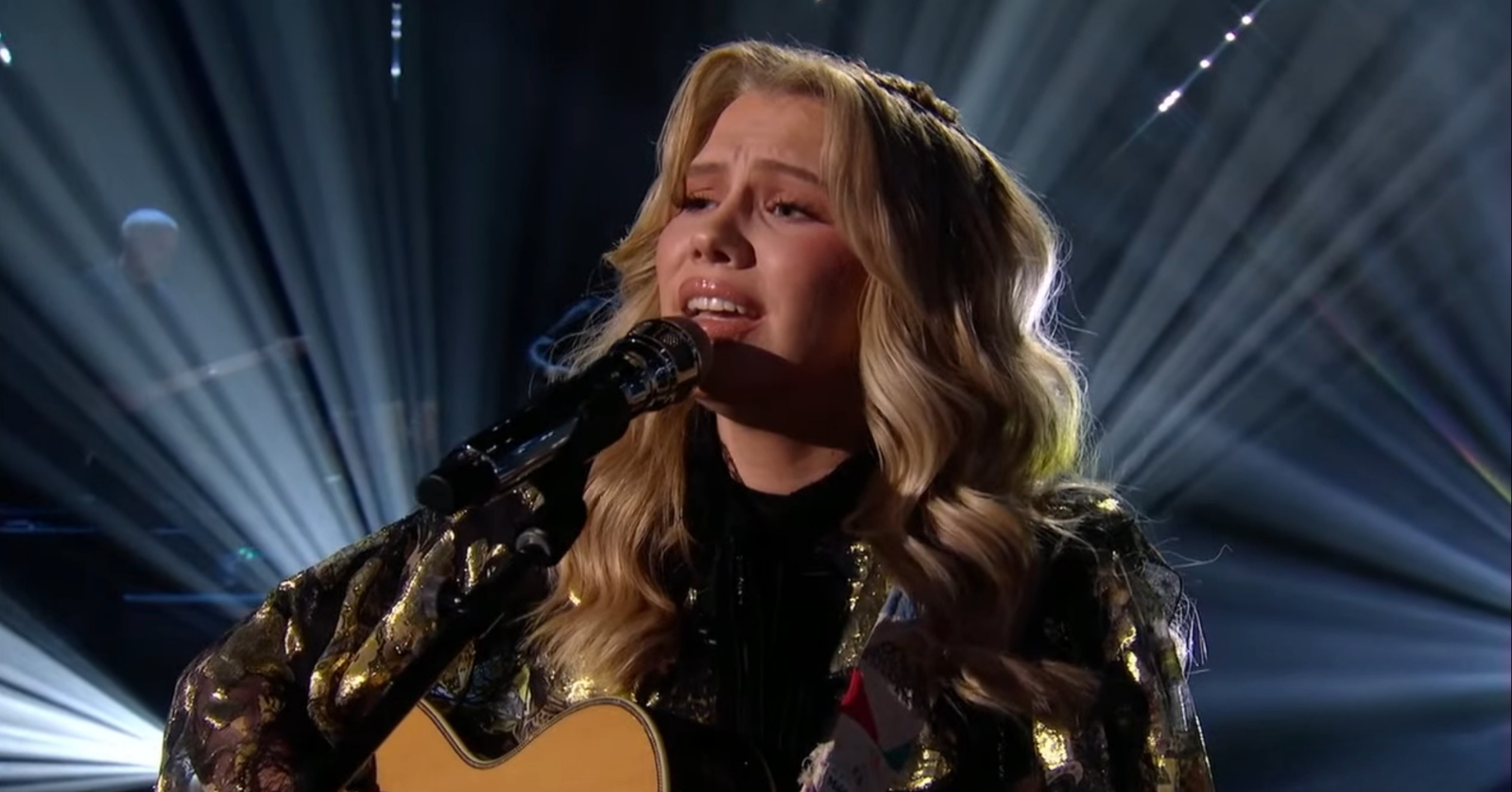
From the quiet corners of Bunker, Missouri, to the dazzling glow of the finale stage, Hannah Harper’s journey on American Idol Season 24 unfolded like a story no writer could fully script. A stay-at-home mom with a dream tucked between daily routines and family responsibilities, she stepped into a world that often feels reserved for the already discovered—and rewrote its rules entirely.
Her early beginnings were humble, shaped not by spotlight moments but by short, self-recorded videos shared with only a handful of viewers. There was no immediate viral fame, no sudden industry push—just consistency, belief, and a voice that refused to stay small even when the world around her was quiet.
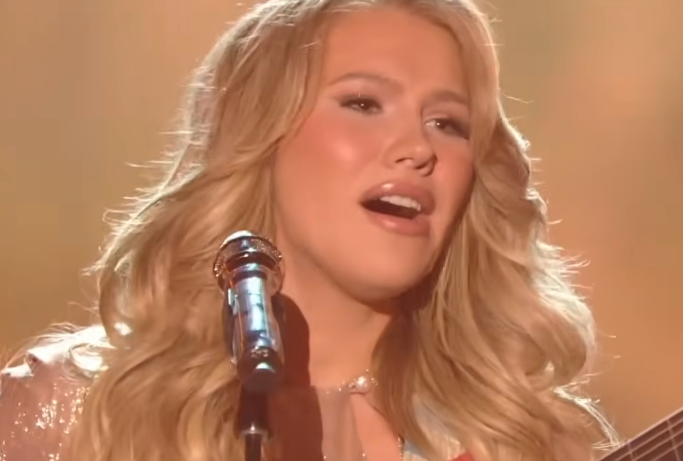
Each performance on American Idol became a turning point. What began as curiosity from judges slowly transformed into recognition of something deeper: authenticity. Hannah didn’t perform as someone trying to fit into an industry mold; she performed as someone bringing her entire life into every lyric.
Behind the stage lights, her reality remained grounded. She was still a mother, still managing the demands of family life, still navigating the same world she came from. That contrast—ordinary life meeting extraordinary opportunity—became part of what made her story so compelling to millions watching.
As the competition advanced, her presence grew stronger. Not in volume alone, but in emotional clarity. Each song felt like a reflection of lived experience rather than performance technique. Viewers began to see her less as a contestant and more as a storyteller with something real to say.
By the time the finale arrived, Hannah Harper was no longer an underdog. She was a frontrunner whose journey had already resonated far beyond the confines of the competition. Still, nothing could fully prepare audiences for the moment her name was announced as the winner of American Idol Season 24.
The reaction was immediate—shock, joy, disbelief, and celebration all colliding at once. For Hannah, however, the moment was deeply personal. Years of quiet effort, doubt, and persistence condensed into a single breath as she stood on stage, absorbing the reality of what had just happened.
What made her win so impactful wasn’t just the title itself, but the path that led there. Fans saw in her journey a reflection of their own unrealized dreams, delayed ambitions, and quiet sacrifices. She became more than a contestant—she became a symbol of timing, patience, and resilience.
Social media erupted within minutes, with viewers calling her victory one of the most heartfelt outcomes in recent memory. Many highlighted how her story challenged the idea that success has an expiration date or a single starting point. Instead, Hannah Harper represented the possibility of beginning again at any stage of life.
Her transformation from local creator to national champion didn’t erase her past—it elevated it. The small beginnings in Missouri weren’t rewritten or left behind; they became the foundation of everything she achieved on the grand stage of American Idol.
Even after the cameras stopped rolling, her story continued to echo. Discussions weren’t only about her vocal ability, but about what her journey meant in a broader cultural sense: the idea that talent can emerge quietly, grow steadily, and still reach massive heights without compromise.
For many, Hannah’s win felt like a reminder that success doesn’t always arrive loudly or early. Sometimes it builds in silence, in repetition, in belief that isn’t always validated immediately—but persists anyway until opportunity finally aligns.
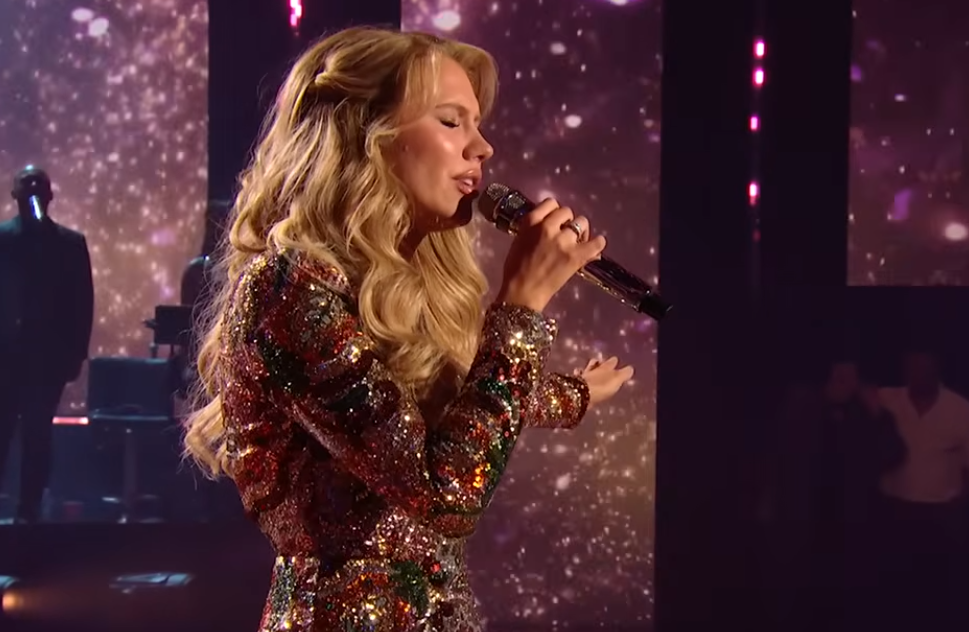
Her connection to her roots in Bunker, Missouri, remained central to her narrative. It wasn’t something she distanced herself from after winning; it was something she carried forward. That grounding influence shaped how her story was received by audiences far beyond her hometown.
As celebrations continue and the spotlight shifts toward what comes next, one question lingers in the wake of her victory on American Idol Season 24: now that Hannah Harper has reached the finish line of one dream, how far can the voice that carried her from a small Missouri town take her next?