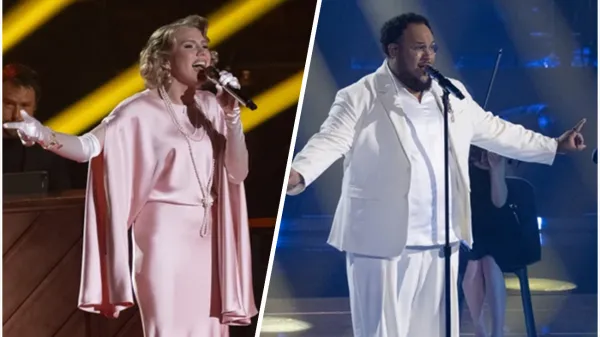
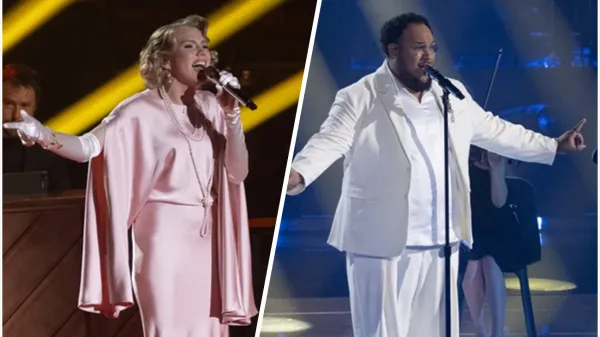
In a season where talent shows often create fleeting moments of chemistry, something about Hannah Harper and Jordan McCullough from American Idol Season 24 has continued to linger far beyond the stage lights. Their connection was never framed purely by competition or performance scores. Instead, it was built on something quieter and more enduring—mutual encouragement, shared faith, and a steady presence during one of the most emotionally demanding journeys in modern music television.
American Idol has always been a pressure cooker for emerging artists. Every performance carries weight, every critique shapes perception, and every week demands growth under public scrutiny. Within that environment, Hannah often leaned on her faith and personal support system to stay grounded. Jordan McCullough, a former worship leader from Murfreesboro, Tennessee, became a consistent source of calm encouragement, offering reassurance when the competition intensified and emotions ran high.

What made their dynamic stand out was not manufactured drama or scripted television moments, but authenticity. Viewers noticed that their interactions reflected genuine care rather than competition-driven alliances. In an industry where narratives are often shaped for entertainment value, their bond felt refreshingly unforced and real.
Hannah’s musical foundation, rooted in Missouri’s gospel and bluegrass traditions, gave her performances a raw emotional quality that resonated deeply with audiences. Her voice often carried the weight of storytelling that felt lived-in, shaped by community, church, and tradition. Jordan, on the other hand, brought a different but complementary influence, shaped by worship music and a passion for uplifting others through song.
Together, their backgrounds created a subtle but powerful contrast. One grounded in traditional country and bluegrass storytelling, the other in worship-driven emotional expression. Yet rather than clashing, those influences seemed to align in a way that fans found both unexpected and compelling. It was not just musical compatibility—it was emotional alignment.
As the competition progressed, moments of support between them became increasingly noticeable. Whether it was a word of encouragement before a performance or visible pride after a successful round, their interactions reflected something deeper than typical contestant camaraderie. For many viewers, it became one of the understated storylines of the season.
That narrative extended beyond the show when Hannah reached a significant milestone with her Grand Ole Opry debut on June 2. The moment marked a major step in her artistic journey, and among those celebrating her achievement was Jordan himself. His presence during that milestone reinforced the sense that their connection was not limited to a television format but extended into real-life support and friendship.
Shortly after, attention naturally shifted toward Jordan’s own upcoming Opry milestone later that month. The idea of both artists reaching such significant stages in their careers within the same timeframe added another layer of intrigue to their story. It felt like two parallel paths moving forward in harmony rather than isolation.
Fans have increasingly begun to wonder whether this shared journey could eventually evolve into something more artistic. The idea of a duet between Hannah Harper and Jordan McCullough is no longer just speculation—it has become a recurring conversation among those who followed their time on American Idol closely.
What makes that possibility compelling is not just their individual talent, but the emotional narrative already associated with them. Music has always thrived on storytelling, and collaborations rooted in real connection often carry a different kind of weight. When artists share history, even brief or unspoken, it can translate into something audiences can feel as much as hear.
Still, both artists remain in the early stages of shaping their careers. Neither has confirmed any plans for collaboration, and their paths continue to develop independently. Yet the idea persists because it feels natural rather than forced, something that could emerge organically rather than be manufactured by industry expectation.
There is also something universal about their story that resonates beyond music. It reflects the importance of having someone who believes in you during uncertain times, especially in high-pressure environments. Whether in music, sports, or any creative field, those connections often become the foundation for confidence and growth.
As their individual journeys continue, the question of a potential duet remains open-ended. It is not defined by industry announcements or scheduled releases, but by possibility. And sometimes in music, the most memorable collaborations are not the ones planned in advance—but the ones that happen when timing, emotion, and connection align naturally.
For now, Hannah Harper and Jordan McCullough remain two rising artists whose shared story continues to evolve. And as fans watch both of them step further into their careers, one lingering question remains at the heart of it all—if their voices eventually come together in a song, would it simply be a duet, or something far more defining than that?