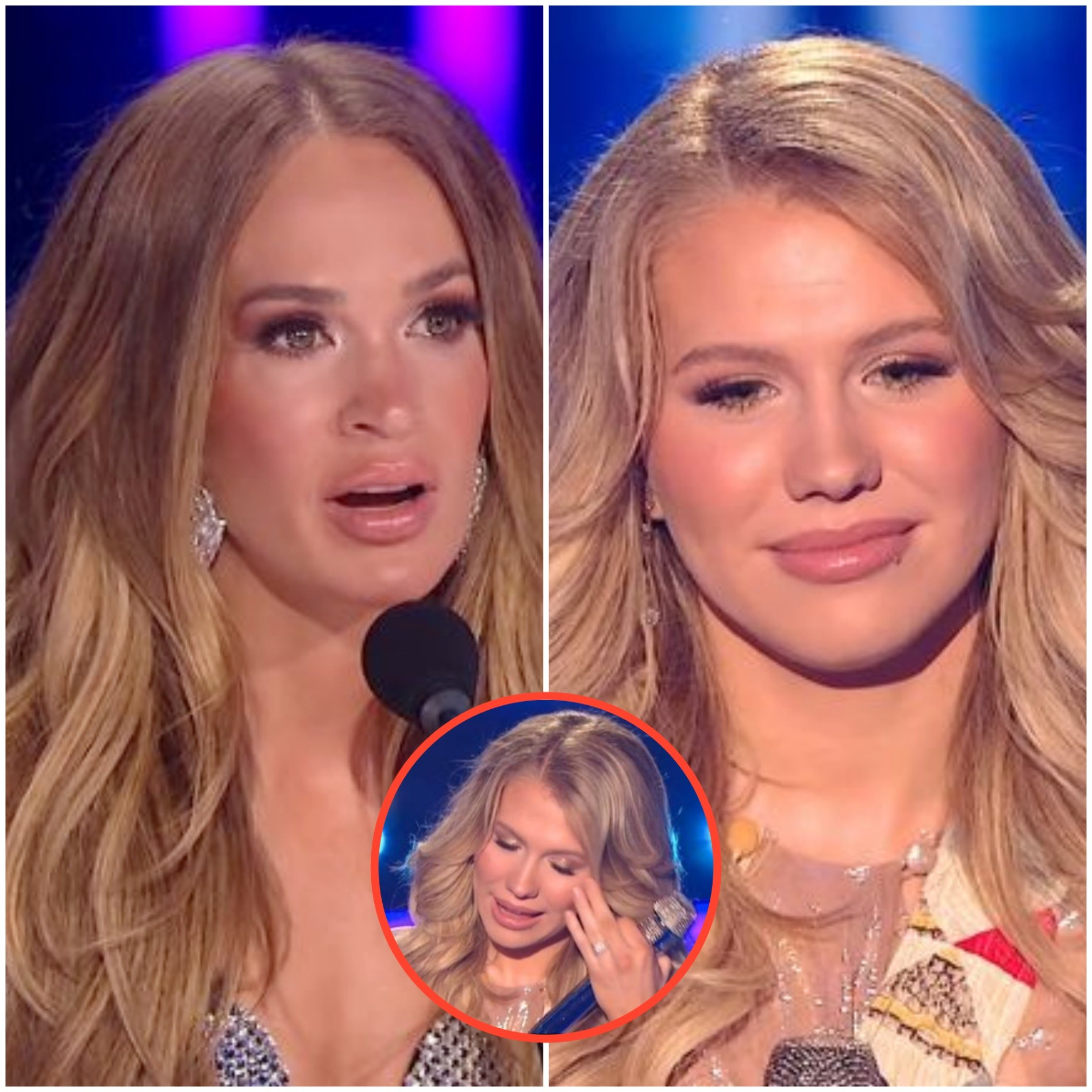
The American Idol grand finale delivered countless emotional moments, but nothing compared to the scene that unfolded when Hannah Harper stepped onto the stage and performed her original song, “Married Into This Town.” Under the bright lights and enormous pressure of the finale, Hannah didn’t just sing — she told a story. Every lyric carried pieces of her life, her roots, and the people who shaped her journey. By the end of the performance, the entire room felt transformed by the honesty pouring from the stage.
But while viewers at home were already emotional, it was Carrie Underwood’s reaction that instantly became the defining moment of the night. As Hannah sang directly from the heart, Carrie visibly broke down in tears on live television, unable to hide how deeply the performance affected her. Cameras captured the country superstar wiping away tears while watching Hannah deliver one of the most personal performances of the entire season.
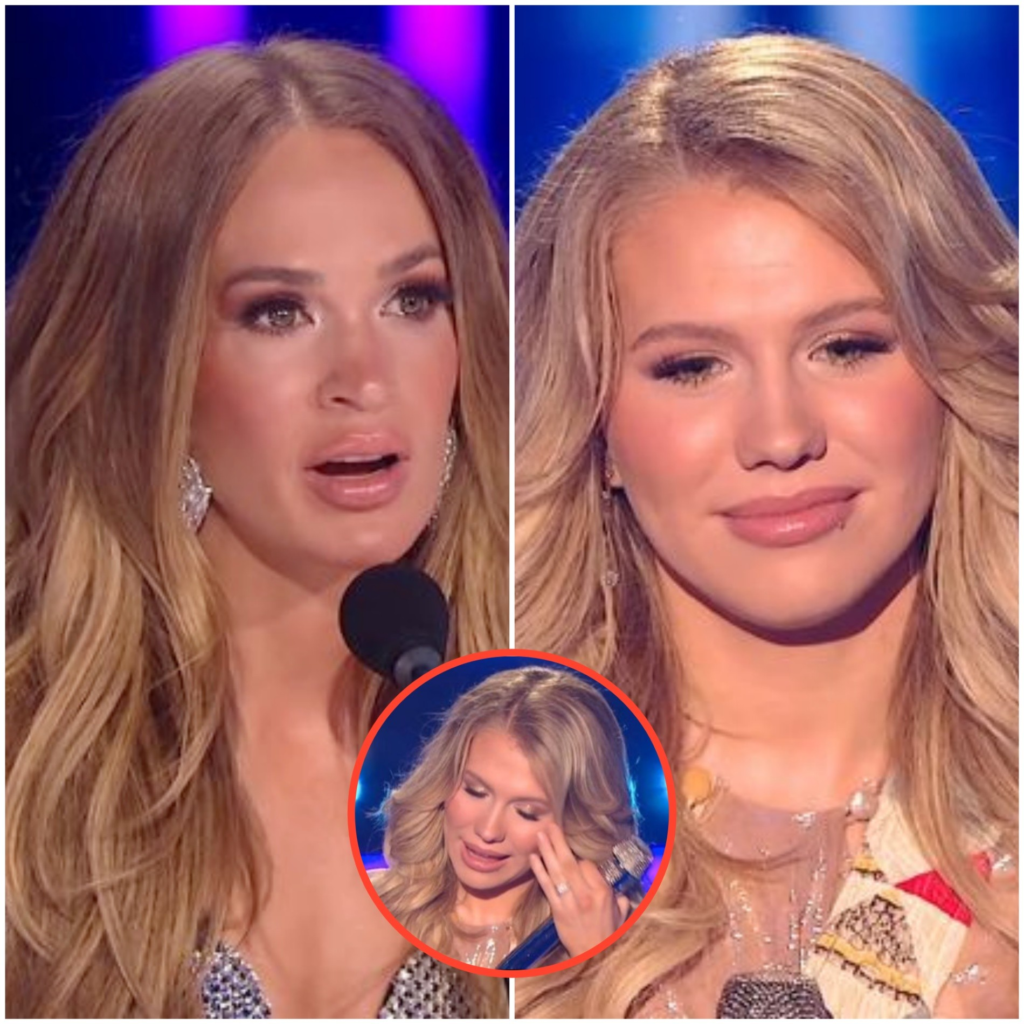
For fans, the moment felt bigger than a typical judge’s reaction. Carrie’s emotions seemed genuine, almost protective, as though she was witnessing not just a contestant perform, but an artist fully arriving in her purpose. Social media exploded within minutes, with viewers sharing clips of Carrie’s tearful response and discussing what they believed was a clear sign of how strongly she has supported Hannah from the very beginning.
Hannah’s original song became the emotional centerpiece of the finale because it carried something audiences rarely experience on reality television: authenticity without calculation. “Married Into This Town” was more than a melody. It was a tribute to small-town life, commitment, family, and belonging. Dedicated to both her hometown and her husband, the song painted vivid emotional images that resonated far beyond the stage.
There was a quiet power in the way Hannah performed it. She didn’t rely on dramatic theatrics or oversized production moments. Instead, she stood confidently in the truth of her story, allowing vulnerability to become the performance’s greatest strength. Every note felt lived-in. Every lyric sounded personal. Viewers weren’t simply hearing a song — they were witnessing someone open their heart in front of millions.
That emotional honesty is likely what moved Carrie Underwood so deeply. As someone who once stood on the same Idol stage chasing her own dream, Carrie understands better than almost anyone how terrifying and meaningful those moments can be. Fans immediately connected Carrie’s emotional reaction to her own history, believing she saw something familiar in Hannah: a young artist grounded in sincerity rather than image.
What made the moment even more powerful was what Carrie said afterward. Her words carried the warmth of someone who had believed in Hannah long before the finale arrived. Rather than offering standard praise, Carrie spoke with visible emotion, making it clear that Hannah’s artistry had touched her personally throughout the competition. Viewers quickly interpreted the exchange as a subtle but unmistakable endorsement.
Across social media, fans began posting emotional reactions of their own. Many admitted they cried alongside Carrie while watching the performance unfold. Others described Hannah’s song as one of the rare Idol moments that felt completely timeless. Clips of Carrie wiping away tears spread rapidly online, turning the performance into one of the most discussed moments of the finale almost instantly.
Part of what made the scene so unforgettable was the contrast between the scale of the show and the intimacy of the performance. American Idol finales are often filled with fireworks, elaborate staging, and high-energy spectacle. Yet Hannah managed to silence all of that noise with a deeply personal story wrapped inside a simple song. In doing so, she reminded audiences why music matters in the first place.
For many viewers, Carrie Underwood’s emotional response became symbolic of something larger. It represented one generation of Idol stars recognizing the emotional power of the next. Carrie didn’t appear emotional because of technical perfection alone. She appeared emotional because she recognized truth in Hannah’s performance — and audiences recognized it too.
As the finale continued, the conversation online no longer centered only around who would win the competition. Instead, people focused on the emotional connection Hannah created in that single moment. Fans debated whether Carrie’s visible support revealed who she truly hoped would take the crown, while others argued that Hannah had already achieved something more important than victory: genuine emotional impact.
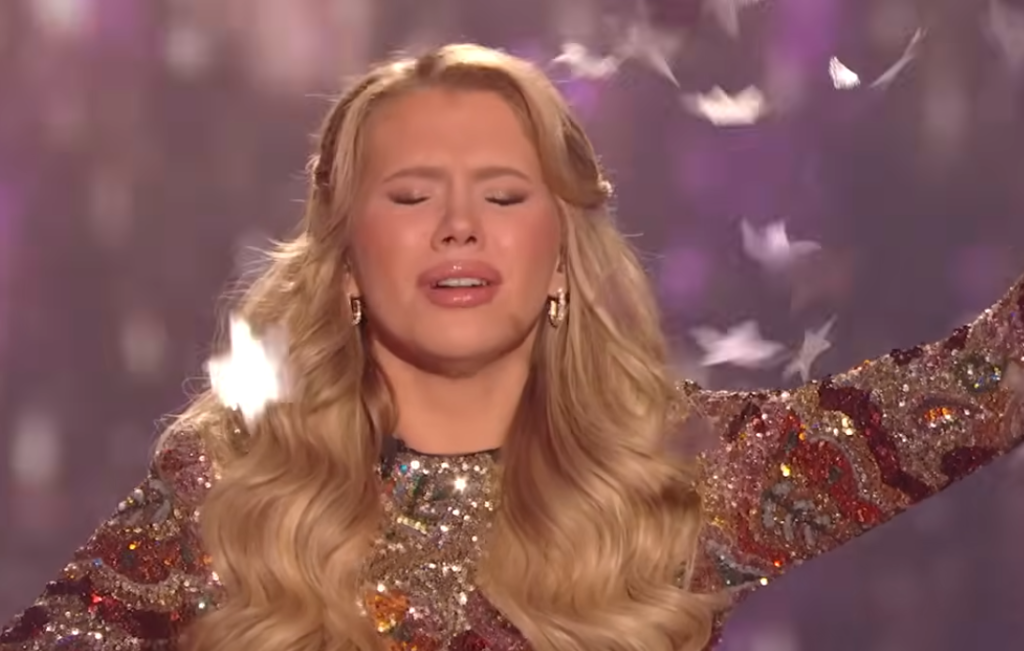
Moments like these are rare in entertainment because they cannot be manufactured. They happen when preparation, vulnerability, timing, and truth collide at exactly the right moment. Hannah Harper’s performance of “Married Into This Town” became one of those moments — the kind audiences remember long after a season ends.
And as Carrie Underwood sat there in tears, watching a young artist sing directly from the soul, viewers everywhere seemed to realize the same thing at once: sometimes the most powerful performances are not the loudest ones, but the ones brave enough to feel completely real.