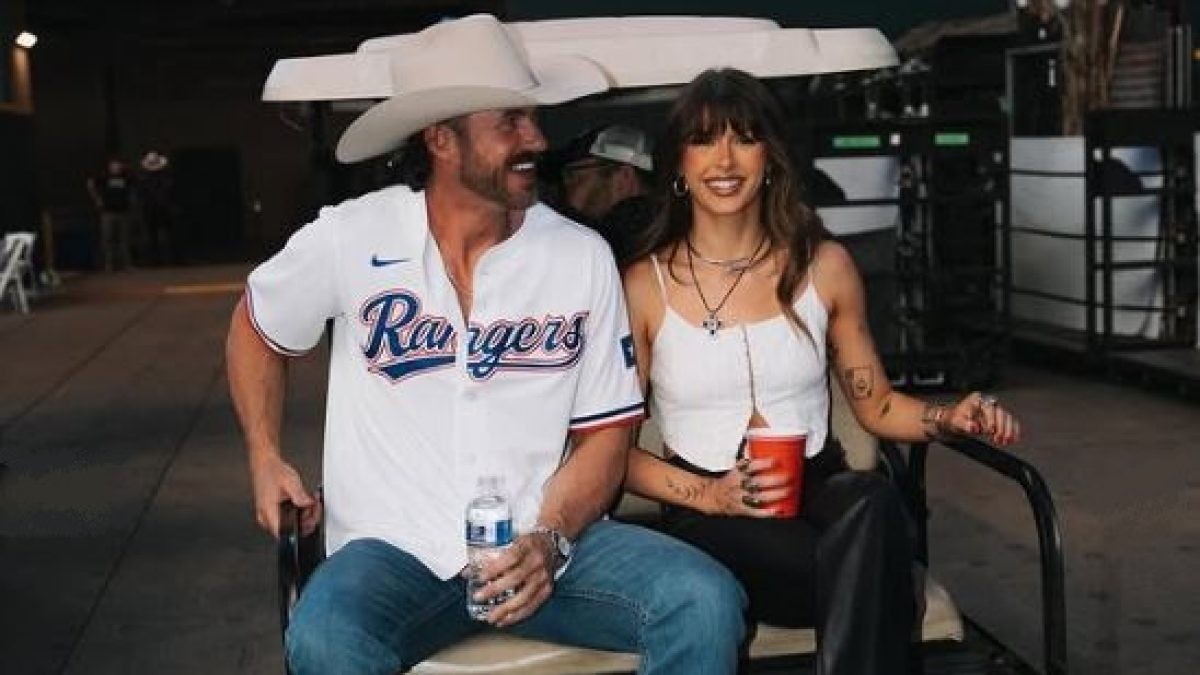
When Ella Langley stepped into the CMA performance of “You Look Like You Love Me,” no one in the arena expected the night to unfold like a staged film sequence. Instead of beginning on the main platform, she appeared from within the audience, immediately shifting the energy of the entire venue and turning anticipation into curiosity within seconds.
Dressed in vintage country glamour, Ella’s entrance felt intentional and theatrical, as if the performance had stepped outside the boundaries of a traditional stage setup. The crowd’s attention followed her every movement, unaware that the structure of the performance itself was about to evolve into something far more dynamic.
Then came the moment that changed everything.
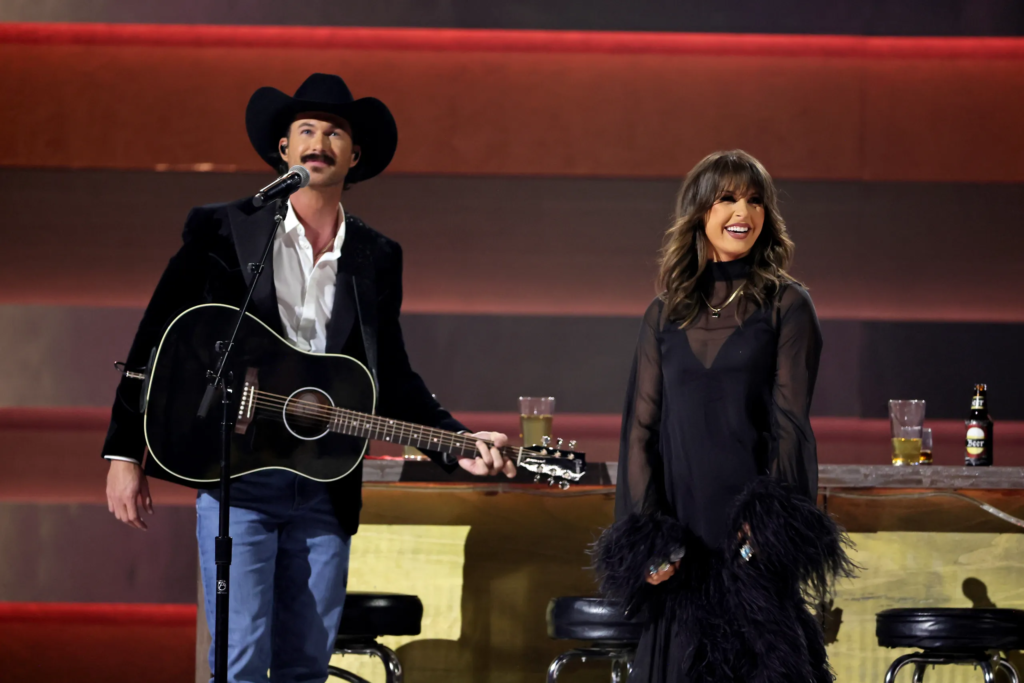
Riley Green emerged from the crowd, seamlessly entering the narrative of the song and instantly elevating the atmosphere inside the arena. The reaction was immediate—surprise, excitement, and a sense that something unscripted, or at least emotionally charged, was unfolding in real time.
From that point forward, the performance was no longer just a musical number. It became a shared experience between artists and audience, blurring the line between storytelling and lived emotion. Every step they took toward each other felt purposeful, every lyric delivered with a sense of playful tension that kept the crowd fully engaged.
As Ella and Riley began trading lines, the structure of the performance shifted again. What started in the audience gradually moved toward the stage, creating a visual journey that mirrored the emotional progression of the song itself. The movement added a cinematic quality that elevated the entire experience beyond a standard live performance.
The chemistry between the two performers quickly became the focal point of conversation inside the arena. It was not simply about vocal harmony or stage coordination—it was about presence, timing, and the ease with which they interacted in front of thousands of people.
That connection, whether purely performative or something more layered, was what made the moment so compelling to watch. Audiences are often drawn to authenticity, and this performance gave them just enough ambiguity to interpret the story in multiple ways.
By the time the pair reached the main stage together, the energy had transformed completely. What began as an unexpected entrance from the crowd had evolved into a full-circle moment that felt carefully constructed yet emotionally spontaneous.
The staging itself contributed to the storytelling. Rather than relying on elaborate production effects, the performance leaned into proximity, movement, and direct interaction between the two artists. This simplicity allowed the emotional undertones of the song to take center stage.
Fans watching in real time responded instantly. Social media reactions during and after the performance reflected a mix of admiration, surprise, and curiosity about the nature of the connection being portrayed. Clips circulated rapidly, each focusing on different moments that seemed to carry emotional weight.
What stood out most was how naturally the performance unfolded. There was no sense of hesitation or disconnect. Instead, it felt like both artists were fully immersed in the narrative they were building together, moment by moment.
The CMA stage has long been known for memorable collaborations, but this performance distinguished itself through its storytelling approach. Rather than simply singing together, Ella Langley and Riley Green constructed a narrative arc that played out in real time.
That narrative quality is part of what made the moment so widely discussed afterward. It wasn’t just a duet—it was an experience that combined music, performance art, and emotional storytelling into a single unfolding sequence.
As the final moments approached and the two artists stood together on stage, the atmosphere inside the arena felt charged with recognition. The audience understood they were witnessing something designed not just to entertain, but to linger in memory.
Even after the performance ended, the conversation continued. Fans replayed clips, debated interpretations, and revisited the small gestures that made the moment feel so alive. The ambiguity only fueled further interest.
Whether viewed as a carefully crafted performance or a reflection of genuine chemistry, the impact was undeniable. It succeeded in capturing attention not just during the show, but long after it concluded.
In a night filled with talent, production, and celebration of country music, this performance stood out because it felt like a story unfolding in real time. And in doing so, it reminded audiences why live music continues to hold such a powerful place in culture.
As the arena lights dimmed and the moment faded into memory, one question remained lingering in the minds of many: was what they witnessed simply performance art—or the beginning of a story still unfolding?