There are performances that entertain, and then there are performances that linger long after the final note fades. Brooks Rosser and Rae Boyd’s rendition of Elvis Presley’s “Can’t Help Falling in Love” belongs firmly in the second category, unfolding like a quiet emotional conversation set to music.
From the very first chord, something feels different.
It is not just a cover of a legendary song. It feels like an experience shaped by two voices that understand each other beyond the stage. Brooks Rosser brings a deep, grounding warmth to the melody, while Rae Boyd answers with soft, floating harmonies that seem to hang in the air just long enough to be felt rather than simply heard.
Together, they do something rare.
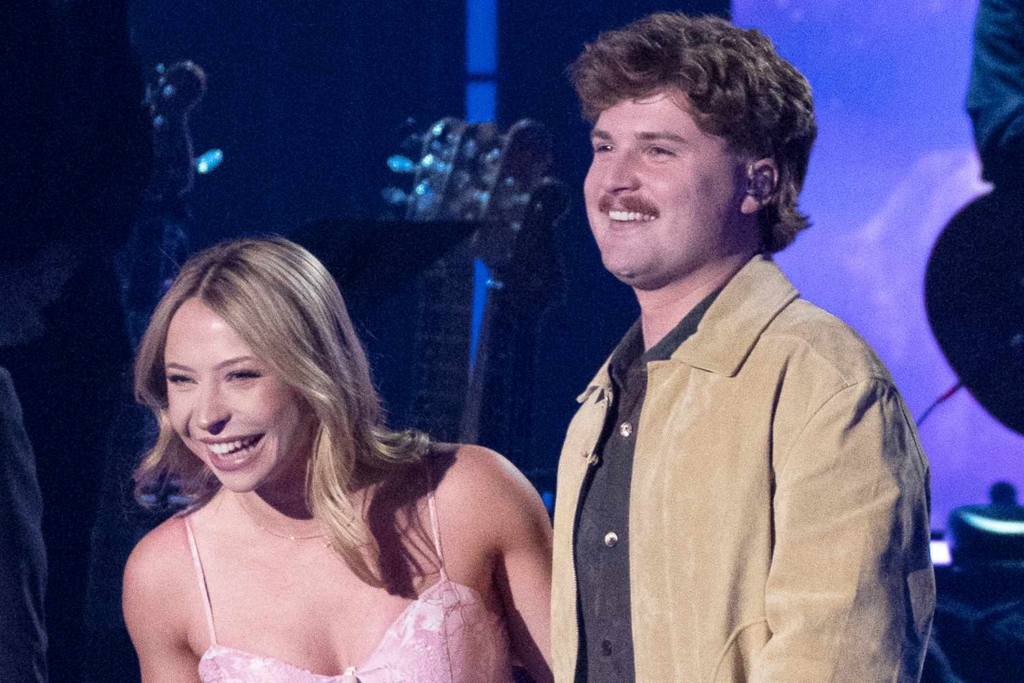
They do not compete with the original. Instead, they step into it gently, almost carefully, as if they are honoring something sacred while still allowing their own story to emerge through it.
That balance is what has captured audiences everywhere.
Fans watching the performance describe it not as a duet, but as a shared moment. There is an unspoken connection between them that cannot be manufactured through rehearsal alone. It is the kind of chemistry that appears when two artists are not just performing together, but emotionally aligned in the same musical space.
And that is exactly what makes this rendition stand out.
Elvis Presley’s original recording is iconic for a reason. It carries a timeless sense of devotion and simplicity that has transcended generations. Any attempt to reinterpret it comes with risk, because listeners already hold deep emotional attachments to the original version.
Yet Brooks and Rae approach it differently.
Rather than trying to recreate what already exists, they reinterpret the emotional essence of the song. The lyrics remain the same, but the delivery shifts into something more intimate, almost like a private exchange rather than a public performance.
Brooks’ voice sets the foundation.
It is steady, rich, and emotionally grounded, giving the song a sense of direction and quiet strength. Then Rae enters, not as an interruption, but as an extension of the feeling already present. Her harmonies do not overpower; they soften, wrap around the melody, and add emotional texture that changes the tone entirely.
It is in this interplay that the magic happens.
There are moments in the performance where the line between rehearsal and reality feels blurred. The way they look toward each other, the way their timing naturally aligns, and the ease with which they share space all contribute to a sense that this is more than just a staged duet.
It feels personal.
That personal quality is exactly why fans have responded so strongly. In an entertainment landscape often driven by spectacle, this performance thrives on restraint. There are no unnecessary vocal runs or dramatic shifts meant to impress. Instead, there is focus, intention, and emotional clarity.
And that clarity is powerful.
Viewers have described feeling as though they are witnessing something they were not meant to see—a quiet moment between two people expressed through one of the most beloved love songs ever written. That sense of intimacy is what transforms the performance from memorable to unforgettable.
Online reactions have reflected that impact.
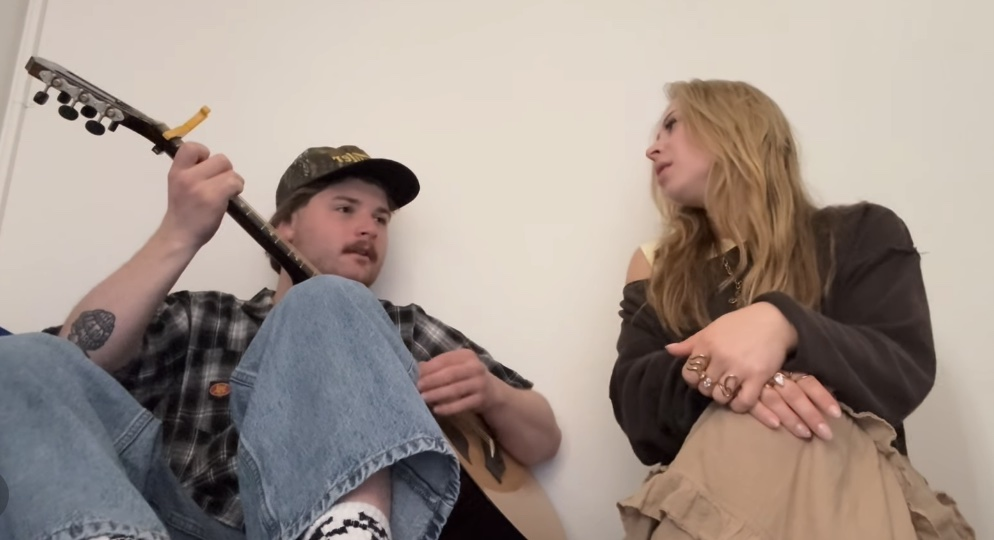
Many listeners have gone as far as calling it one of the most heartfelt covers of “Can’t Help Falling in Love” in recent memory. While comparisons to Elvis are inevitable, most reactions focus less on ranking and more on emotional response. People are not asking whether it is better than the original; they are asking how it made them feel.
And that may be the real achievement here.
Great covers do not erase originals. They add new layers of meaning to them. Brooks Rosser and Rae Boyd have managed to take a song already filled with history and gently reframe it through their own artistic connection, creating something that feels both familiar and newly discovered at the same time.
In the end, what stays with the audience is not just the melody.
It is the feeling that love songs are not only about lyrics or composition, but about the connection between the people performing them. When that connection feels authentic, the song becomes more than music—it becomes a shared emotional space.
And that is exactly what this duet has created.
A moment where two voices met, blended, and briefly turned a timeless classic into something that felt deeply, unmistakably alive.