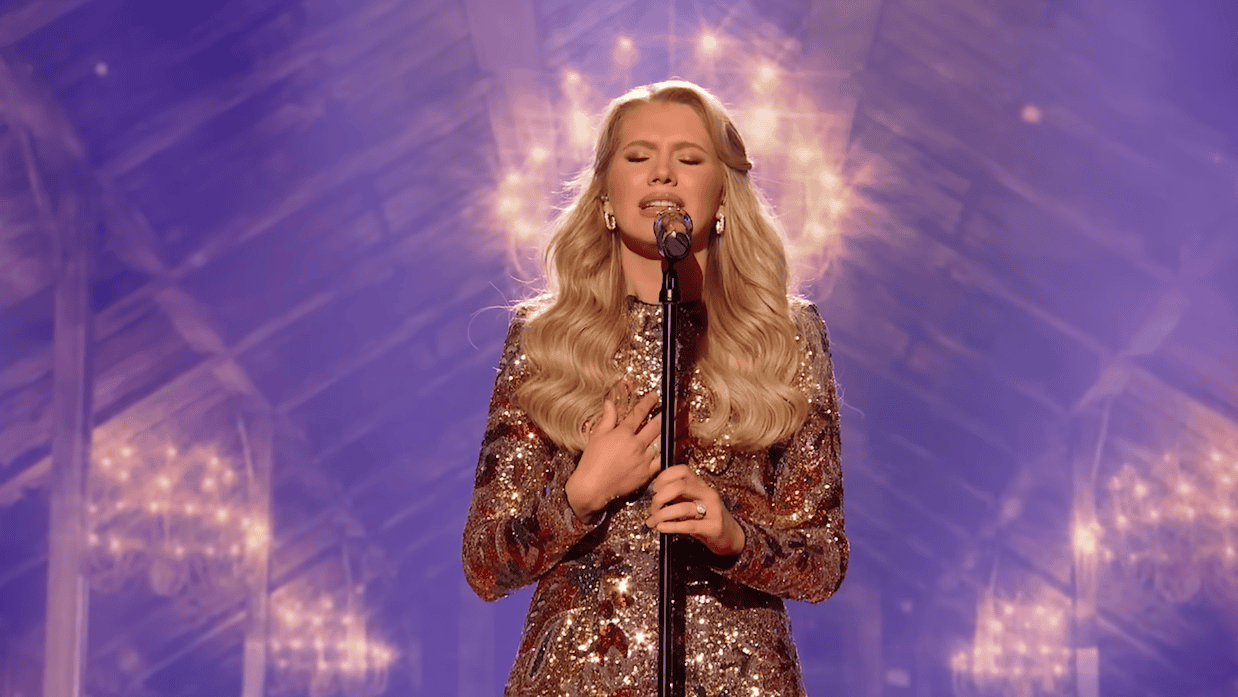
Before Hannah Harper became the newest American Idol winner, she was simply a woman trying to survive the quietest storm of her life.
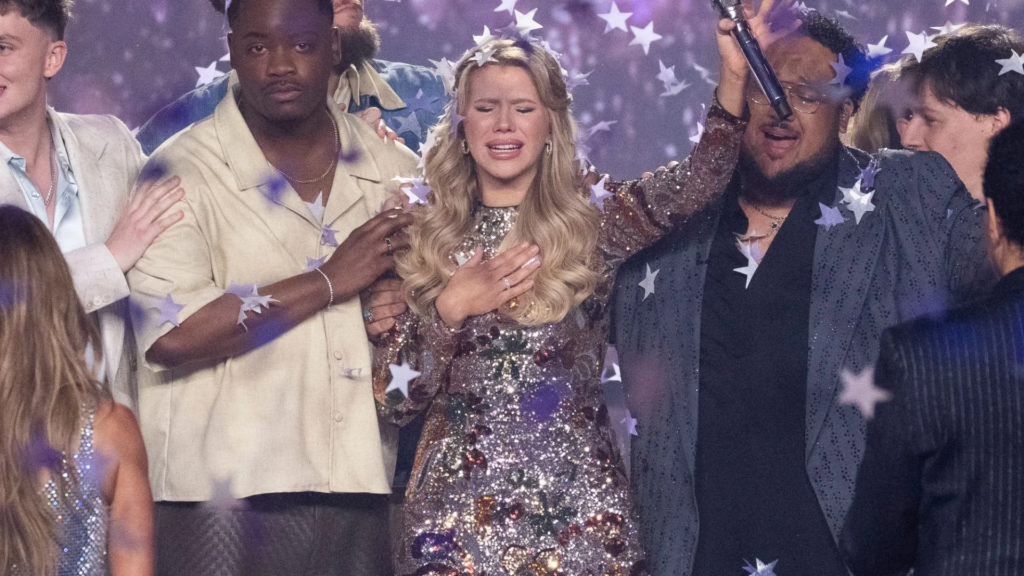
No cameras.
No applause.
No headlines.
Just long nights, emotional exhaustion, and the invisible weight of postpartum depression pressing against her spirit while she tried to continue being a mother, a wife, and somehow still herself at the same time.
To the outside world, she looked strong.
But many people battling postpartum depression know the truth about pain like that — sometimes the strongest-looking people are fighting the hardest battles privately.
And somewhere in the middle of that darkness, Hannah Harper held onto one thing that refused to let her completely fall apart.
Her faith.
Not the loud kind.
Not the performative kind.
The quiet kind people cling to when life stops making sense.
There is something deeply powerful about the way Hannah’s story has resonated with audiences across America because her journey was never built around perfection. It was built around perseverance. Fans did not connect to her because she looked untouchable. They connected because she looked human.
Broken some days.
Exhausted some days.
But still standing.
That is why her original song “String Cheese” became far more than an American Idol audition. The song carried pieces of emotional pain many mothers spend years hiding from the world. Through lyrics about motherhood, emotional pressure, and mental exhaustion, Hannah transformed her suffering into something strangely healing for millions of listeners.
And suddenly, mothers everywhere began crying to a song that finally sounded honest.
Many fans online described feeling “seen” for the first time. Others admitted they played the performance repeatedly because it captured emotions they never had the words to explain themselves. Some viewers even shared their own postpartum depression stories publicly after hearing Hannah sing.
That kind of connection cannot be manufactured.
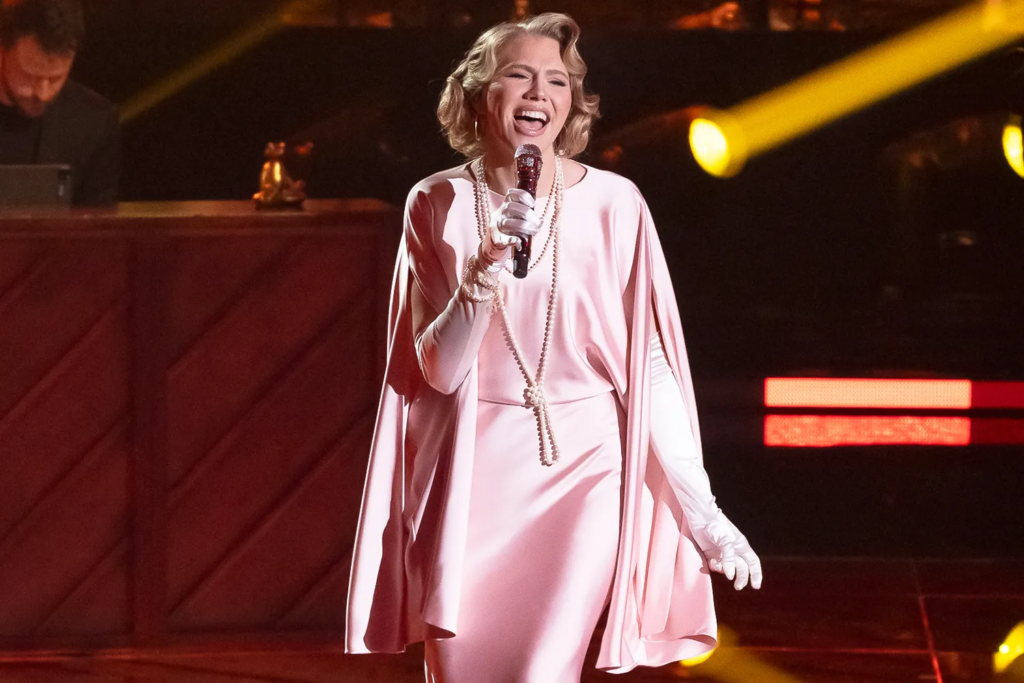
It comes from truth.
But perhaps the most emotional part of Hannah Harper’s rise is that she never framed herself as a victim. Even while discussing painful experiences, she carried herself with humility, grace, and quiet belief. There was always a sense that she viewed survival itself as proof of something greater working in her life.
And for many fans, that became impossible to ignore.
Because every week she returned to the Idol stage looking stronger.
More confident.
More alive.
As though the woman who once questioned herself privately was slowly rediscovering who she truly was in front of millions of people watching from home.
That transformation became spiritual for many viewers.
Not because Hannah preached constantly.
But because she embodied resilience.
There is a reason so many fans now describe her journey as “God’s timing.” At multiple points, Hannah’s path could have collapsed completely. Producers reportedly questioned whether her deeply personal music was too risky. The competition itself was filled with powerhouse vocalists and polished performers. Even Hannah herself admitted through her music that life had left her emotionally overwhelmed at times.
Yet somehow, every obstacle became part of the story pushing her forward instead of stopping her.
That is what makes her victory feel bigger than television.
Hannah Harper did not simply win a singing competition.
She reclaimed herself.
And now, as she prepares for her Grand Ole Opry debut and the nationwide String Cheese Tour, fans are watching a woman who once battled silent pain step into one of country music’s brightest spotlights. The same mother who once poured her heartbreak into lyrics is now standing in front of screaming crowds who sing those same words back to her like an anthem of survival.
There is something beautifully poetic about that.
A woman nearly crushed by postpartum depression somehow became a source of strength for millions of other mothers.
A woman who once felt emotionally lost became a voice helping others feel found.
And through every stage light, every standing ovation, and every emotional performance, many fans believe they are witnessing something greater than fame unfold in real time.
They are witnessing faith surviving the fire.
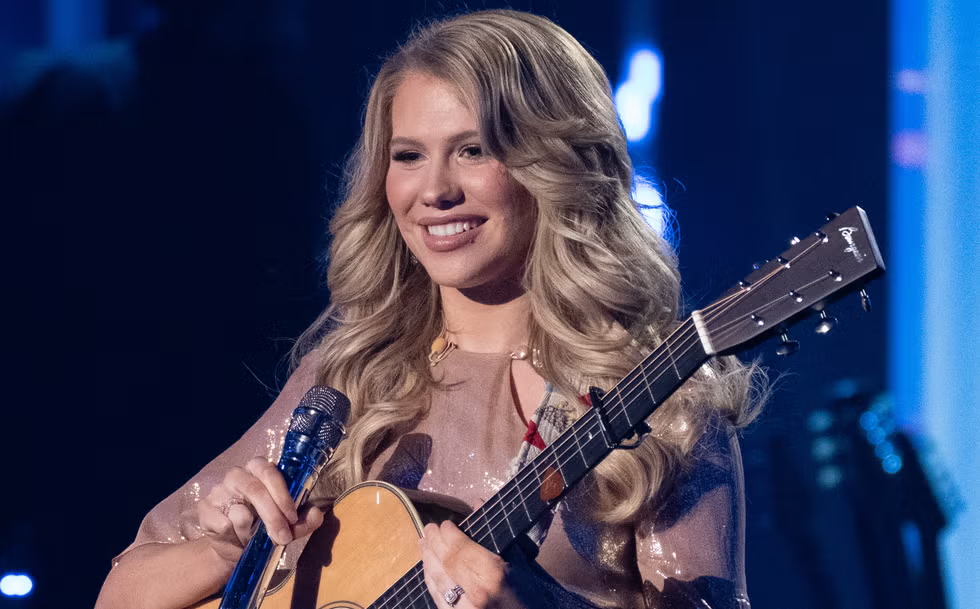
Because Hannah Harper’s story was never really about becoming famous.
It was about refusing to let darkness convince her she was forgotten.
And in the end, that may be why so many people now look at her journey and believe she proved something far bigger than talent alone:
That even after pain, fear, and heartbreak tried to silence her, she still rose like someone who knew deep down she belonged to something greater all along.