
Hannah Harper never planned to become the emotional heartbeat of American Idol.
She only planned to tell the truth.
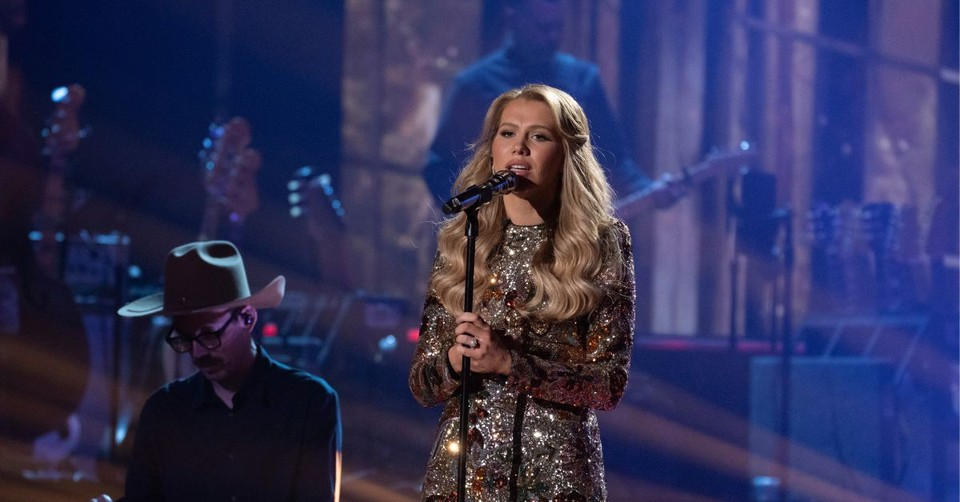
Long before the standing ovations, viral clips, and nationwide fanbase, Hannah was simply a mother trying to survive emotions she could barely explain. Sleepless nights. Silent breakdowns. The overwhelming guilt of feeling emotionally lost while trying to be everything for everyone else.
Most people never saw that part.
But Hannah wrote it down anyway.
That pain eventually became “String Cheese,” the song that would completely change her life. What sounded at first like a quirky title slowly unfolded into something devastatingly personal — a raw reflection of motherhood, emotional exhaustion, and postpartum depression.
And when she finally performed it on national television, something extraordinary happened.
Millions of mothers immediately understood what she meant without her needing to explain a single thing.
Because “String Cheese” was not written like a polished industry single. It felt messy in the most human way possible. Honest. Unfiltered. Vulnerable. Hannah wasn’t singing as a celebrity. She was singing as a woman carrying emotional weight she had hidden for far too long.
That honesty hit viewers harder than anyone expected.
Social media exploded after the performance aired. Mothers from across the country began sharing emotional reactions online, describing how the song mirrored feelings they had been too ashamed to say out loud themselves. Some admitted they cried the entire performance. Others said it was the first time they had ever felt “seen” by a song on mainstream television.
Suddenly, Hannah Harper was no longer just another contestant.
She became a voice for people quietly struggling behind closed doors.
What made the moment even more powerful was how risky it actually was. In a competition built around huge vocals and crowd-pleasing covers, Hannah chose vulnerability over safety. She did not chase perfection. She chased connection.
And somehow, that became her greatest weapon.
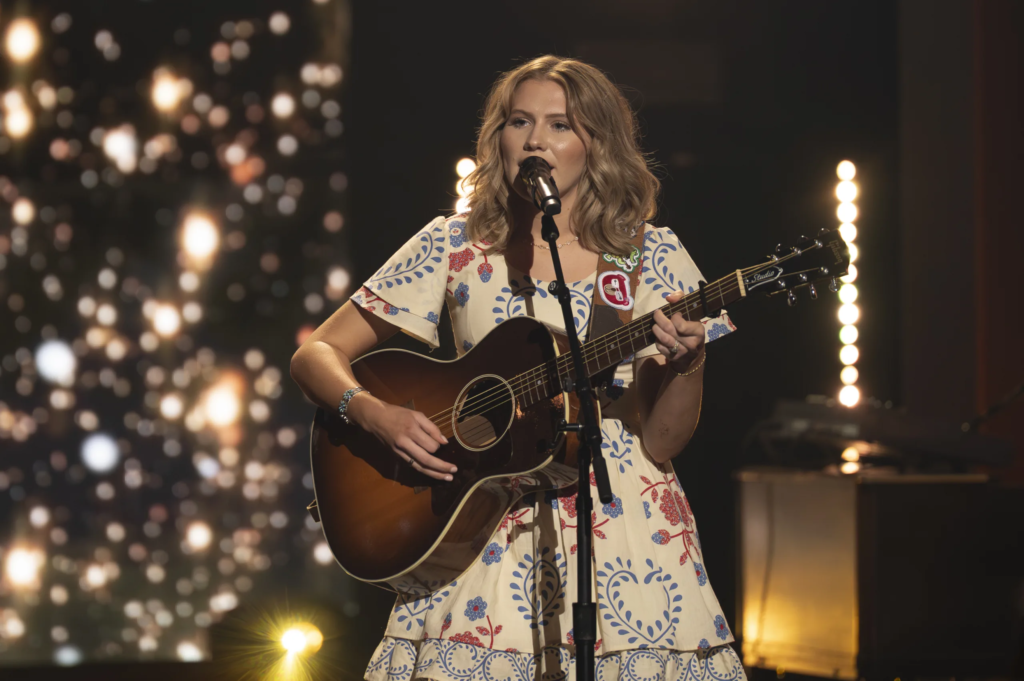
Week after week, America kept voting for the girl who sang about real life instead of fantasy. While other performers delivered polished productions, Hannah delivered emotional truth. Viewers connected to the cracks in her voice, the exhaustion behind her lyrics, and the quiet strength it took to stand under national television lights while exposing such deeply personal pain.
Even Carrie Underwood appeared visibly emotional during Hannah’s now-famous audition.
Fans later began calling it the moment they realized Hannah Harper was different.
Not because she sounded different.
Because she felt different.
The conversation around postpartum depression also changed because of her. Many fans praised Hannah for helping bring attention to a struggle that often stays hidden behind smiling family photos and unrealistic expectations placed on mothers. Her song sparked conversations far beyond entertainment pages, with countless women opening up publicly about their own emotional battles after childbirth.
That is what made “String Cheese” bigger than music.
It became recognition.
And perhaps the most remarkable part of Hannah’s rise is that she never tried to market herself as inspirational. She never forced emotional moments or chased sympathy. Everything people connected with came from authenticity. From lived experience. From scars she stopped trying to hide.
Now, Hannah Harper stands at the center of one of country music’s fastest-rising success stories. Her Grand Ole Opry debut is approaching. The String Cheese Tour is preparing to travel across America. Fans scream every lyric back to her at appearances. But despite all the success surrounding her now, many people still return to that first vulnerable performance that changed everything.
Because that was the moment Hannah Harper proved something millions of mothers desperately needed to hear.
Pain does not always destroy people.
Sometimes, when someone finally finds the courage to sing about it, pain becomes the very thing that saves them.