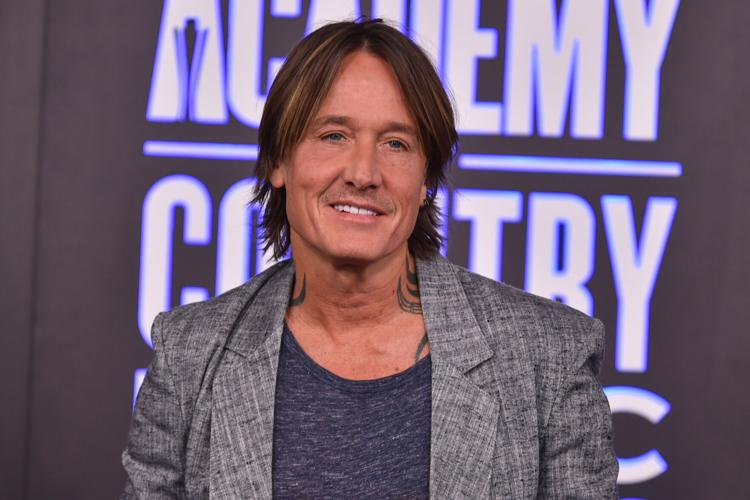
When most artists finish a project, the next question is already waiting: what comes next? But for Keith Urban, that question currently has no fixed answer. After his latest creative chapter with Flow State, he has chosen something rare in today’s music industry—uncertainty.
In a world driven by schedules, rollouts, and carefully mapped careers, Urban’s approach feels almost radical. Instead of planning his next move, he is allowing inspiration to lead the way. There is no rigid blueprint, no defined timeline, and no guaranteed destination—only the possibility of what might come next.

What makes this shift even more interesting is how organically Flow State itself came to life. According to Urban, it was never designed as a major strategic release. It began as a simple creative experiment, something loose and unforced, which gradually expanded into a complete body of work.
That origin story seems to have reshaped how he now views creativity. If something as significant as Flow State could emerge without planning, then perhaps the next chapter does not need to be forced into existence either. It can be discovered the same way the last one was—naturally.
This perspective stands in contrast to much of today’s entertainment industry, where momentum is often managed with precision. Artists are expected to constantly forecast their next release, maintain visibility, and stay ahead of audience expectations. Silence is often seen as risk.
Yet Urban’s philosophy challenges that pressure. By stepping away from rigid planning, he is choosing to trust the unpredictable nature of creativity. In doing so, he highlights something many artists quietly understand but rarely admit publicly: inspiration does not always follow a schedule.
There is a certain freedom in not knowing what comes next. It allows ideas to arrive without restriction, without being shaped prematurely by expectation. For an artist like Urban, whose career has already spanned decades, that freedom may be more valuable now than ever before.
Fans, of course, are used to anticipation. They look for clues, hints, and signs of what might be coming next. But in this case, the absence of a plan becomes the story itself. The mystery is not what is being prepared—it is whether anything is being prepared at all.
That uncertainty does not suggest inactivity. Instead, it suggests openness. It means Urban is still creating, still listening, still responding to whatever ideas surface naturally rather than forcing them into a predetermined structure.
Flow State itself serves as a quiet example of that philosophy. What began as a small creative spark evolved into something far more complete without losing its sense of spontaneity. That evolution may now be the template for whatever comes next—or does not come next.
In an industry that often equates success with constant output, Urban’s stance introduces a different kind of success: the ability to pause without disappearing, and to wait without losing relevance. It is a reminder that presence does not always require production.
This approach also reframes how audiences experience an artist’s journey. Instead of following a clearly marked path, fans are invited into something more open-ended, where meaning is not only found in releases but also in the spaces between them.
There is a quiet confidence in not rushing toward the next milestone. It suggests trust—not just in the creative process, but in the audience’s willingness to stay connected even when there is nothing immediate to consume.
At the same time, it raises a question that lingers beneath the surface of this moment. If the next step is not planned, then what happens when inspiration finally does arrive again?
For now, that question remains unanswered. And perhaps that is exactly the point. In leaving the future unwritten, Keith Urban is allowing it to be shaped by something far less predictable—and far more powerful than strategy alone.