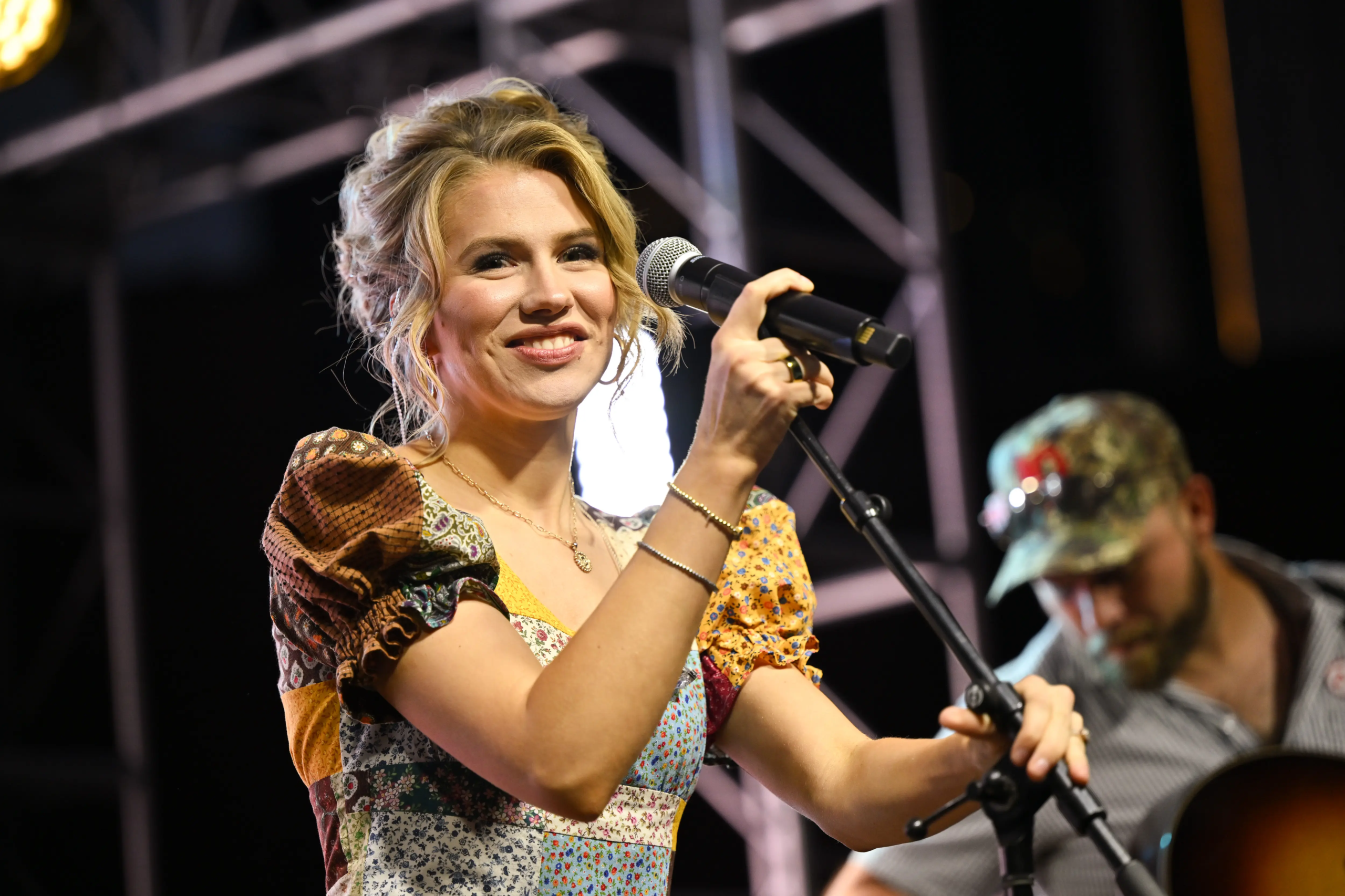
Hannah Harper is once again at the center of a growing country music conversation, and this time the debate feels even more layered than before. After earlier performances drew comparisons to Dolly Parton, her latest cover of “The Lucky One” has shifted the discussion in a new direction entirely. Listeners are now hearing echoes of Alison Krauss, and the contrast between the two comparisons has only intensified public curiosity.
What makes this moment so compelling is not just the song choice, but the emotional texture of her performance. “The Lucky One” is already a song built on quiet vulnerability, and Hannah’s interpretation leans fully into that space. Rather than trying to impress through vocal power or dramatic delivery, she chooses restraint, allowing subtlety to carry the weight of emotion.
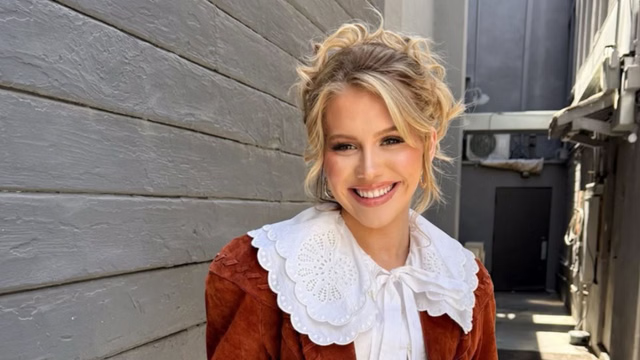
Accompanying her is her brother Dalton Harper, whose guitar work adds a delicate but steady foundation to the performance. His playing never overwhelms the vocals; instead, it frames them with precision and sensitivity. Together, they create a musical atmosphere that feels intimate, almost like a private session rather than a public performance.
It is in this space that the conversation begins to shift. Fans are no longer simply listening—they are analyzing, comparing, and debating. Some hear the unmistakable influence of Alison Krauss in Hannah’s tone, particularly in the softness of her phrasing and the emotional clarity she brings to each line. Others argue that her sound is developing its own identity entirely, separate from any comparison.
The most striking part of the performance, however, is the moment that subtly changes everything. Midway through the song, there is a shift in energy that feels almost unplanned, as if emotion briefly overtakes structure. It is not a dramatic pause or a vocal explosion, but something quieter and more human—a slight break in control that makes the performance feel even more authentic.
That moment has become the focal point of discussion among fans. Some describe it as the highlight of the entire cover, a rare instance where imperfection enhances beauty. Others see it as evidence of an emerging artistic voice still in the process of finding its full shape. Either way, it has ensured that the performance is not easily forgotten.
As reactions continue to spread across social platforms, the debate has grown into two distinct camps. One group praises the cover as Hannah’s most emotionally complete performance to date, emphasizing the purity in her delivery and the understated elegance of the arrangement. For them, the simplicity of the performance is exactly what makes it powerful.
The other group remains focused on comparison, insisting that the resemblance to Alison Krauss is too strong to ignore. They point to the tonal softness, the phrasing style, and the emotional restraint as clear indicators of influence. In their view, the performance is not just a cover but a reflection of a specific musical lineage.
Yet what stands out most in this ongoing discussion is how both perspectives ultimately highlight the same truth: Hannah Harper is capturing attention in a way that feels meaningful. Whether listeners are comparing her to established icons or recognizing her individuality, they are engaging deeply with her artistry.
In many ways, this is what defines a rising artist in today’s music landscape. It is not just about producing sound, but about creating conversation. Hannah’s ability to spark debate with a single performance suggests that her presence in country music is becoming increasingly difficult to overlook.
Dalton Harper’s role in this moment also adds an important layer. His presence is not just supportive but foundational, shaping the emotional tone of the performance. The brother-sister dynamic brings an added sense of sincerity, reminding listeners that behind the artistry is a shared history that predates any stage or audience.
What makes “The Lucky One” particularly effective as a performance piece is its emotional openness. The song itself invites reflection, and Hannah’s interpretation leans into that invitation without hesitation. Instead of reshaping the song into something unrecognizable, she allows it to breathe while adding her own subtle emotional imprint.
As the performance continues to circulate, it is clear that it has done more than simply entertain. It has reopened conversations about influence, originality, and interpretation in modern country music. These are not new questions, but moments like this bring them back into focus with renewed intensity.
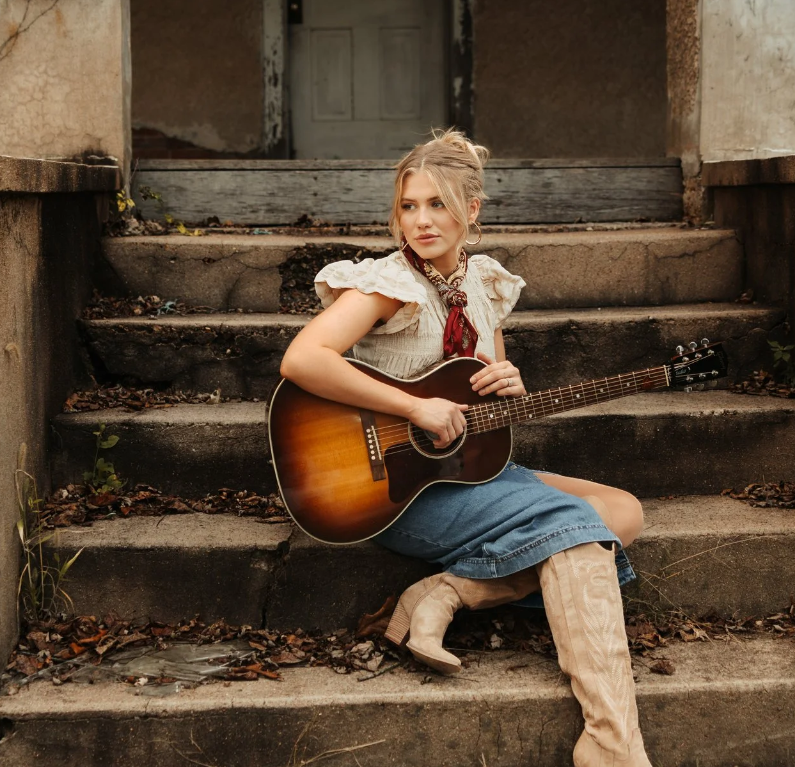
There is also an evolving sense that Hannah Harper is still in the early stages of defining her artistic identity. Each performance seems to add another layer to how audiences perceive her, shifting between comparisons and originality. That fluidity is part of what keeps listeners engaged.
In the end, whether one hears Dolly Parton, Alison Krauss, or something entirely new, the impact of the performance remains undeniable. It has succeeded in doing what many artists strive for but few achieve—it has made people stop, listen closely, and talk about what they heard long after the final note faded.
And as the conversation continues to grow, one question remains quietly suspended in the air: is Hannah Harper becoming a reflection of country music’s greatest voices, or is she slowly revealing a sound that belongs only to her?