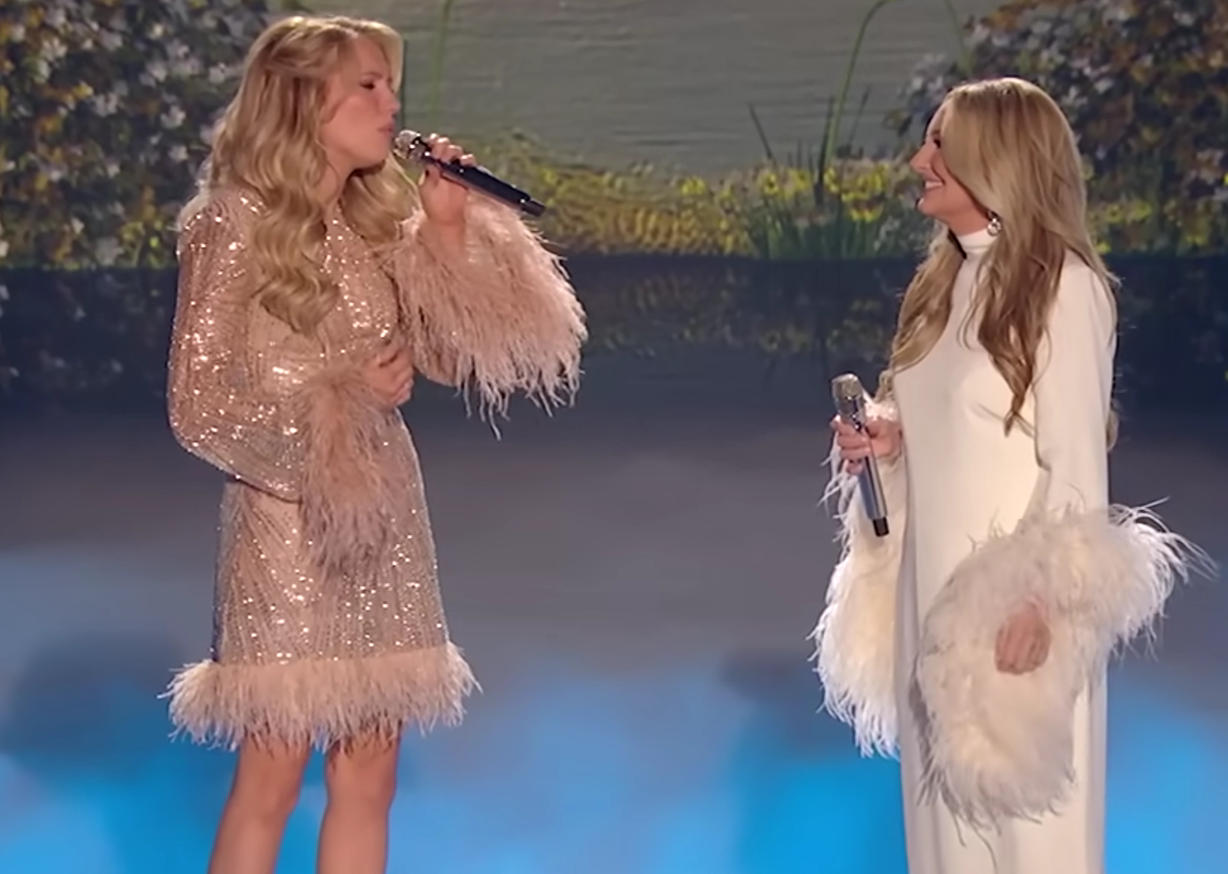
The American Idol finale has seen many memorable performances over the years, but this time, the stage became something far greater than a competition. When Hannah Harper stepped out alongside Lee Ann Womack for a rendition of “I Hope You Dance,” the atmosphere shifted instantly. What followed was not just a duet—it was a moment that felt suspended in time, as if the entire world had briefly stopped to listen.
From the very first note, the energy in the room changed. The usual finale intensity gave way to stillness, a rare kind of silence that only appears when something truly emotional is unfolding. Fans in the audience stopped reacting, phones lowered, and even the production lights seemed to fade into the background as the voices took over.
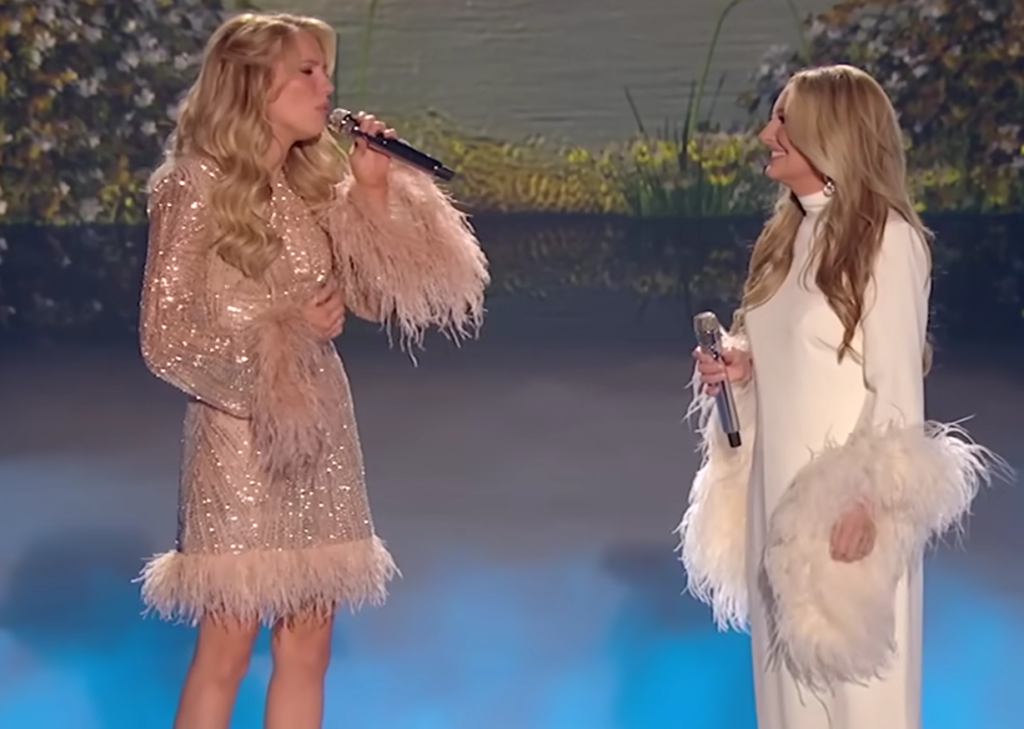
What made the performance so powerful was the contrast between generations. Lee Ann Womack carried the weight of legacy, the original voice of a song that has lived in hearts for decades. Standing beside her, Hannah Harper brought a fresh emotional clarity that felt both respectful and newly alive, creating a bridge between past and present through music alone.
As the duet progressed, it became clear this was not about vocal competition or technical perfection. It was about storytelling. Every lyric of “I Hope You Dance” felt reimagined, as if the song was being heard again for the first time through a shared emotional lens rather than a single voice.
Viewers watching from home quickly took to social media, struggling to put into words what they had just experienced. Many described chills, tears, and silence of their own while watching the performance. Some called it the emotional peak of the entire season, while others went even further, labeling it one of the most powerful live television moments in recent memory.
Critics echoed similar sentiments, pointing out that the performance succeeded not because of spectacle, but because of restraint. There were no flashy production tricks or overwhelming arrangements—just two voices carrying a message that resonated far beyond the stage itself.
For Hannah Harper, the moment also marked a symbolic step in her journey as an artist. Winning American Idol already placed her in the spotlight, but sharing a stage with an established icon like Lee Ann Womack elevated her presence in a different way. It positioned her not just as a contestant-turned-winner, but as someone capable of standing alongside legends.
Lee Ann Womack’s presence added a layer of authenticity that grounded the performance in its original emotional intention. Known for her deeply expressive style, she brought a quiet authority to the stage that complemented Hannah’s rising artistry rather than overshadowing it. Together, they created balance rather than contrast.
As the final notes faded, the silence that followed was almost as powerful as the performance itself. The audience did not erupt immediately; instead, there was a brief pause, as if everyone needed a moment to return to reality after what they had just witnessed.
That lingering silence became part of the story. In a world filled with constant noise, viral moments, and instant reactions, this performance demanded stillness. It reminded viewers that music at its core is not always about volume or spectacle, but about connection and meaning.
Social media platforms quickly amplified the moment, with clips circulating alongside emotional reactions and personal reflections. Many fans revisited their own memories connected to the song, proving how deeply music can embed itself into individual life stories across generations.
Industry observers have already begun calling the duet a defining moment for the season, not just for its emotional impact, but for what it represents about collaboration in modern music. When artists from different eras come together with mutual respect, something timeless can emerge.
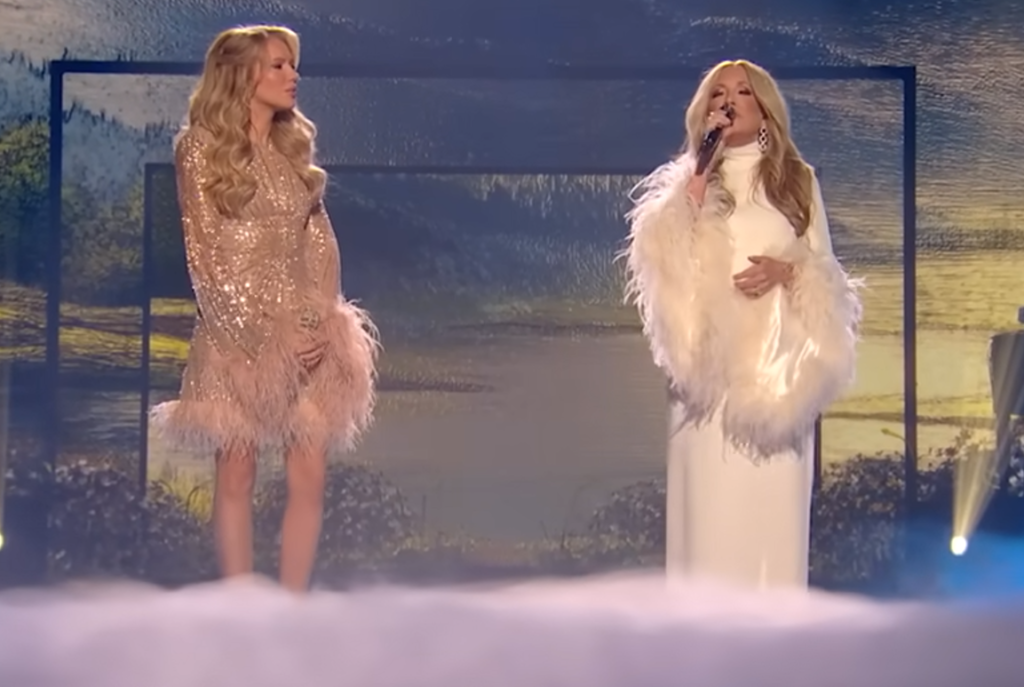
For Hannah Harper, the performance may ultimately become one of the defining highlights of her early career. For Lee Ann Womack, it served as a reminder of the enduring power of her signature song. And for viewers, it became something even more rare—a shared emotional experience that transcended the format of television itself.
In the end, what made the moment unforgettable was not just the song or the voices, but the feeling it left behind. And as fans continue to replay the performance, one question continues to echo quietly through every discussion: when music reaches this level of emotion, is it still just a performance—or something far closer to a memory being created in real time?