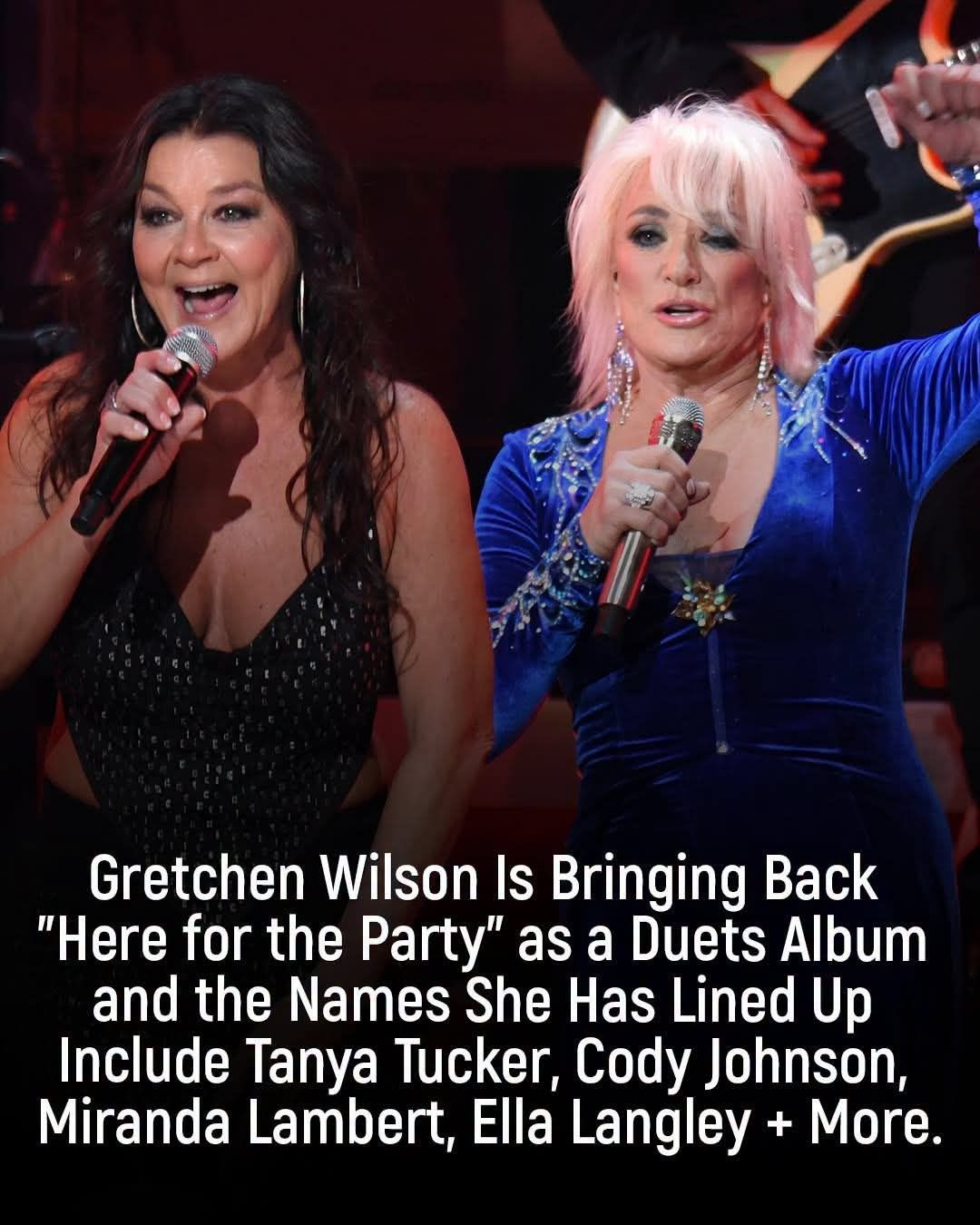
For most artists, revisiting a breakthrough album is an exercise in nostalgia. It is a chance to relive a moment, celebrate old successes, and remind listeners why those songs mattered in the first place. But Gretchen Wilson appears to be aiming for something much bigger. With her decision to reimagine Here for the Party through a series of high-profile duets, she is not simply reopening a chapter of her career—she is rewriting it.
When Here for the Party first exploded onto the country music scene, it arrived with an energy that felt impossible to ignore. The album was unapologetic, bold, and deeply authentic. Wilson didn’t just sing about working-class life; she embodied it. Her voice carried grit, confidence, and a sense of lived experience that instantly connected with millions of listeners. More than two decades later, those songs still hold weight, but now they are being viewed through an entirely different lens.
The concept behind this reinvention is fascinating because it balances preservation with transformation. Rather than replacing the original recordings, Wilson is expanding them. Every duet creates a conversation between generations, styles, and perspectives. The songs remain familiar, yet they gain new dimensions through the voices that join them.
Perhaps no collaboration captures that spirit more naturally than “Redneck Woman” featuring Tanya Tucker. On paper, it feels like a perfect match. Both artists built careers on refusing to fit into neatly defined expectations. They have always represented a fearless side of country music, one that values honesty over polish and attitude over approval. Together, they turn an already iconic anthem into something that feels even larger than before.
Then there is Cody Johnson stepping into “When I Think About Cheatin’.” The pairing introduces a different kind of chemistry. Johnson’s traditional country sensibilities blend with Wilson’s emotional storytelling, creating a version of the song that feels both fresh and timeless. Instead of competing with the original, the duet offers listeners another way to experience the heartbreak and vulnerability at the center of the track.
What makes this project particularly compelling is the caliber of artists involved. Miranda Lambert, Travis Tritt, Ashley McBryde, and Ella Langley are not merely guest appearances added for attention. Each artist brings a unique identity and musical history that can reshape the emotional texture of a song. Their contributions transform familiar tracks into collaborative experiences rather than simple reproductions.
For fans, that creates a rare kind of anticipation. Usually, listeners know exactly what to expect when an album is re-recorded. This time, every duet introduces an element of surprise. How will the personalities blend? Which songs will take on entirely new meanings? What moments will emerge when two powerful voices share the same story? Those questions become part of the listening experience itself.
At its core, the project also reflects something deeper about legacy. Many artists spend years protecting their most celebrated work from change. Wilson appears willing to do the opposite. By inviting others into these songs, she is acknowledging that great music evolves alongside its audience. The tracks that once defined her career are now becoming shared pieces of country music history.
Yet amid all the collaborations and creative experimentation, one song remains untouched. “Pocahontas Proud” stands alone. In an album built around partnership, its solitude feels deliberate. The decision immediately draws attention because it contrasts so sharply with everything else happening around it. While other songs are being expanded through new voices, this one remains exactly where Wilson left it.

That choice may reveal more than any duet ever could. Some songs carry stories that are too personal to reinterpret. Some truths belong to a specific moment, a specific memory, or a specific voice. By leaving “Pocahontas Proud” unchanged, Wilson may be signaling that certain parts of her journey are meant to remain unfiltered and entirely her own.
As excitement continues to build around the project, fans are finding themselves pulled between celebration and curiosity. The star-studded collaborations promise a thrilling new chapter for a beloved album, but the untouched song at its center raises an equally powerful question. While listeners eagerly wait to hear how these classics have evolved, many are beginning to wonder whether the album’s biggest story is not hidden within the duets at all—but within the one track Gretchen Wilson chose not to change.