There are nights in music history that don’t just fill stadiums—they redefine what a live performance can mean. George Strait’s return to Clemson’s Memorial Stadium on May 2 became one of those rare moments, where legacy, scale, and cultural weight collided under a single spotlight in “Death Valley.”
For fans in attendance, this was not just another concert date on a tour schedule. It was a return decades in the making, marking Strait’s first performance at the venue in 27 years. That gap alone carried emotional weight, turning anticipation into something closer to collective memory waiting to be reopened.
When the final attendance figure was announced—90,037 fans—it didn’t just signal a packed stadium. It marked a historic milestone. The King of Country had officially shattered the all-time attendance record at Clemson’s Memorial Stadium, surpassing even the largest football crowds the venue had ever hosted.
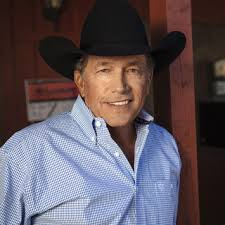
Part of what made the night extraordinary was the staging itself. By introducing an “in-the-round” setup and extending seating onto the field, the concert transformed the stadium into a fully immersive space. Instead of distance between artist and audience, there was proximity on all sides, reshaping how the performance was experienced.
That design choice was more than logistical—it was symbolic. It reflected the kind of career George Strait has built: steady, centered, and surrounded by an audience that has never truly drifted away. Even in a venue known for roaring football crowds, this night belonged entirely to music.
As the performance unfolded, the scale of the audience became part of the experience itself. Tens of thousands of voices moved in sync, not just reacting to songs, but participating in them. The atmosphere felt less like a traditional concert and more like a shared cultural gathering.
What stood out most was how effortlessly Strait commanded that space. There was no need for dramatic reinvention or spectacle-driven reinforcements. His presence alone anchored the entire stadium, a reminder of why longevity in country music often depends on consistency rather than reinvention.
The significance of this show extended beyond South Carolina. Officially, it became the largest concert George Strait has ever performed outside of Texas—a detail that quietly reinforces just how deeply rooted his connection remains with audiences far beyond his home state.
Yet despite the scale, the essence of the night remained grounded. Songs that have defined decades of country music history carried the same emotional weight they always have, proving that time does not dilute connection when the foundation is strong.
There is also something notable about how moments like this reshape perception. Attendance records are numerical, but what they represent is far more human: loyalty, nostalgia, and the ability of music to gather generations in a single shared space.

For many in the crowd, this wasn’t just about seeing a legendary artist perform. It was about participating in a living chapter of country music history, one that continues to grow long after most artists would have stepped away from stadium-scale stages.
As the final echoes of the night settle into memory, one truth becomes difficult to ignore. George Strait’s influence is not measured solely in awards or catalog depth, but in the scale of presence he continues to command across decades.
And as this historic night in Clemson fades into the record books, it leaves behind a lingering question—if a 27-year return can produce a moment this massive, what else is still possible when the King of Country steps onto a stage next time?