There are moments in country music history that feel less like industry milestones and more like cultural turning points. One of those moments arrived in 1987 when three of the genre’s most respected voices—Dolly Parton, Emmylou Harris, and Linda Ronstadt—came together for a project that would quietly reshape expectations forever. Their collaboration was not built on competition or spectacle, but on mutual respect, shared artistry, and a belief that great music becomes even greater when voices unite instead of stand apart.
The result was the Trio album, a record that didn’t just succeed commercially but earned critical acclaim, including a Grammy Award for Best Country Performance by a Duo or Group. More importantly, it became a symbol of artistic collaboration done right. Each woman was already a star in her own right, yet together they created something that felt timeless. The album stood as proof that strength in music does not require isolation—it can thrive in harmony.
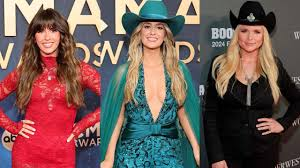
What made Trio so influential was not only its sound but its spirit. At a time when the music industry often positioned women as competitors, Dolly, Emmylou, and Linda chose a different narrative. They showed that success did not have to come at the expense of someone else’s rise. Instead, it could be shared, amplified, and celebrated collectively. That message echoed far beyond country music, influencing generations of artists who followed.
Decades later, a new wave of country women appears to be carrying that same energy forward. Miranda Lambert, Lainey Wilson, and Ella Langley are not officially a trio in the traditional sense, but their connections tell a story that feels strikingly familiar. It is a story built not on formal collaboration alone, but on mentorship, encouragement, and moments of quiet support that shape careers in powerful ways.
Miranda Lambert, already established as one of country music’s defining voices, has played a pivotal role behind the scenes in nurturing emerging talent. Her involvement in co-writing “Choosin’ Texas” and co-producing Ella Langley’s Dandelion project before Langley became widely recognized speaks volumes about her willingness to invest in the next generation. It is not simply collaboration—it is belief placed into action.
Lainey Wilson’s connection to Lambert adds another layer to this evolving narrative. There is something deeply symbolic about an artist who once looked up to industry leaders now finding herself in creative spaces alongside them. The story of Wilson arriving at Miranda’s farm exhausted and leaving with a hit song has become a modern reflection of how artistic relationships can transform into defining career moments. It is in those informal, unglamorous spaces that some of the most meaningful music is born.
Then there is Ella Langley, whose rise has been shaped not only by her own talent but by the environment created around her. Performing alongside established names and sharing stages at events like HARDY’s charity performance of “Girl Crush” has positioned her within a growing network of support rather than competition. Each appearance becomes less about hierarchy and more about shared momentum.
What ties these women together is not a formal group or marketing strategy. It is something far more organic. It is the choice to show up for one another in an industry that often emphasizes comparison. Whether through songwriting sessions, shared performances, or quiet encouragement behind the scenes, their interactions reflect a culture shift that feels both intentional and natural.
In many ways, the comparison to Dolly, Emmylou, and Linda is not about replication—it is about reflection. The same values that shaped Trio are resurfacing in a new generation: collaboration over competition, unity over isolation, and artistry over ego. While the faces and sounds may have changed, the underlying message remains remarkably consistent.
Country music has always been rooted in storytelling, and perhaps this is one of its most compelling ongoing stories. It is the story of women who rise individually but choose to elevate each other along the way. It is the story of mentorship that does not end when success arrives but expands because of it. And it is the story of influence passing quietly from one generation to the next.
What makes this moment particularly intriguing is that it is still unfolding. There is no official album tying Miranda Lambert, Lainey Wilson, and Ella Langley together—at least not yet. But the creative energy surrounding them suggests that something meaningful is already in motion. The connections are real, the collaborations are happening, and the support system is visible to anyone paying attention.
As country music continues to evolve, it often returns to its most powerful foundation: authenticity. And authenticity, in this case, is not only found in lyrics or melodies but in relationships between artists. The willingness to uplift others while building one’s own career may be one of the most enduring legacies in the genre.
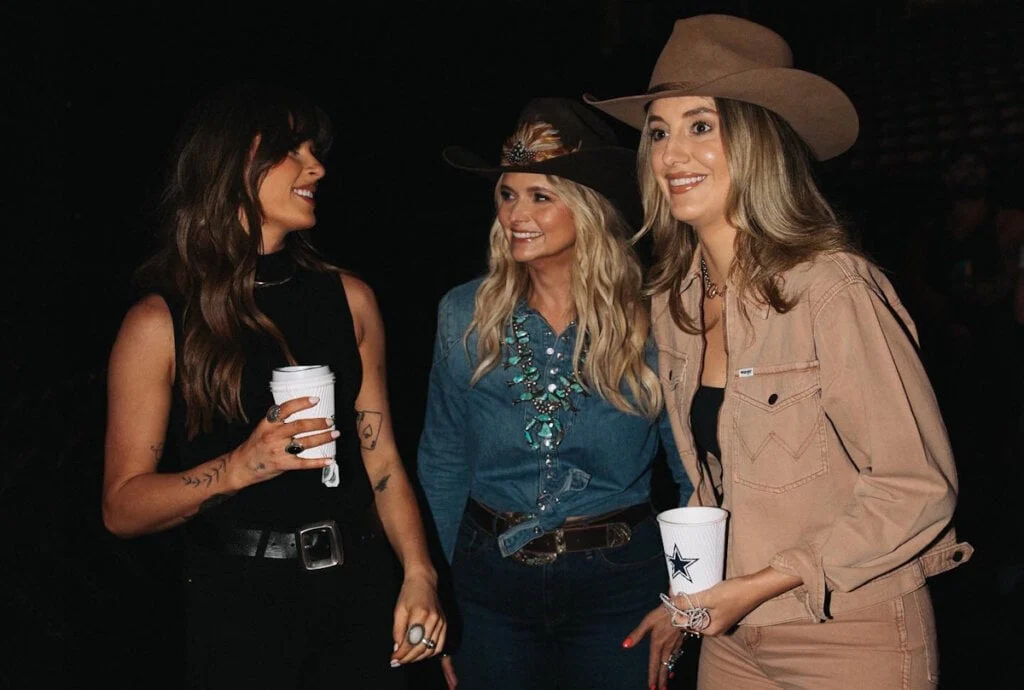
So when listeners look back years from now, they may see this era as more than just a collection of individual successes. They may recognize it as a period where the spirit of Trio quietly reemerged in a different form. Not as a replication of the past, but as a continuation of its philosophy.
Country music might not be witnessing a literal sequel to Trio, but something just as meaningful could already be taking shape. And if history is any indication, when women in Nashville choose collaboration over competition, the entire genre shifts with them.