
“ALL THOSE NIGHTS OF OPENING STRING CHEESE FOR THE KIDS… SOMEHOW LED TO THIS.” Hannah Harper’s American Idol 2026 journey didn’t begin under stage lights. It began in the quiet chaos of motherhood—between sleepless nights, postpartum exhaustion, and the invisible weight of responsibilities that rarely make it into songs. Yet somehow, those everyday moments became the foundation for a performance that would stop an entire nation in its tracks and redefine what a victory moment can feel like.
When Hannah stepped onto the stage that night, she wasn’t just another finalist chasing a dream. She was a mother carrying years of unspoken fatigue, resilience, and quiet strength. The song she chose didn’t sound like a typical competition piece. It felt lived-in, almost like a diary entry set to music. Every lyric carried fragments of real life—forgotten meals, tiny snack requests, and the emotional tug-of-war between identity and responsibility.

What made the performance so powerful wasn’t perfection. It was honesty. The kind of honesty that doesn’t try to impress, but simply to exist. As Hannah sang, the arena slowly changed. Conversations faded. Phones lowered. Even the judges seemed locked into something deeper than scoring a performance. It wasn’t just music anymore—it was recognition. Recognition of every parent who has ever felt invisible while holding everything together.
By the middle of the song, something remarkable was already happening. The energy in the room shifted from observation to emotional immersion. Audience members weren’t just watching Hannah; they were feeling with her. The lyrics about surviving everyday chaos suddenly became universal. People saw their own lives reflected back at them in unexpected ways, and that connection built a silence louder than applause.
And then came the moment that changed everything. Ryan Seacrest stepped forward, the tension in the room thick enough to feel like time had slowed. One announcement. One name. A breath held across millions of viewers watching at home. Hannah Harper. The words didn’t just declare a winner—they released a wave of emotion that had been building all season long.
The instant her name was called, confetti erupted across the stage like a storm of color and disbelief. But Hannah didn’t react with immediate celebration. Instead, she broke down. The weight of the journey, the years of struggle, and the quiet sacrifices she had made all surfaced at once. It wasn’t a controlled television moment. It was raw, unfiltered humanity unfolding in real time.
In the crowd, her family watched in stunned silence before emotions finally overtook them. The same people who had seen her in the hardest moments—late-night routines, exhaustion masked as routine strength, dreams postponed for survival—were now witnessing her transformation into America’s newest Idol. The contrast was almost too much to process. A mother who once sang through chaos was now standing at the center of it.
What made this victory resonate far beyond the stage was its relatability. Hannah wasn’t a distant, untouchable star. She was a reflection of everyday life—of people who sacrifice their own aspirations to hold everything else together. Her win felt less like a surprise and more like recognition. As if the world had finally paused long enough to say, “We see you.”
Social media erupted almost instantly. Fans didn’t just celebrate her win; they shared their own stories. Parents, especially mothers, connected deeply with the emotional weight behind her journey. Many described watching her performance as unexpectedly healing, as if she had given voice to feelings they had never been able to express out loud.
Industry voices also began to take notice of what Hannah’s victory represented. It wasn’t just about vocal ability or stage presence—it was about narrative authenticity. In a world saturated with polished performances, her honesty became her defining strength. She didn’t just perform a song; she translated lived experience into art that people could feel in their own lives.
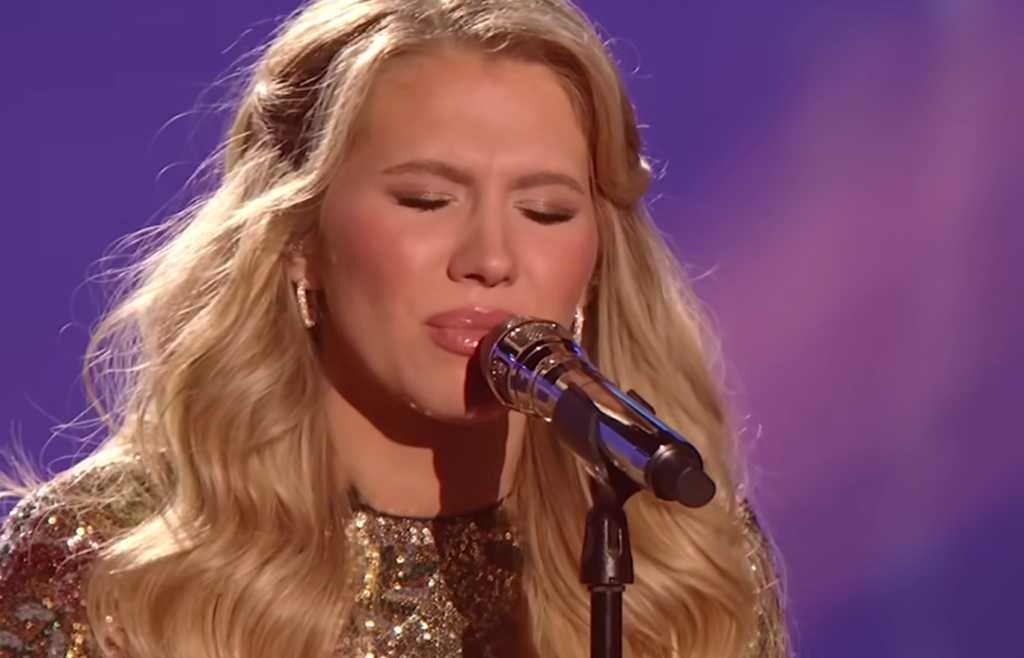
As the finale settled into history, one truth lingered above everything else. Hannah Harper’s win wasn’t built on spectacle. It was built on truth. The truth of motherhood, exhaustion, resilience, and quiet endurance that rarely gets center stage. And in that moment, those truths were not only seen—they were celebrated.
When the lights dimmed and the stage cleared, what remained was more than a winner’s announcement. It was a reminder that some of the most powerful voices come from the most overlooked places. Hannah’s journey showed that even in the middle of chaos, dreams don’t disappear—they simply wait for the right moment to be heard.
And as her story moves beyond American Idol, one question now lingers in the air, quiet but impossible to ignore—what happens when a voice like hers is finally given the space to sing without limits?