On September 9, 1956, something unusual happened in American television history. While millions tuned in expecting the familiar New York stage of “The Ed Sullivan Show,” Elvis Presley appeared from an entirely different location — CBS Television City in Los Angeles. It was a quiet production adjustment on paper, but in reality, it marked one of the most important moments in the rise of a cultural revolution.
At the time, Elvis was not just performing. He was in the middle of filming “Love Me Tender,” which made it impossible for him to travel to New York. Instead of delaying the appearance or changing plans entirely, the decision was made to broadcast his performance live from California. What seemed like a logistical compromise would soon become a defining moment in entertainment history.
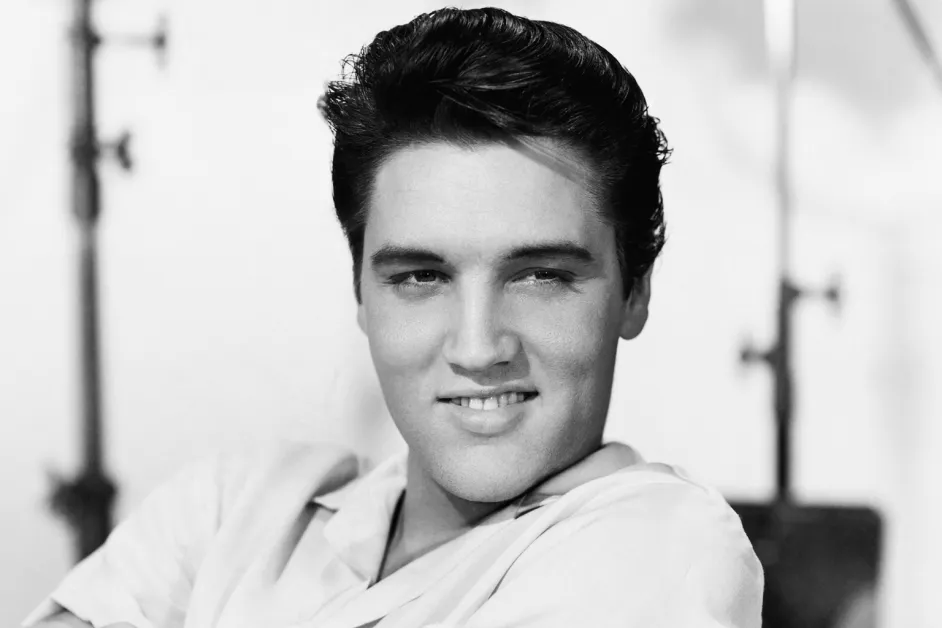
There was already a sense that Elvis was different from anything television had seen before.
By 1956, his rise had been rapid and almost overwhelming. Teenagers adored him, critics debated him, and television producers were still trying to understand how to present him to a national audience. “The Ed Sullivan Show” was one of the most powerful platforms in America at the time, capable of turning performers into household names overnight. Elvis, however, did not need introduction — he already felt like a phenomenon in motion.
CBS Television City, usually a production hub rather than a symbol of cultural transformation, suddenly became the center of that phenomenon. Inside those studios, Elvis performed with the same energy that had already begun redefining popular music. Even though the physical setting was different from the iconic New York stage audiences expected, the impact remained unmistakably powerful.
What made this performance especially significant was not just where it happened, but what it represented.
Television in the 1950s was still a relatively young medium. Most live broadcasts were tightly controlled, carefully staged, and geographically centralized. Elvis performing from Los Angeles while being part of a New York-based broadcast signaled something new — entertainment was becoming national in a more fluid, connected way. Distance no longer diluted presence. Performance could reach everywhere at once.
And Elvis, knowingly or not, became the face of that shift.
For viewers watching at home, none of the logistical details mattered. What they saw was a young performer who carried an intensity that felt almost uncontrollable. His movements, voice, and stage presence had already sparked controversy and admiration in equal measure. Parents debated his influence, while teenagers saw in him something that felt fresh, rebellious, and deeply personal.
The “Ed Sullivan Show” appearance itself had been highly anticipated. Sullivan had initially expressed hesitation about booking Elvis due to concerns about his performance style. However, audience demand was impossible to ignore. By the time September arrived, expectations had reached a national scale. Everyone wanted to see what Elvis Presley would do next.
And even from Los Angeles, he delivered exactly what people expected — and feared.
His performance carried a kind of electricity that television cameras struggled to contain. The simplicity of the studio setup did not reduce his impact. If anything, it intensified it. Without elaborate staging or distractions, the focus remained entirely on Elvis himself, and that was more than enough to captivate viewers across the country.
What is often overlooked about this moment is how it reflects the intersection of three forces: rising celebrity culture, the expanding reach of television, and the unpredictable nature of youth-driven music. Elvis stood at the center of all three. He was not just performing on a show — he was helping reshape what television entertainment could look like.
In hindsight, this appearance also highlights how quickly the entertainment industry was evolving. A performer could now be filmed in one city, broadcast from another, and watched simultaneously across an entire nation. That idea, which feels ordinary today, was still relatively new in 1956. Elvis unintentionally became part of that technological and cultural shift.
Meanwhile, the filming of “Love Me Tender” added another layer to the moment. Elvis was balancing film work and live performance at a scale few artists had ever experienced. This dual presence — film star and television sensation — reinforced his growing status as a multi-platform cultural figure. He was no longer confined to one medium. He was everywhere at once.
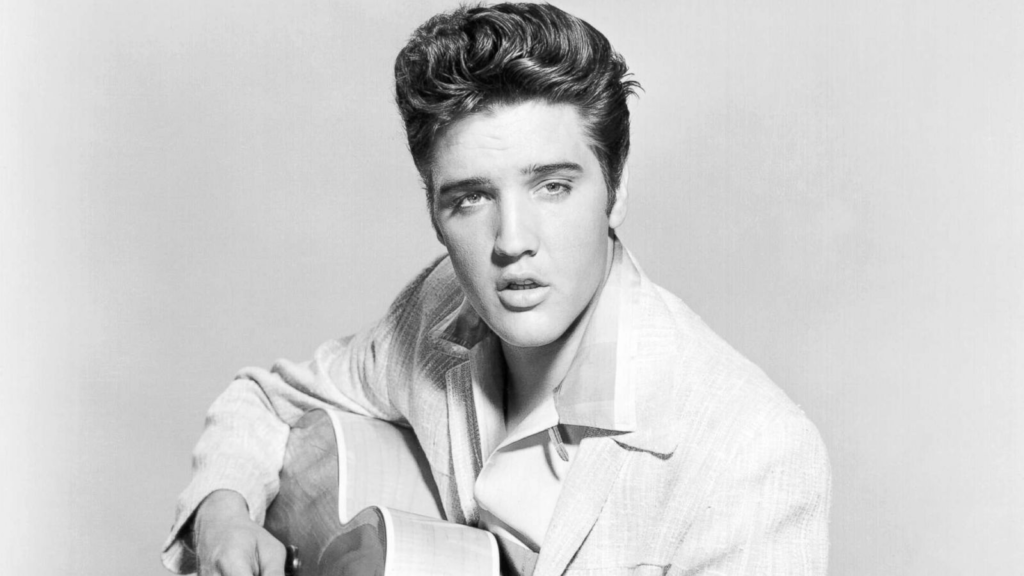
For fans who witnessed that broadcast, the memory has only grown more significant with time. It represents not just a performance, but a snapshot of a turning point. A moment when entertainment stopped being local and started becoming national in real time, driven by a single performer whose influence was still expanding.
Today, when people look back at Elvis at CBS Television City on that September night, they are not just recalling a live appearance. They are revisiting the moment a young artist began transforming into something larger than music — a symbol of cultural change.
And even now, one question continues to echo through that historic broadcast…
What exactly did America realize it was witnessing that night — before the world even had a name for it?