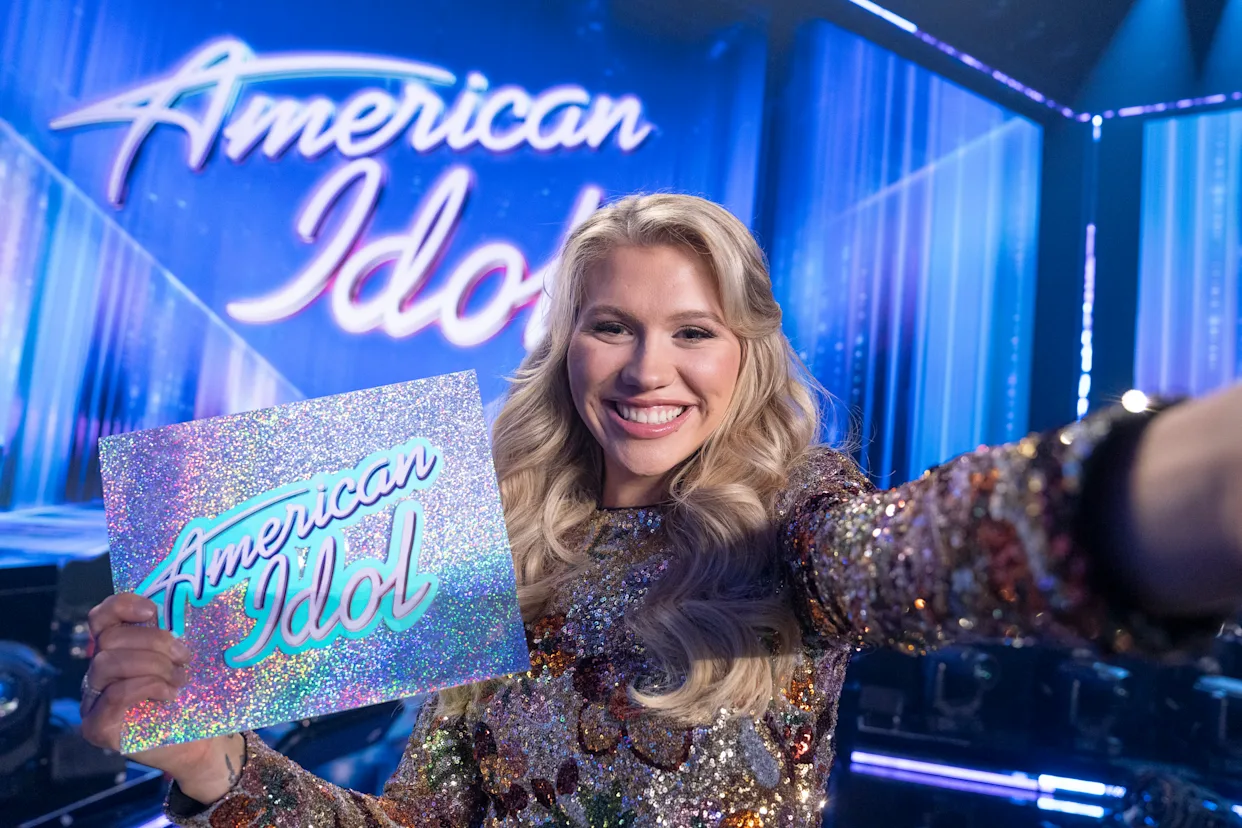
When the lights dimmed for Hannah Harper’s final performance on American Idol, something unusual happened inside that studio. The audience was cheering, the judges were smiling, and the cameras were moving exactly the way they always do during a finale — yet the atmosphere felt completely different. It no longer felt like television trying to create emotion. It felt like emotion creating television. Every reaction in the room seemed genuine, almost uncontrollable, as if people understood they were witnessing something much larger than a contestant singing for votes.
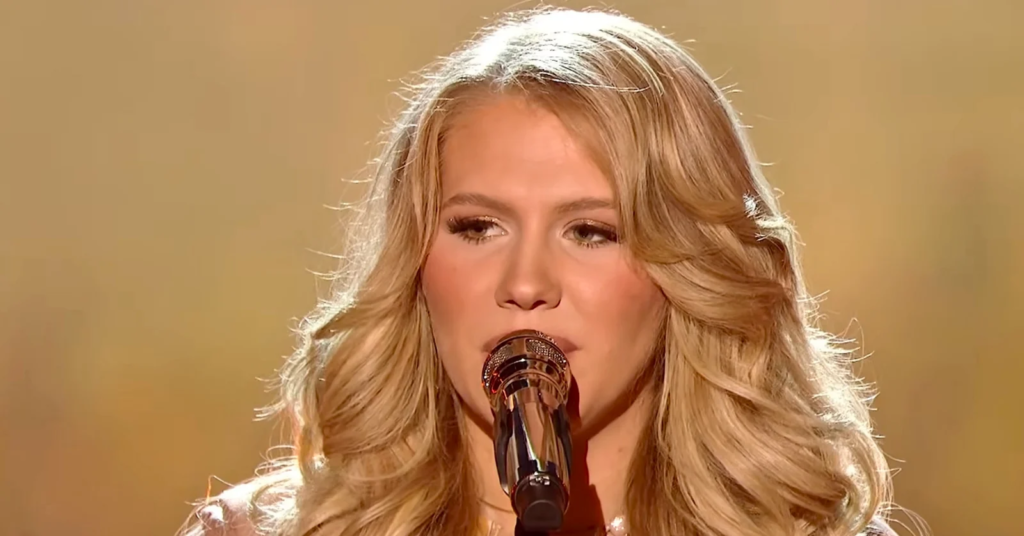
From the very first note, Hannah carried herself with a kind of emotional honesty that modern entertainment rarely allows anymore. She wasn’t trying to sound perfect. She wasn’t performing like someone desperate to impress executives or dominate social media trends. Instead, she looked like someone standing in the middle of her own story, singing every lyric as if it had already lived inside her for years. That authenticity changed the energy of the entire finale within minutes.
What made the moment even more powerful was the visible reaction from the judges. Throughout the season, they had praised Hannah’s vocals, storytelling, and emotional delivery, but the finale felt different. Their expressions looked heavier, more reflective, almost emotional in a personal way. It was as if they were no longer judging a contestant anymore. They were realizing, in real time, that country music may have just found a voice capable of carrying an entirely new generation forward.
Fans immediately noticed the shift online. Social media stopped sounding like ordinary reality-show commentary and started feeling deeply emotional. Viewers weren’t just discussing vocal technique or song choices anymore. They were talking about family, memories, struggle, faith, heartbreak, and healing. Hannah Harper somehow created the kind of connection artists spend entire careers chasing. People didn’t simply watch her perform — they saw themselves inside the performance.
Part of what makes Hannah’s rise feel so important is how naturally she represents a version of country music many listeners have been missing. In an era where audiences often feel overwhelmed by polished branding and manufactured personalities, Hannah arrived with something quieter but far more powerful: sincerity. She reminded people of why they fell in love with country music in the first place. Not because it looked glamorous, but because it felt human.
There was also something symbolic about the way the audience responded during the finale. The applause didn’t sound forced or routine. By the final chorus, the room seemed emotionally overwhelmed. People were standing, crying, shouting lyrics back toward the stage, and staring at Hannah with the kind of admiration usually reserved for artists who have been famous for decades. For a brief moment, the competition itself almost disappeared. The atmosphere transformed into something that felt closer to a passing of the torch.
What truly separated Hannah from many previous finalists was her ability to make vulnerability look powerful instead of fragile. She never came across as someone trying to become a star overnight. Instead, she felt like someone carrying years of personal experiences into every performance. That emotional weight gave her voice depth that audiences could instantly recognize. Viewers trusted her because nothing about her seemed artificial.
Even people who normally avoid talent competitions found themselves paying attention to this finale. Clips of Hannah’s performances spread rapidly because the emotion translated beyond the show itself. You didn’t need to follow American Idol to understand why the moment mattered. There was a rawness in her delivery that crossed generations. Older country fans heard echoes of classic storytelling traditions, while younger listeners saw an artist who still felt relatable in today’s world.
The most fascinating part of Hannah Harper’s victory is that it didn’t feel like a manufactured industry moment. Usually, reality television endings are designed around spectacle — confetti, dramatic pauses, giant reactions. But Hannah’s finale became memorable because of its emotional stillness. The room seemed quieter in spirit, almost reflective, like everyone collectively realized they were watching the beginning of something impossible to fully explain yet.
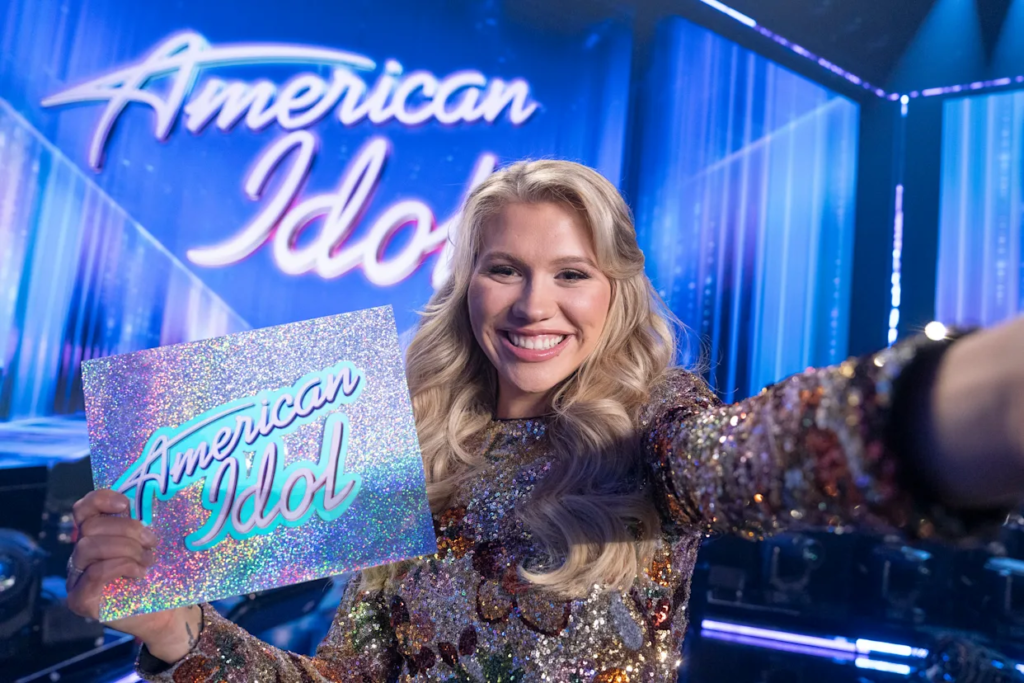
By the end of the night, fans no longer viewed Hannah Harper as just the newest American Idol winner. To many people, she represented the emotional direction country music has been searching for. Not louder. Not trendier. Just more real. Her voice carried warmth, pain, hope, and honesty all at once, and audiences responded to that authenticity immediately.
Now the conversation surrounding Hannah is becoming much bigger than a television show. Fans are beginning to wonder whether this finale will eventually be remembered as the exact moment country music emotionally shifted toward a new era. Because sometimes an artist does more than win a competition. Sometimes they walk onto a stage and quietly remind an entire genre what it was always supposed to feel like.