
Hannah Harper’s American Idol story has now reached a stage where emotion, pressure, and expectation collide in a way few contestants ever experience. She is no longer introduced as just the girl with a touching audition or the hopeful tour bus mom chasing a distant dream. She is standing firmly at the doorstep of the Final 3, where every note carries the weight of everything she has survived so far in the competition.
What continues to pull viewers into her journey is not simply technical vocal ability, but the emotional narrative that surrounds it. Fans have watched Hannah fall, rebuild, and rise again more times than they can count. Each performance feels like another chapter in a story shaped by struggle and persistence, creating a bond between artist and audience that goes far beyond a typical reality show journey.

The phrase “Resurrection Rock” has followed her throughout the season, but it has now evolved into something much deeper than a nickname. It represents a pattern that fans have come to recognize — moments where Hannah seems knocked down by pressure or doubt, only to return stronger, more focused, and more emotionally connected to her performances than before. That cycle has become the foundation of her identity on the show.
Yet this is exactly where her journey becomes more fragile than ever. In competitions like American Idol, emotional momentum can shift quickly, and public perception often plays a role just as important as performance itself. When a contestant becomes widely loved, audiences sometimes assume safety without realizing how quickly voting outcomes can change in a single night.
The danger in that assumption is what makes this stage of Hannah’s journey so intense. Fans begin to believe support is guaranteed, while the reality of live voting remains unpredictable. Every week resets the competition, and even the strongest emotional connection does not replace the need for active engagement from viewers.
This is the point in the season where anticipation often turns into tension. Supporters are reminded that no contestant is ever truly secure until the results are announced. In past seasons of similar competitions, unexpected eliminations have often shocked audiences who assumed their favorites were safe. That uncertainty now hangs over every remaining performance.
For Hannah, however, this moment also carries enormous potential. If she advances into the next round, she is positioned to deliver one of the most defining performances of her entire journey. Her ability to take vulnerability and transform it into power has already become one of her strongest traits on stage. That emotional depth is what makes her performances linger long after the music ends.
Many fans believe that if she continues forward, Hannah has the ability to channel everything she has experienced into a performance that feels almost unstoppable. It would not just be about hitting the right notes — it would be about telling a story that reflects everything she has overcome, from doubt and pressure to resilience and rediscovery.
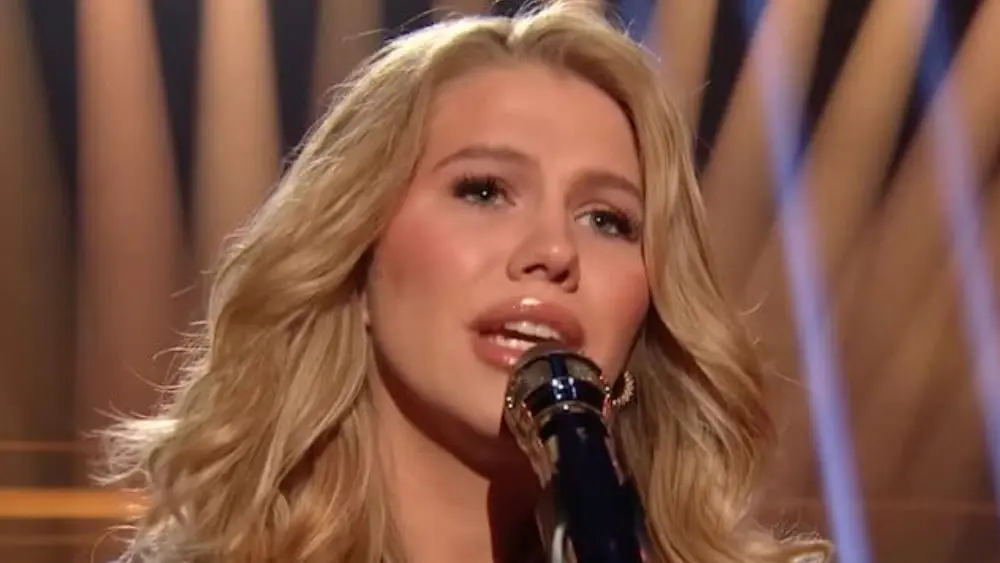
That is why her journey has sparked such strong reactions online. Viewers are not only invested in her talent, but in the feeling that she represents something larger — the idea that people can be broken down and still rise stronger each time. This emotional thread is what keeps audiences deeply connected to her story week after week.
Still, as the competition narrows, the stakes grow sharper. Every finalist is now performing not only for judges and audiences, but for moments that could define their entire career trajectory. The margin between advancement and elimination becomes thinner, and every performance carries consequences that extend far beyond the stage.
As the Final 3 approaches, one question continues to echo across fans and social media discussions alike. If Hannah Harper’s journey were to stop here, after everything she has endured and rebuilt, would it feel like an ending — or the beginning of something that was almost fully realized but never completed?