
There’s always a moment in every American Idol season when emotion begins to meet evidence. When the cheers, the tears, the performances, and the personalities start to translate into something measurable. This is that moment. And as the May 4 showdown approaches, the numbers are beginning to whisper a story that fans can no longer ignore.
Because this time, it’s not just about who sounds good.
It’s about who’s breaking through.
Across digital platforms—votes, shares, comments, replay rates, and organic engagement—a pattern has begun to take shape. It’s subtle at first, almost easy to dismiss. But look closer, and the signal becomes clear. Three contestants are not just competing—they’re leading.
And each of them represents something completely different.
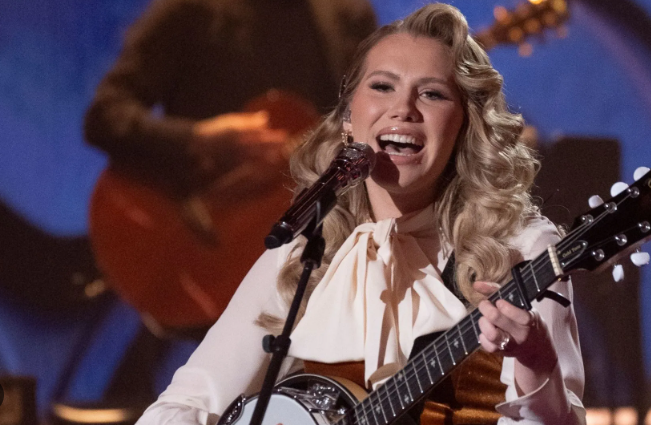
At the center of this analytical surge stands Hannah Harper—the storyteller. Her rise hasn’t been explosive. It hasn’t relied on viral theatrics or overwhelming spectacle. Instead, it’s been steady, almost quiet, built on consistency and emotional clarity.
That’s what makes her dangerous.
In a competition often dominated by high notes and dramatic crescendos, Hannah has carved out a space where simplicity becomes strength. Her acoustic purity isn’t just a stylistic choice—it’s an identity. Each performance feels grounded, intentional, and deeply personal, allowing audiences to connect without distraction.
And the data reflects that.
Her engagement isn’t always the loudest, but it’s among the most loyal. High retention, strong repeat views, and consistent positive sentiment point to something rare: trust. Fans don’t just watch Hannah—they return to her.
Then there’s Jordan McCullough—the performer.
If Hannah builds connection through stillness, Jordan commands attention through motion. His presence on stage is undeniable, almost magnetic. Every performance feels like an event, carefully balanced between technical precision and emotional impact.
And audiences respond immediately.
His metrics are sharp and reactive—spikes in real-time engagement, strong shareability, and high cross-platform visibility. Jordan doesn’t just perform; he creates moments that travel. Clips circulate, conversations ignite, and suddenly, his performances extend far beyond the broadcast itself.
That’s influence.
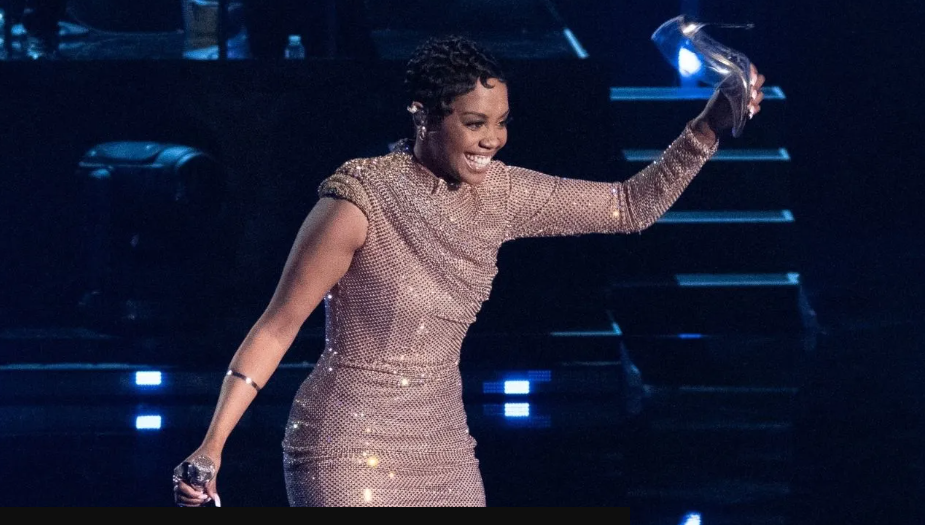
But perhaps the most explosive force in this trio is Keyla Richardson—the powerhouse.
Where others build momentum, Keyla detonates it.
Her performances are engineered for impact—vocally commanding, emotionally charged, and visually unforgettable. She doesn’t just deliver songs; she creates peaks. Moments that demand attention, that compel audiences to react, to share, to amplify.
And the numbers?
They surge.
Viral spikes, rapid engagement growth, and dominant short-form video traction make her one of the most visible contestants in the race. Keyla’s strength lies in immediacy. She captures attention quickly and holds it long enough to turn it into something bigger.
Three artists. Three completely different strategies.
And yet, they’re converging at the same point.
Of course, no analysis would be complete without acknowledging the wildcards. Chris Tungseth and Braden Rumfelt remain unpredictable forces in this equation. Their fanbases are passionate, their performances resonate, and their potential for a late surge is very real.

That’s the nature of this competition.
Because while data can identify trends, it can’t fully capture momentum shifts. It can’t measure the impact of a single breakout performance or the emotional weight of a moment that changes perception overnight.
And Idol thrives on those moments.
Still, the current landscape is difficult to ignore. Organic social media support—arguably the most authentic form of audience engagement—is leaning heavily toward Hannah, Jordan, and Keyla. Not because they’re identical, but because they each fulfill a different audience desire.
Connection. Entertainment. Impact.
Together, they form a kind of balance.
And perhaps that’s what makes this race so compelling. It’s not a battle of similar voices competing for the same space. It’s a collision of distinct identities, each proving that there isn’t just one way to lead.
There are many.
As the finale draws closer, the question isn’t just who will make the Top 3. It’s which kind of artistry will resonate the most when it matters. Will it be the quiet strength of storytelling? The commanding pull of performance? Or the undeniable force of vocal power?
The data suggests one outcome.
But American Idol has never been ruled by numbers alone.
Because sometimes, the biggest moment of the season hasn’t happened yet.
And when it does, everything we think we know could change.