
Ella Langley has just stepped into a space so exclusive it has, until now, belonged only to Taylor Swift. On her 27th birthday, she didn’t just celebrate another year—she cemented a moment in music history that feels both improbable and deeply earned.
To understand the magnitude, you have to look at the numbers. Holding the number one song on the Billboard Hot 100 and the number one album on the Billboard 200 at the same time is rare territory. Doing it within country music makes it even more exceptional.

Swift achieved this feat in 2021 with a project rooted in nostalgia—a reimagining of work fans already held close. Ella’s path, however, carries a different weight. There is no revisiting the past here, no reintroduction. What she’s built is entirely new, entirely her own.
“Dandelion” didn’t just arrive—it dominated. Debuting at number one with massive first-week numbers, it proved that anticipation had been quietly building. The follow-up week confirmed it wasn’t a fluke, but a sustained moment of cultural attention.
At the same time, “Choosin’ Texas” climbed with a steady, undeniable force. Its longevity on the charts speaks less about virality and more about connection. This isn’t a song people visit once—it’s one they return to, again and again.
There’s something striking about how this success has unfolded. No genre blending designed for mass appeal, no calculated crossover into pop spaces. Just country music, presented without compromise, resonating far beyond its expected boundaries.
That authenticity traces back to her roots. Coming from Hope Hull, Alabama, Ella carries a sense of place in her sound. It’s not manufactured for an audience—it’s lived in, shaped by experience, and delivered without dilution.
What makes this moment particularly compelling is its timing. In an era where charts are often driven by trends, algorithms, and strategic collaborations, her rise feels almost defiant. It suggests that there is still room—real room—for music that simply connects.
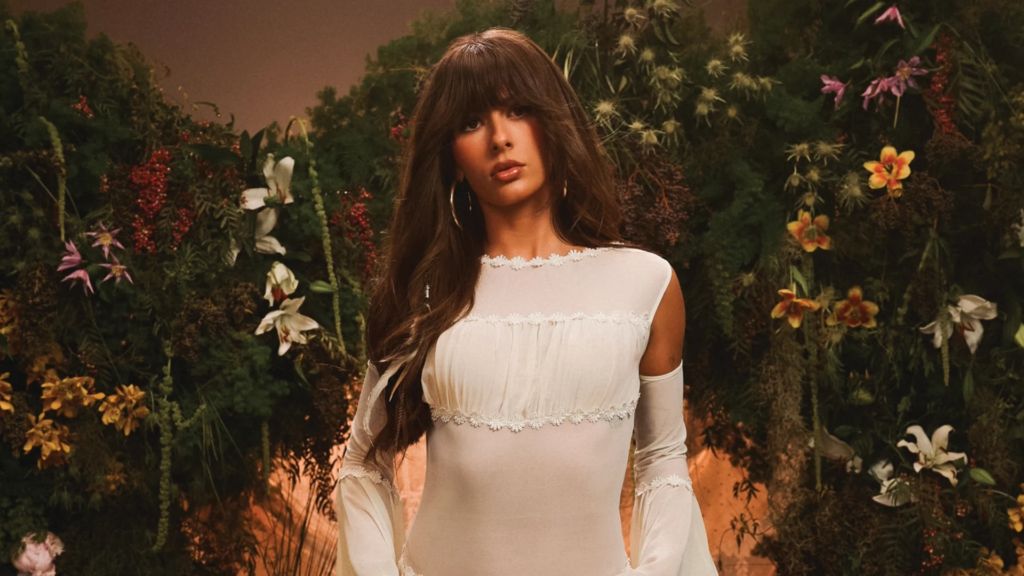
Comparisons to Swift are inevitable, but they only tell part of the story. Where Swift’s achievement reflected the power of reinvention, Ella’s reflects the power of emergence. One revisited legacy; the other is actively building it.
And that distinction matters. Because it reframes the accomplishment not as an echo of something great, but as the beginning of something entirely new.
As the industry watches, one question lingers beneath the celebration: if this is what Ella Langley can achieve at this stage, without compromise or convention, what happens when she decides to push even further?