
In an industry where reinvention is often treated as survival, Hannah Harper stands out for doing something far less predictable. Instead of chasing trends or reshaping herself to match a dominant sound, she has built her identity around staying exactly where she began emotionally—rooted in small-town values that prioritize honesty over imitation.
Nashville, with its towering influence on modern music culture, has shaped countless artists. It offers structure, opportunity, and a blueprint for commercial success. Yet it also carries expectations about how artists should sound, present themselves, and evolve. For many, fitting into that system becomes part of the climb. For Harper, however, fitting in was never the goal.
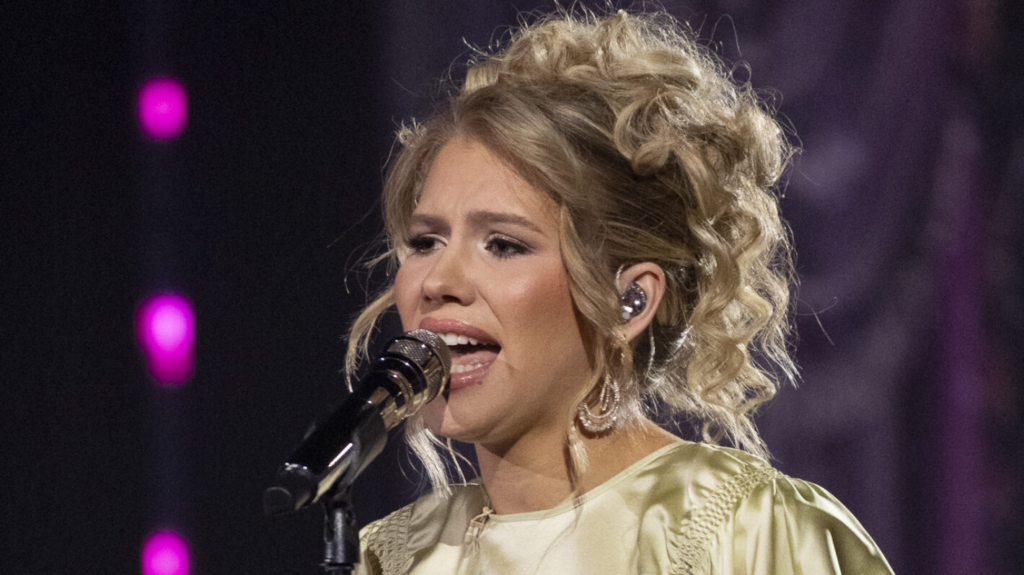
Her approach didn’t come from rejection of the industry, but from clarity about who she wanted to remain. Early in her journey, she understood something many artists only realize after years of experience: identity can either be shaped internally or outsourced to external pressure. She chose the former, even when it seemed slower or less conventional.
Small-town values often carry a simplicity that becomes powerful under pressure. Things like sincerity, consistency, humility, and personal connection don’t always make headlines, but they tend to last longer than trends. Harper’s career strategy appears to be built on exactly that foundation, turning personal grounding into professional direction.
While others leaned into polished reinvention, she leaned into familiarity. Instead of trying to sound like Nashville, she focused on sounding like herself. That decision may appear subtle from the outside, but in creative industries, subtle differences often define long-term trajectories.
There is a quiet courage in refusing to mimic what is already successful. It means accepting that your path might not follow the fastest route upward. It also means trusting that authenticity will eventually find its audience, even if it takes longer to surface. Harper’s journey reflects that kind of patience-driven ambition.
What makes her approach particularly interesting is how it reframes “strategy.” In many careers, strategy is associated with branding, positioning, and calculated adaptation. For Harper, strategy seems to be something more internal—an alignment between personal values and creative output that doesn’t shift depending on external expectations.
That alignment becomes even more important in a place like Nashville, where artistic identity is constantly being refined, reshaped, and tested against commercial benchmarks. The pressure to evolve can be intense, and yet Harper’s refusal to lose her original tone has become part of what sets her apart rather than holding her back.
Audiences often respond to authenticity in ways they cannot always articulate. They may not describe it as “small-town values,” but they recognize when something feels grounded. There is a difference between performance that is constructed and performance that feels lived-in. Harper’s work appears to sit firmly in the latter category.
Over time, this consistency begins to function as a kind of quiet branding. While others may shift styles or experiment with reinvention cycles, she reinforces a recognizable emotional signature. That reliability can become a powerful form of trust between artist and audience, especially in a landscape saturated with constant change.
It is easy to assume that success requires adaptation to dominant systems, but Harper’s path suggests another possibility: that long-term impact can come from resisting over-adaptation. Instead of becoming a reflection of her environment, she treats her environment as something she moves through without losing her center.
This doesn’t mean she is static. Growth is still present, but it appears to be guided by internal evolution rather than external imitation. The difference may sound subtle, but in practice it shapes everything from artistic choices to public perception. Growth without identity loss becomes the underlying principle.
One of the most compelling aspects of her approach is that it redefines what it means to “fit” into an industry like Nashville. Rather than trying to meet every expectation, she filters expectations through her own foundation. In doing so, she changes the question from “How do I fit in?” to “What should I keep unchanged?”
That shift can be difficult in environments where comparison is constant. When surrounded by artists who are constantly evolving their image or sound, staying consistent can feel like swimming against the current. Yet consistency, when rooted in conviction, often creates its own form of momentum.
For Harper, small-town values are not a nostalgic reference point—they are a working framework. They influence how she makes decisions, how she approaches collaboration, and how she defines success. Instead of treating them as something to outgrow, she treats them as something to build on.
In many ways, her career challenges the assumption that sophistication in the entertainment world requires distancing oneself from origins. She seems to suggest the opposite: that depth can come from staying connected to where you started, even as everything around you expands.

As her journey continues, the contrast between expectation and execution becomes more visible. The industry may expect transformation, but what it gets is continuity. And in that continuity, there is a distinct artistic identity forming—one that does not rely on sounding like Nashville to be understood within it.
In the end, Hannah Harper’s strategy is not about rejecting influence, but about choosing which influences deserve to shape her. By turning small-town values into a guiding framework rather than a backdrop, she creates a career path that feels deliberate rather than reactive. And as the industry continues to evolve around her, one question remains quietly open: how far can staying true to yourself really take you?