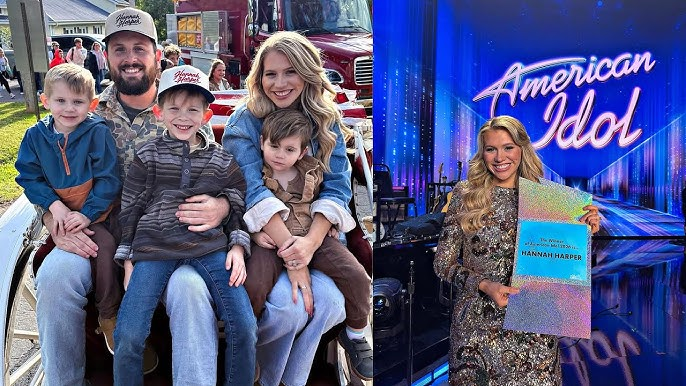
Most country stars sell audiences a polished fantasy. Hannah Harper seems determined to do the exact opposite.
Her current tour feels less like a carefully engineered music campaign and more like a collection of messy, beautiful memories captured through a car window somewhere between small-town diners and neon motel signs.
And strangely, that may be exactly why fans cannot stop watching.
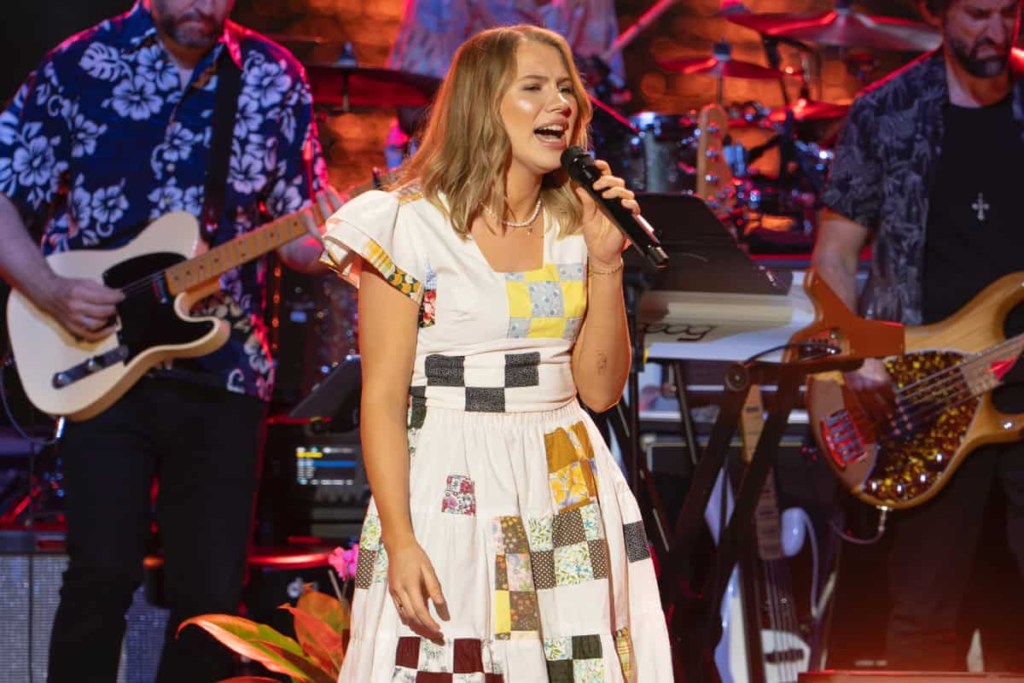
Instead of glamorous backstage footage and perfectly staged photoshoots, Harper’s tour diary is filled with half-awake coffee runs, wrinkled hoodies, cramped bus corners, and blurry midnight snapshots from empty highways. The visuals feel accidental in the best possible way.
Nothing about it screams celebrity.
Everything about it feels alive.
One clip circulating online shows Harper sitting cross-legged on the floor of the tour bus while the rest of her crew argues over gas-station snacks in the background. No dramatic lighting. No production value. Just noise, laughter, exhaustion, and movement.
It looked less like a music empire in motion and more like a family trying to survive a long road trip together.
That raw simplicity is becoming her signature.
At a time when audiences are overwhelmed by perfection online, Harper’s visual storytelling feels deeply refreshing. Her fans are not being invited into a fantasy world they could never touch. They are being invited into ordinary moments that somehow feel cinematic because they are real.
A paper map folded on the dashboard.
Rain hitting bus windows at 2 a.m.
Cowboy boots left abandoned beside tangled charging cables.
Tiny details like these are transforming her tour into something emotionally recognizable. Fans are no longer just consuming content from an artist. They are beginning to feel like passengers sitting in the seat beside her.
That emotional closeness is incredibly rare in modern entertainment.
Many rising artists spend years trying to appear larger than life. Harper’s visuals do the opposite. They shrink the distance between celebrity and audience until almost nothing remains between them.
And the strategy is working.
Every imperfect photo and unfiltered video creates a stronger sense of intimacy than a heavily produced campaign ever could. The lack of polish becomes the polish.
Even the landscapes surrounding the tour seem to tell their own story. Endless highways, fading sunsets, roadside motels, and quiet parking lots create a distinctly American loneliness that mirrors the emotional core of country music itself.
Her audience is not just seeing performances.
They are seeing the spaces between performances — the silence, the waiting, the boredom, the freedom, and the exhaustion that touring actually looks like when nobody is pretending.
That honesty changes everything.
Because eventually, fans stop feeling like observers. They begin feeling emotionally involved in the journey itself.
And if Hannah Harper continues documenting tour life this way, she may accidentally create something far more powerful than a country music image.
She may create a world people genuinely want to live inside.