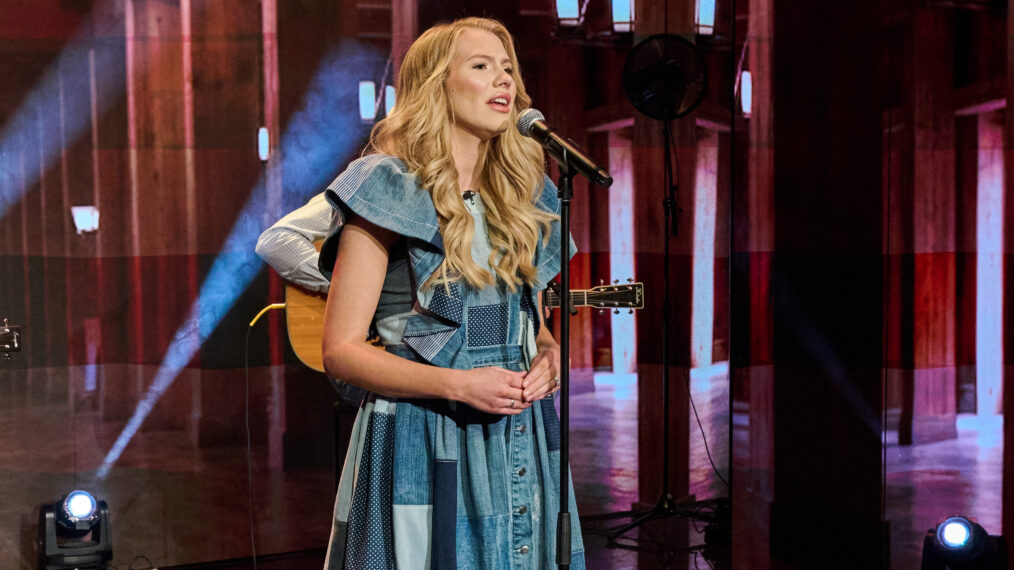
Hannah Harper did not walk onto the stage looking like someone chasing a flawless performance. She walked on carrying exhaustion, heartbreak, vulnerability, and the invisible emotional weight millions of mothers silently carry every single day. And by the time she finished singing “String Cheese,” something extraordinary had happened inside that room — people were no longer simply listening to music. They were confronting emotions they had buried for years.
The song itself arrived without dramatic spectacle or overproduced theatrics. There were no distractions, no flashy moments designed to steal attention away from the lyrics. Instead, Hannah stood in front of the audience armed with little more than honesty, and somehow that honesty became more powerful than any elaborate production ever could have been. Every word felt painfully lived-in.
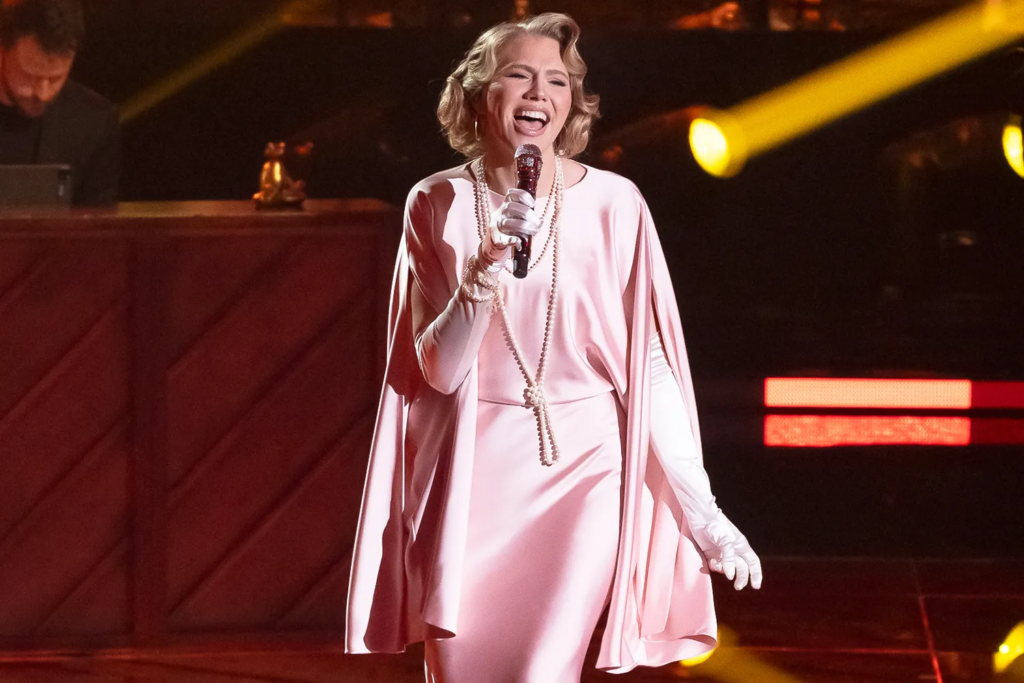
From the opening verse, listeners immediately recognized that this was not just another emotional country ballad. “String Cheese” sounded deeply personal, almost uncomfortably intimate at times, as Hannah sang about motherhood, emotional exhaustion, isolation, and the crushing pressure of trying to appear strong while quietly falling apart inside. Mothers across America instantly connected to it because the pain inside the lyrics felt unmistakably real.
Social media began erupting before the performance had even ended. Thousands of mothers flooded comment sections describing how the song mirrored feelings they had struggled to explain for years. Some admitted they cried halfway through the performance. Others shared deeply personal stories about postpartum depression, emotional burnout, and the loneliness many women experience after becoming mothers but rarely discuss publicly.
What made the reaction even more overwhelming was the way Hannah refused to romanticize the experience. She didn’t frame motherhood as perfect or endlessly beautiful. Instead, she portrayed the emotional contradictions that so many women quietly live with — love mixed with exhaustion, gratitude tangled with sadness, joy interrupted by emotional numbness. That raw honesty became the emotional core of the performance.
But as viewers continued replaying the moment online, attention shifted toward one subtle detail fans could not stop discussing. Near the middle of the song, Hannah briefly paused between lyrics and appeared visibly emotional for just a second longer than expected. It was not dramatic. In fact, it almost went unnoticed at first. Yet for many viewers, that single moment revealed more than the entire performance itself.
Fans quickly began analyzing clips across social media, convinced the expression on her face reflected pain she was still actively carrying behind the music. Some viewers described the moment as heartbreaking because it no longer felt like Hannah was revisiting old emotions for artistic inspiration. It felt like she was still surviving them in real time while standing under the spotlight.
That emotional vulnerability is precisely why the performance resonated at such an enormous scale. In an entertainment industry often built around polished perfection, Hannah Harper gave audiences something startlingly human. She allowed herself to appear emotionally exposed in front of millions of strangers, and instead of weakening her connection with audiences, it strengthened it beyond measure.
Many mothers online later admitted the performance made them feel seen for the first time in years. Some said they had never heard postpartum depression discussed so honestly through music before. Others thanked Hannah for creating a space where emotional struggle did not feel shameful or hidden. The song quickly evolved beyond entertainment and became something much more personal for listeners everywhere.
Entertainment commentators soon began calling “String Cheese” one of the most emotionally impactful performances of the year, not because of vocal acrobatics or viral stage production, but because of its emotional truth. Hannah managed to transform private suffering into a collective emotional experience that connected strangers across the country through shared vulnerability.

What makes the moment even more unforgettable is the possibility that Hannah herself may still be navigating the very emotions she sang about so openly. That realization changed how audiences viewed the performance entirely. Suddenly, viewers were no longer watching an artist perform pain from the safety of hindsight. They were watching someone brave enough to stand inside that pain while the entire world looked on.
And perhaps that is why “String Cheese” continues spreading across social media with such emotional force. It is not merely a song about motherhood or sadness. It is a mirror reflecting emotions millions of women have hidden behind smiles for far too long. Hannah Harper did not just perform a song that night — she gave voice to a silent ache countless mothers thought they had to carry alone forever.