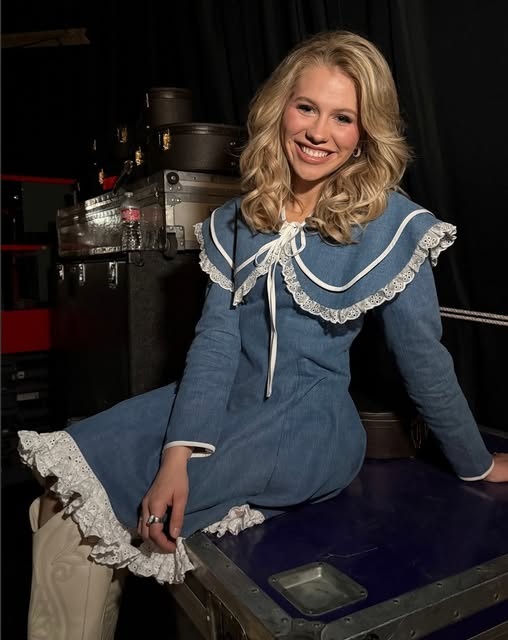
There is a common misconception in singing competitions that the biggest voice always wins the biggest moment. Viewers are often trained to expect soaring belts, dramatic key changes, and performances designed to shake the room. But every so often, an artist walks onto the stage and reminds everyone that true power does not always arrive at full volume. Sometimes, it arrives softly, steadily, and with complete emotional control. That is exactly what Hannah Harper delivered with her breathtaking performance of “Landslide” on American Idol.
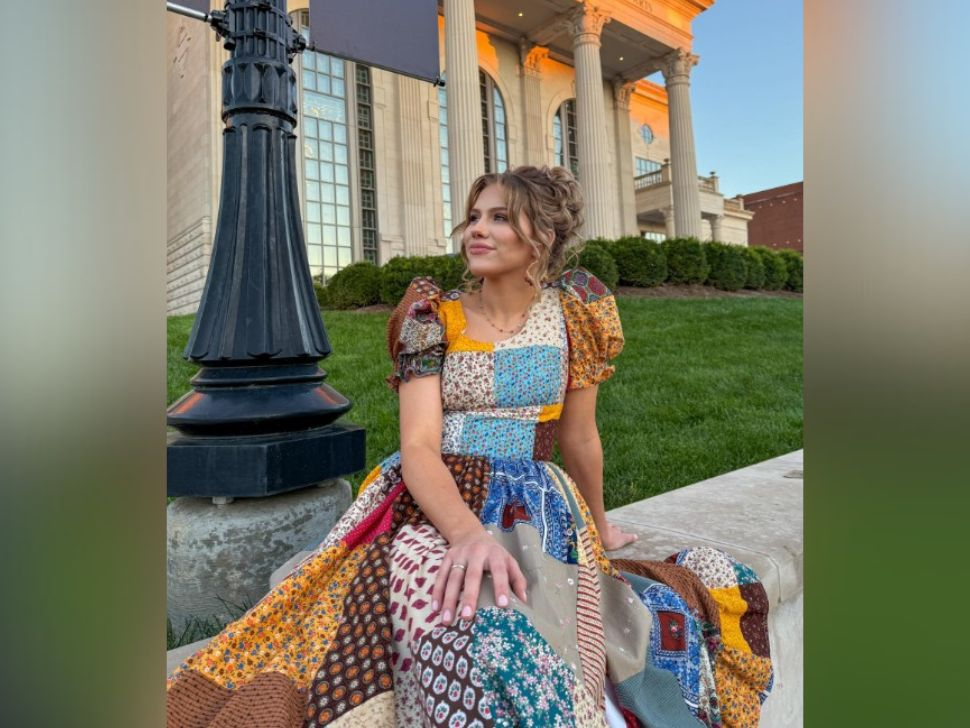
From the first note, it was clear that Hannah had no intention of overpowering the song.
Instead of treating the classic track as an opportunity to showcase vocal force, she approached it with restraint. That choice alone set her apart. In a setting where contestants often feel pressure to do more, Hannah understood that some songs ask for less. They ask for honesty, patience, and the confidence to let simplicity carry the weight.
And simplicity, when done well, can be unforgettable.
“Landslide” is one of those songs that already carries decades of emotion before a contestant ever sings the opening line. It lives in the memories of listeners. It belongs to heartbreak, reflection, change, and growth. That means anyone who performs it faces a challenge: either disappear inside the legacy of the song or find a way to make it personal. Hannah Harper chose the second path.
She did not imitate. She interpreted.
Every lyric felt considered. Every phrase seemed connected to something real within her. She sang as if she understood that the song’s greatest strength is not in its melody alone, but in its vulnerability. That emotional awareness transformed the performance from a cover into a conversation between singer and audience.
What made the moment so striking was her control.
Control in singing is often misunderstood as technical precision alone. Yes, Hannah showed that. Her pitch was steady, her phrasing elegant, and her transitions smooth. But the deeper kind of control is emotional discipline—the ability to feel deeply without letting the feeling overwhelm the performance. Hannah balanced both beautifully.
She never rushed the song.
She never forced a dramatic note for applause.
She never chased a reaction.

Instead, she trusted the material and trusted herself. That confidence is rare, especially on a stage built around instant impressions. Many performers try to convince the audience they are special. Hannah simply sang, and let the audience discover it on their own.
The room responded almost immediately.
As the performance unfolded, a noticeable stillness settled over the studio. Judges leaned in. Audience members stopped shifting in their seats. The usual energy of a televised competition gave way to something calmer and more attentive. People were not waiting for a big moment—they were already inside one.
That is the mark of a compelling artist.
They do not need to announce when something important is happening. You feel it naturally.
Hannah’s voice carried an effortless beauty that can be difficult to teach. Some singers have power. Some have technique. Some have tone. The rare ones know how to blend all three while making it seem easy. Hannah’s delivery never sounded strained or manufactured. She moved through the melody with grace, allowing each note to land exactly where it needed to.
Even the smallest moments mattered.
A soft breath before a lyric. A gentle lift at the end of a phrase. A pause that allowed meaning to settle. These details often go unnoticed in louder performances, but they are what create intimacy. Hannah seemed to understand that audiences remember how a performance made them feel, not just how high someone sang.
That emotional intelligence elevated everything.
It also showed maturity beyond the competition itself. Many contestants sing to survive another week. Hannah sang like an artist already thinking beyond the show. There was identity in the performance. There was taste in her choices. There was a sense that she knew who she was, and just as importantly, who she did not need to be.
That distinction matters.
In entertainment, originality is not always about doing something never seen before. Sometimes originality means refusing to copy the formula everyone else is following. Hannah Harper’s version of “Landslide” felt fresh because she resisted the urge to oversell it. She let the song breathe. She let the audience come to her.
And they did.
By the end, applause arrived not as routine appreciation, but as release. The room had been holding onto the moment carefully, almost protectively. When the final note faded, people seemed to exhale together. That kind of reaction cannot be manufactured. It comes only when a performance creates real connection.
For the judges, it was likely a reminder that artistry often hides in subtle places.
For viewers at home, it was proof that quieter performances can leave the deepest imprint.
For Hannah Harper, it may have been a turning point.
Shows like American Idol are filled with memorable vocals, flashy moments, and viral clips. But careers are often built on something different: trust. The moment audiences trust an artist’s instincts, they begin following their journey with real investment. Hannah’s “Landslide” felt like one of those moments where trust begins.
She showed that she does not need spectacle to command attention.
She does not need volume to create impact.
She does not need excess to be unforgettable.
What she needs, and clearly possesses, is the rare combination of control, emotion, and natural beauty in performance. Those qualities last longer than trends. They outlive competition rounds. They travel beyond television stages.
Hannah Harper did more than sing “Landslide.”
She reminded everyone watching that sometimes the strongest performer in the room is the one who never has to raise her voice.