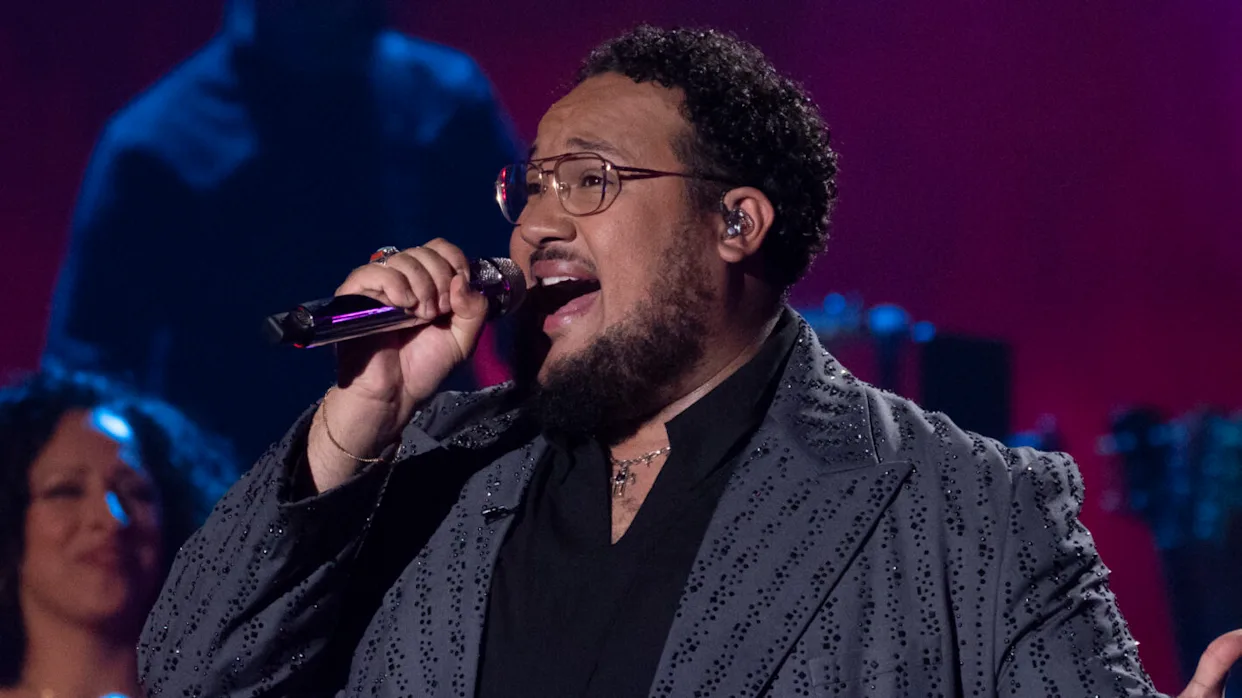
Seven years ago, Jordan McCullough stepped onto the stage of The Voice with confidence in his R&B sound and left with something far more difficult to process than rejection—silence. No chair turns. No second chance in that moment. Just a performance that quietly faded into the endless archive of reality television auditions. At the time, it looked like the end of a dream.
But what audiences didn’t see was how that moment became a turning point rather than a conclusion. Away from cameras and commentary, Jordan continued shaping his voice, rebuilding his approach, and redefining what kind of artist he wanted to become. The version of him that left that stage was not the same one that would eventually re-emerge years later on American Idol.
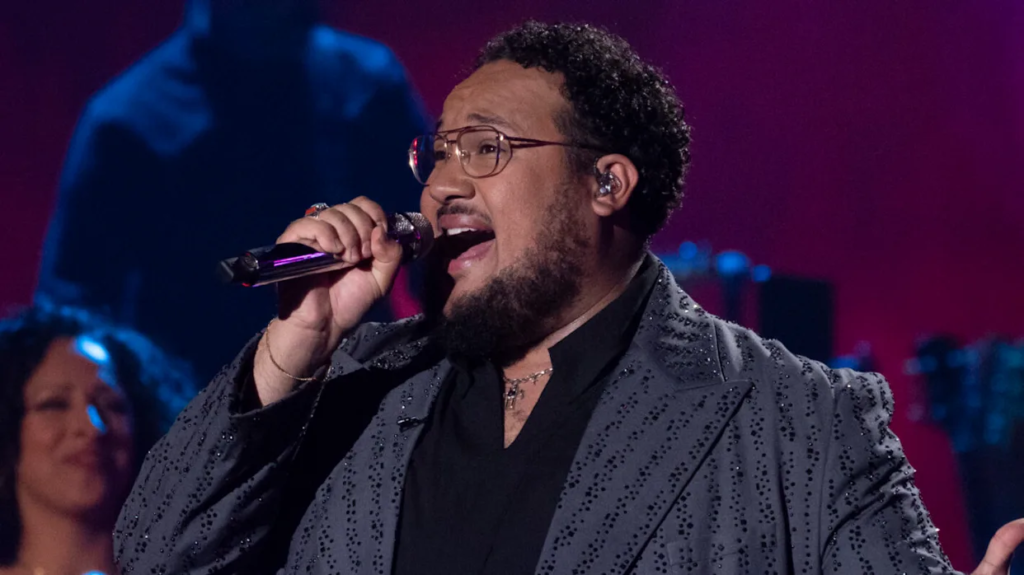
When he returned to the public eye, it was not as a familiar contestant but as a transformed performer. His sound had shifted into something deeper, more grounded, and unmistakably spiritual in tone. The emotional weight in his gospel performances immediately set him apart, drawing attention not just for technical skill but for the feeling behind every note.
His journey through American Idol 2026 became a narrative of resurgence. Week after week, viewers watched him build momentum, ultimately earning over 20 million votes and finishing as runner-up. But numbers alone fail to capture why his story resonated so strongly with audiences across different generations.
What made his rise compelling was the contrast. The same artist once dismissed in an early audition had now become one of the most talked-about voices of the season. Fans who revisited his original The Voice clip described it differently in hindsight—not as failure, but as an unfinished beginning.
As his performances grew in intensity, so did the emotional connection with viewers. Many described feeling as though each song carried lived experience rather than performance alone. His interpretations of gospel-infused arrangements were not just vocally powerful; they felt reflective, almost like conversations between struggle and resolution.
The transformation sparked widespread discussion online. Some focused on technique, pointing to improved control, range, and phrasing. Others focused on something less measurable—the sense of purpose that seemed to guide his performances. In that sense, Jordan’s evolution became a case study in artistic identity rather than just competition success.
By the time the finale arrived, his presence on stage carried the weight of the entire journey. Every note seemed informed by the version of himself who once stood unnoticed on a different stage years earlier. The contrast between then and now became part of the story fans told as much as the performances themselves.
Even after the competition ended, conversations continued to grow. Clips of his earlier and later performances circulated side by side, reinforcing the idea that his career was defined not by a single breakthrough moment, but by a long arc of persistence and reinvention.
Supporters often describe his journey as something closer to timing than chance. They argue that his early setback on The Voice was not an ending but a delay, and that his eventual success on American Idol represented readiness finally meeting opportunity.
Critics of reality TV narratives, however, caution against romanticizing transformation too neatly. They point out that editing, production framing, and audience sentiment all play roles in shaping how stories are perceived. Yet even with that context, Jordan’s vocal progression remains widely acknowledged as genuine and significant.
Still, what continues to capture attention is the emotional language fans use when describing him. Words like “destiny,” “meant to be,” and “timing” appear repeatedly in discussions about his performances. Whether literal or symbolic, they reflect how strongly his journey resonates on a personal level for many viewers.

The idea of “zero chairs to 20 million votes” has become more than a headline—it has turned into shorthand for resilience in artistic form. It represents the possibility that early rejection does not define final outcome, especially in a landscape where growth can take unexpected shapes.
In the end, Jordan McCullough’s story is no longer just about two shows or two moments in time. It is about the space between them—the years of unseen development that transformed an overlooked audition into one of the most talked-about arcs in modern reality music television. And as fans continue revisiting both versions of his journey, one question remains at the center of it all: what changed first—the voice, or the moment the world finally decided to hear it?