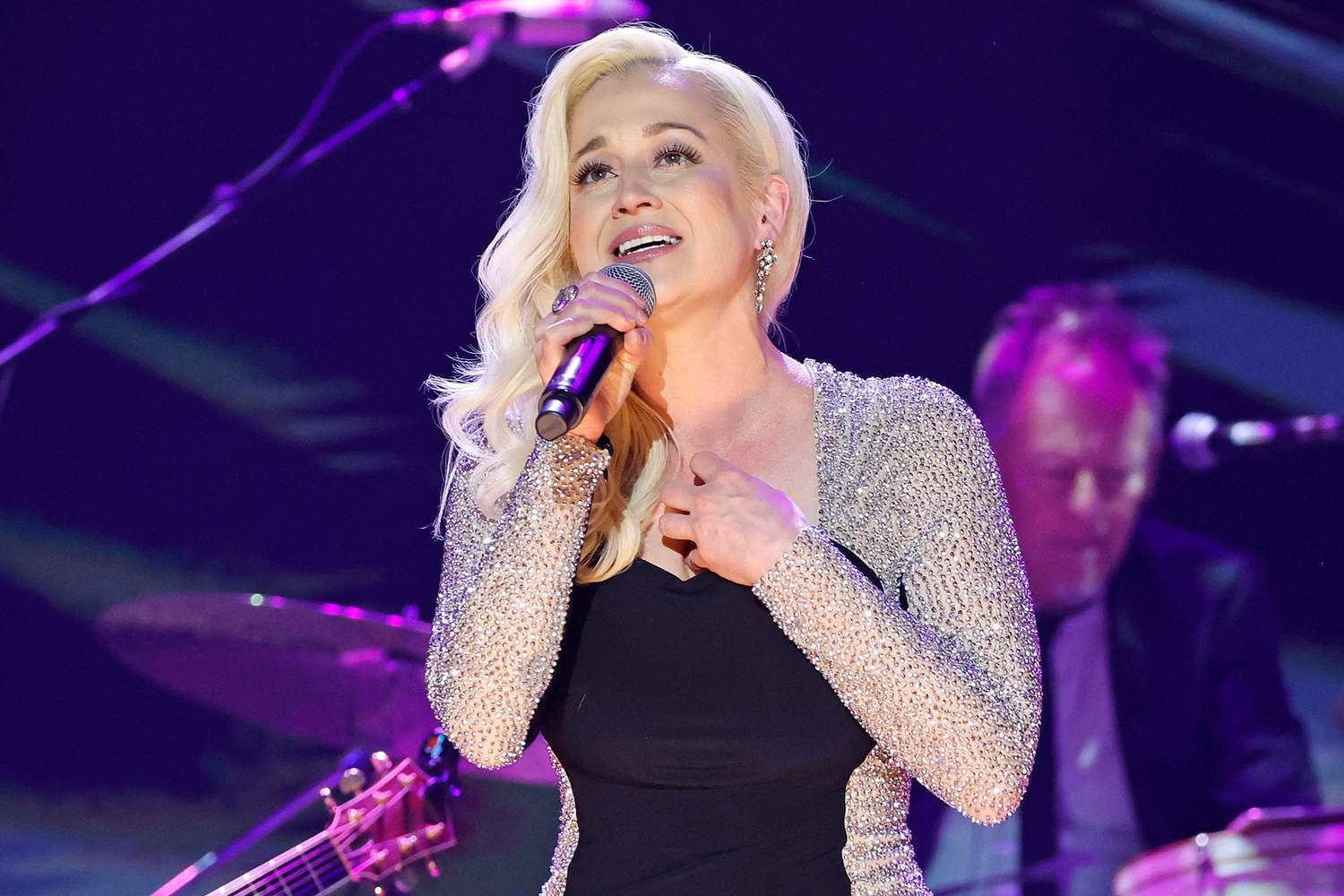
Twenty years after she first captured America’s attention with her unforgettable Golden Ticket moment performing “A Broken Wing,” Kellie Pickler stepped back onto the American Idol stage—and for a few minutes, it felt like time had folded in on itself. Standing beside finalist Hannah Harper, she wasn’t just a guest performer; she became a living reminder of where the show has been and why it still matters.
The atmosphere in the room changed the moment she appeared. There was a quiet recognition from the audience, as if everyone collectively understood they were about to witness something more meaningful than a typical guest performance. It was not just nostalgia—it was emotional memory being reactivated in real time.
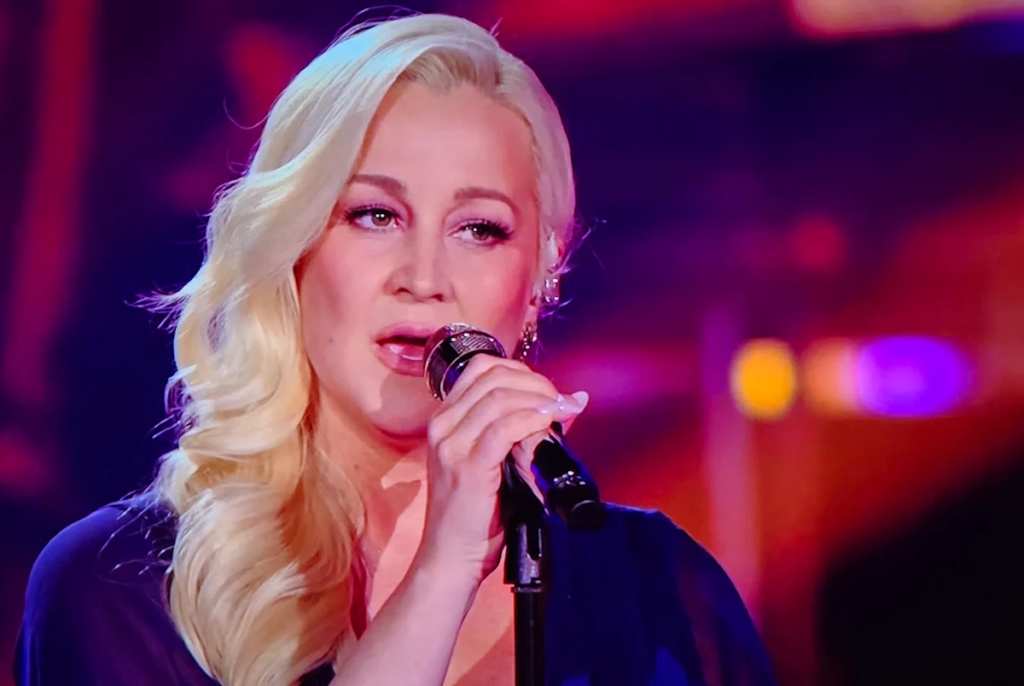
As Kellie began to sing, her voice carried a weight that only experience can bring. Every lyric felt shaped by years of growth, heartbreak, success, and resilience. The performance didn’t rely on spectacle. Instead, it leaned into sincerity, drawing the audience closer with each note.
For viewers watching at home, the moment felt almost surreal. It was as if a piece of Idol history had returned to the stage exactly where it began. That sense of continuity—of past meeting present—created a rare emotional atmosphere that extended far beyond the song itself.
Hannah Harper’s presence beside her added another layer of meaning. As a current finalist, she represented the next generation of Idol talent, standing side by side with someone who once stood in her exact position years ago. The symbolism was impossible to ignore.
Their duet became more than a performance; it became a conversation between eras. One voice carrying memory, the other carrying momentum. Together, they created a bridge between where American Idol started for Kellie Pickler and where it continues to evolve today.
The crowd’s reaction reflected that deeper significance. Applause wasn’t just loud—it was sustained, emotional, and filled with recognition. Many in the audience appeared visibly moved, reacting not just to the music, but to the story unfolding through it.
What made the moment stand out even more was its simplicity. There were no overproduced effects or distractions. The focus remained entirely on the voices, allowing the emotional weight of the performance to take center stage. In a world of constant visual intensity, that restraint made it even more powerful.
Online, fans quickly began sharing clips and reactions, with many describing the performance as one of the most heartfelt moments of the season. Comments reflected a shared sentiment: that Kellie Pickler had not returned as a contestant or a competitor, but as a reminder of what made the show iconic in the first place.
Some viewers pointed out that performances like this are rare because they carry both history and presence at the same time. Kellie’s return wasn’t about revisiting the past—it was about showing how that past still lives within the music she creates today.
Hannah Harper’s role in the performance also became a focal point of discussion. Many fans saw it as a passing of emotional energy rather than a traditional duet. It highlighted the cyclical nature of Idol, where each generation builds on the one before it.
Industry observers often note that moments like these help define a show’s legacy more than competition results ever could. They become reference points—performances that fans remember long after a season ends, not because of rankings, but because of feeling.

And that is exactly what Kellie Pickler delivered on that stage: not just a return, but a reminder. A reminder that voices can age, grow, and evolve, yet still carry the same emotional truth that first made them unforgettable.
As the lights dimmed and the performance came to an end, one question lingered in the air—was this simply a nostalgic guest appearance, or the quiet proof that some moments in American Idol history never truly leave the stage at all?