It wasn’t staged.
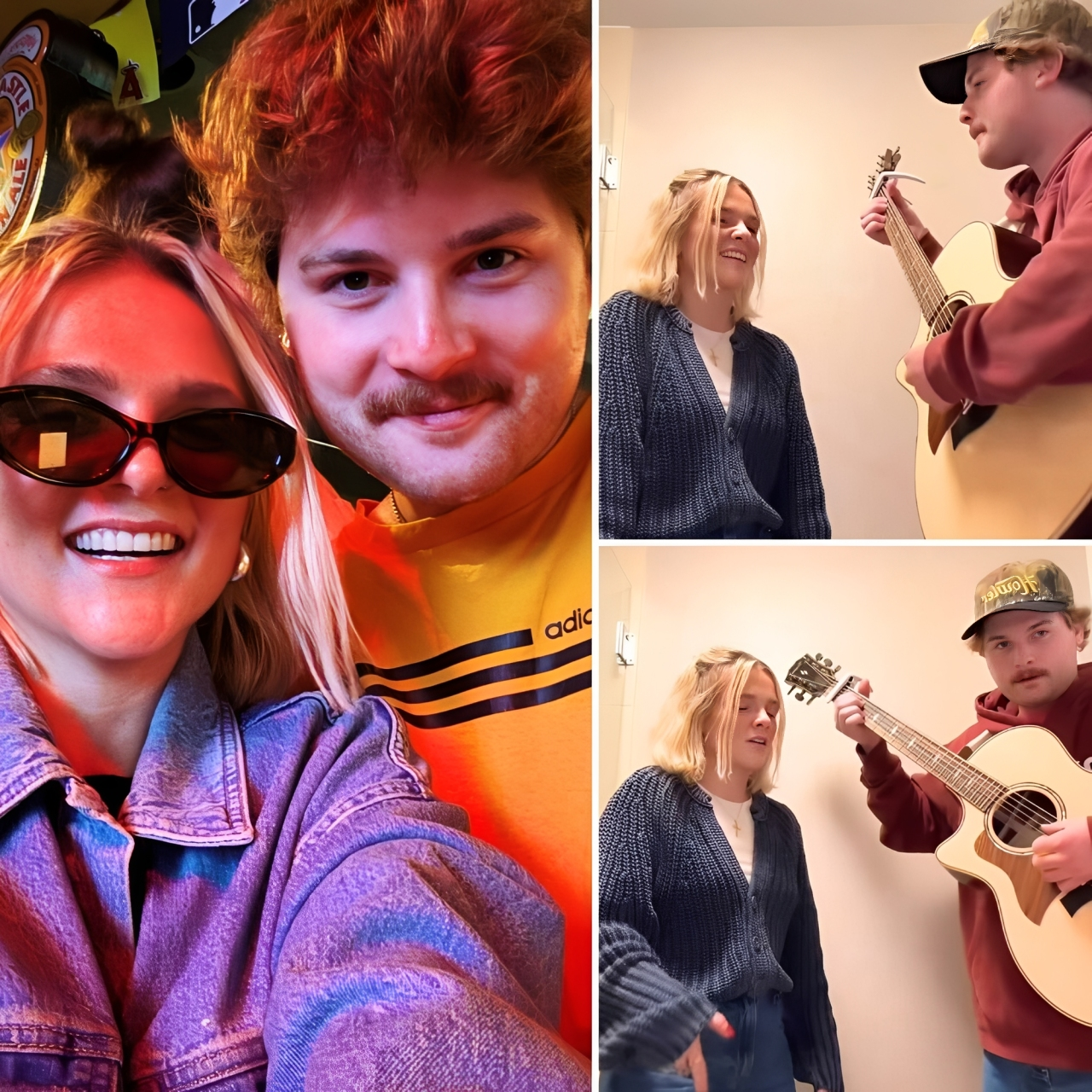
There were no lights, no audience, no judges waiting with rehearsed reactions. Just tiled walls, a mirror that had seen nothing but ordinary reflections, and two voices that decided—almost accidentally—to meet in a moment that would soon feel anything but small.

In a season built on spectacle, it was something surprisingly simple that broke through the noise. A bathroom. A phone camera. And a duet that didn’t feel like a performance, but a confession.
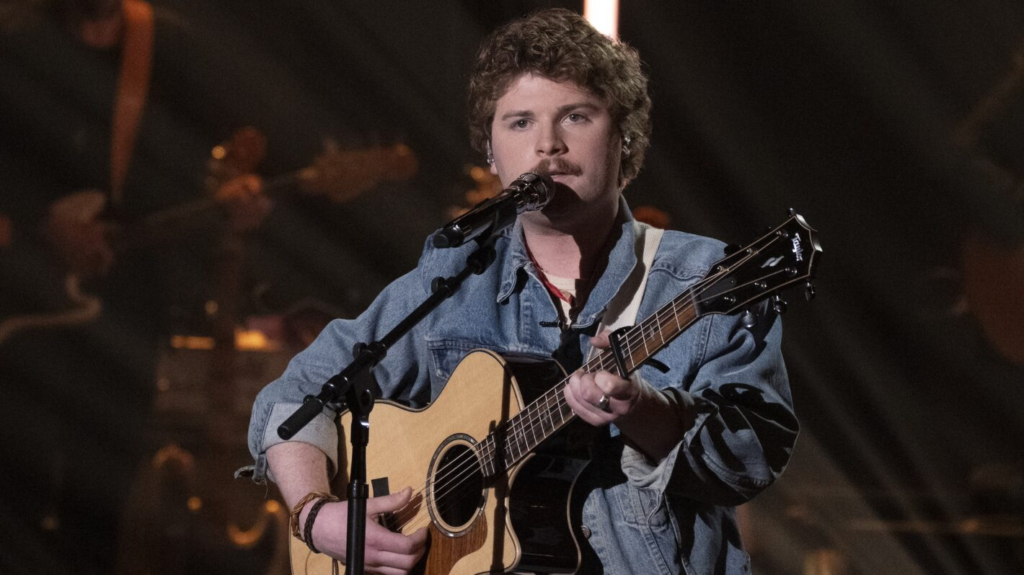
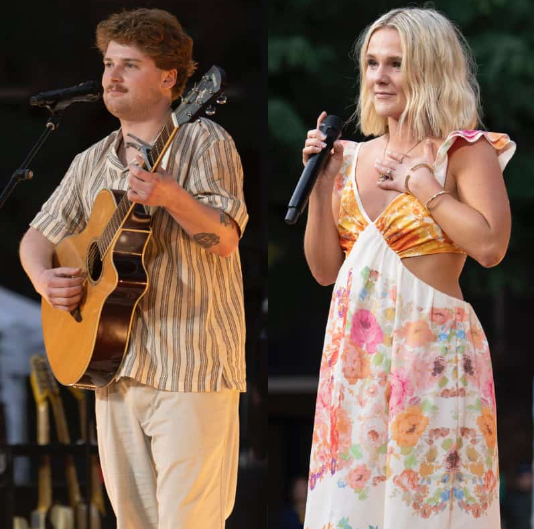
When Brooks Rosser and Kyndal Inskeep began singing, it didn’t sound like they were trying to impress anyone. There was no urgency to prove, no rush to dominate. Instead, it felt like they were listening—to each other, to the silence between notes, to something unspoken that only music could translate.
And maybe that’s exactly why it worked.
Within hours, the clip spread across social media like a quiet wildfire. No flashy edits. No dramatic captions. Just raw sound—and yet, it pulled people in with a force that polished performances sometimes fail to reach. Half a million views in less than a day wasn’t just impressive—it was telling.
Because people didn’t just watch it. They stayed.
They replayed it.
They felt it.
Comments began flooding in, not with casual praise, but with something deeper—requests, almost demands. “Sing this on Idol.” “We need this live.” “I would pay to hear this in a theater.” It stopped being just a viral moment and started becoming something else: a collective desire to witness that same authenticity on a bigger stage.
But here’s where it gets interesting.
Moments like these don’t always translate well under pressure. What feels organic in a quiet, unexpected space can sometimes lose its soul under bright lights and ticking clocks. That bathroom didn’t just have good acoustics—it had no expectations.
And that absence of pressure allowed something rare to happen.
Their voices didn’t compete—they intertwined. Brooks brought a grounded steadiness, a tone that felt like home, while Kyndal carried a fragile strength, almost like a thread that could break at any moment—but never did. Together, they didn’t just harmonize—they balanced.
It’s the kind of chemistry that can’t be manufactured.
And viewers noticed.
What makes this even more compelling is the timing. In a competition where every performance is scrutinized, ranked, and voted on, this moment existed outside of all that. It wasn’t about advancing to the next round. It wasn’t about securing votes. It was just music, existing for its own sake.
Ironically, that might be what makes it their most powerful “performance” yet.
Because now, the expectations are different.
If they choose to bring this duet onto the Idol stage, it won’t just be another song—it will carry the weight of everything people felt in that first, quiet recording. And that’s both an opportunity and a risk.
Can something so spontaneous survive structure?
Can something so intimate stay real when millions are watching?
That’s the question lingering behind the excitement.
There’s also something subtly symbolic about where it happened. A bathroom—a place of echoes, of reflection, of privacy. It’s not where stars are made. It’s where people go to be alone, to breathe, to reset.
And yet, in that unlikely space, two artists created a moment that felt more genuine than anything carefully designed.
It reminds us of something we often forget in shows like American Idol: behind the competition, behind the edits and narratives, there are still real artists trying to find real moments.
And sometimes, those moments don’t happen on stage.
They happen when no one is supposed to be watching.
Now, the internet waits. Not just for another video, not just for another duet—but for what comes next. Whether Brooks and Kyndal choose to recreate it or leave it as it is, untouched and perfect in its imperfection.
Because sometimes, the most powerful thing an artist can do… is not try to top a moment that was never meant to be topped.
And maybe that’s why this one lingers.
Not because it was loud.
Not because it was viral.
But because, for a brief moment, it didn’t feel like a performance at all—it felt like something we weren’t supposed to see… and now can’t forget.