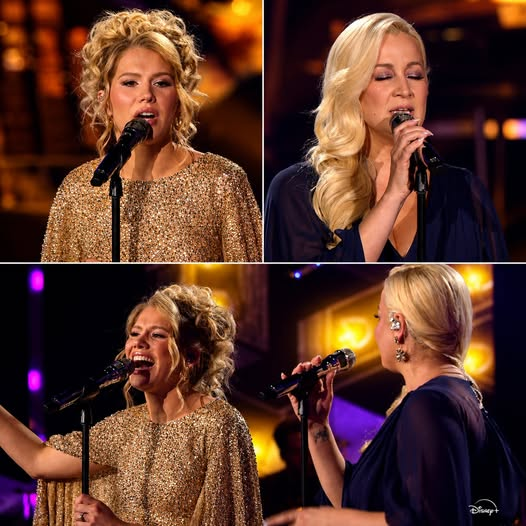
The stage of American Idol has witnessed countless performances over the years, but every so often, a moment emerges that feels almost untouchable—something that transcends competition and enters the realm of pure artistry. That’s exactly what unfolded when Hannah Harper and Kellie Pickler stepped forward to perform “A Broken Wing.”
From the very first note, there was a shift—subtle, yet undeniable. The atmosphere in the room changed, as if the air itself had grown heavier with anticipation. It wasn’t just another duet. It felt intentional, almost destined, like two voices meeting at precisely the right moment in time.
Their harmonies didn’t simply align—they intertwined. There was a seamlessness to their delivery that made it difficult to distinguish where one voice ended and the other began. It wasn’t technical perfection alone that created this effect, but something far more elusive: emotional synchronization.
Each lyric carried weight, not because it was sung flawlessly, but because it was felt deeply. The song itself, already rich with vulnerability, took on a new dimension through their interpretation. It became less of a performance and more of a shared confession.
What made the moment even more compelling was the restraint. Neither singer tried to outshine the other. There was no competition in their delivery, no unnecessary embellishment. Instead, they leaned into the simplicity of the song, allowing its raw emotion to guide them.
The audience could sense it. There’s a certain silence that only occurs when people are completely absorbed—when applause feels almost intrusive. That silence filled the room as they sang, creating an unspoken connection between the performers and everyone watching.
Even the judges, seasoned in witnessing extraordinary talent, seemed momentarily at a loss. Their reactions weren’t immediate or exaggerated. Instead, there was a pause—a genuine moment of processing what they had just experienced. Sometimes, the most powerful response is the absence of words.
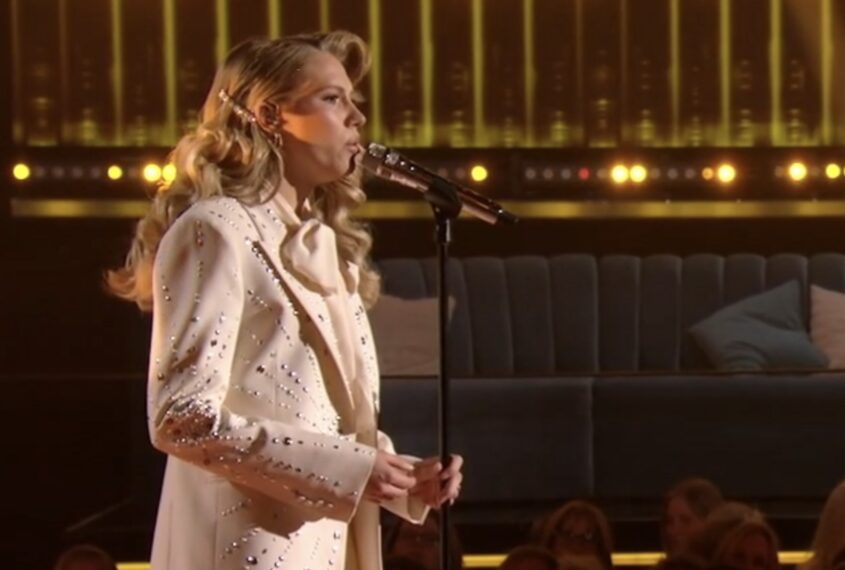
For Hannah Harper, sharing the stage with an established artist like Kellie Pickler could have been overwhelming. Yet, she didn’t shrink in the moment. She rose into it, matching not just the notes, but the emotional depth required to make the performance resonate.
For Pickler, it was a reminder of the artistry that extends beyond experience. Her ability to blend, to adapt, and to create space for another voice demonstrated a level of maturity that elevated the entire performance. Together, they formed something that neither could have achieved alone.
Moments like this are rare because they cannot be manufactured. They don’t come from perfect rehearsals or strategic arrangements. They emerge when timing, emotion, and authenticity collide in a way that feels almost accidental—yet undeniably powerful.
Long after the final note faded, the impact lingered. It wasn’t just a memorable performance; it was a reminder of what music can do at its best. It can dissolve boundaries, quiet the noise, and bring people into a shared emotional experience that feels both personal and universal.
And perhaps that’s why this performance continues to resonate. Not because it was flawless, but because it was real. In a space often defined by competition, Hannah Harper and Kellie Pickler created something far more meaningful—something that felt, even if just for a moment, like two voices becoming one.