When Jamal Roberts stepped back onto the American Idol stage, it wasn’t framed as a comeback—but it felt like one. The kind that doesn’t ask for attention, yet commands it anyway. There was a quiet anticipation in the air, the kind that builds when an artist with something to prove returns to where it all began.
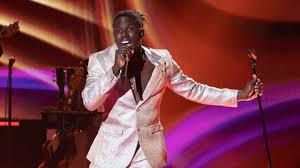
He walked out in velvet, a subtle but deliberate choice. It wasn’t flashy in the conventional sense, but it carried weight—confidence stitched into every fold. Before he even sang a note, the room had already shifted. It was clear this wouldn’t be a routine guest appearance.
Then came “Perfect for Me,” and with it, a performance that felt less like a song and more like a reflection. From the first note, Jamal didn’t just sing—he placed each lyric with intention. His voice carried a maturity that hadn’t been there before, shaped by time, experience, and distance from the spotlight.

What made the moment striking wasn’t just the technical control, though that was undeniable. It was the emotional restraint. He didn’t oversell the performance. He didn’t reach for theatrics. Instead, he trusted the silence between notes, allowing the audience to meet him halfway.
That’s where the real shift happened. The energy in the room didn’t explode—it deepened. Conversations stopped. Movements stilled. It became less about watching and more about feeling. That’s a rare transformation, especially on a stage known for spectacle.
For longtime viewers, the performance carried a sense of full circle. This was the same stage that once introduced Jamal to the world, but the person standing on it now was undeniably different. Not just improved, but refined. There was a clarity in his artistry that spoke of evolution rather than repetition.
It also sparked a quiet conversation among fans. Was this simply a nostalgic return, or something more deliberate? In an industry that thrives on constant visibility, stepping away can either dim a presence or sharpen it. Jamal’s return suggested the latter.
There’s a discipline in knowing when not to appear. And perhaps that’s what made this moment resonate so deeply. He didn’t come back to remind people of who he was—he came back to show who he has become. That distinction is subtle, but powerful.
The performance didn’t chase applause, yet it earned it. Not in a burst, but in a wave—steady, growing, undeniable. It wasn’t about reclaiming a title or reliving a victory. It was about redefining what that victory meant in the present.
And as the final note lingered in the air, something unspoken settled over the room. This wasn’t closure. It didn’t feel like the end of a chapter. If anything, it felt like a beginning disguised as a return.
Because sometimes, the most impactful statements aren’t the loudest ones. They’re the ones that leave people thinking long after the stage lights fade—and wondering if what they just witnessed was only the first glimpse of something much bigger.