
There are moments in televised music competitions that feel rehearsed, and then there are moments that feel discovered in real time. Hannah Harper’s performance on Taylor Swift night belonged firmly to the second category, where expectation dissolves and something unexpected takes its place under the stage lights.
What began as a familiar song choice—Taylor Swift’s “Mean”—quickly evolved into something far less predictable. From the opening lines, it was clear Hannah was not aiming to replicate the original, but to reshape it into something more personal, more lived-in, and far more emotionally exposed.
The transformation did not rely on vocal gymnastics or dramatic staging. Instead, it unfolded through restraint, phrasing, and a quiet intensity that gradually built until the entire performance felt less like a cover and more like a confession told in real time.
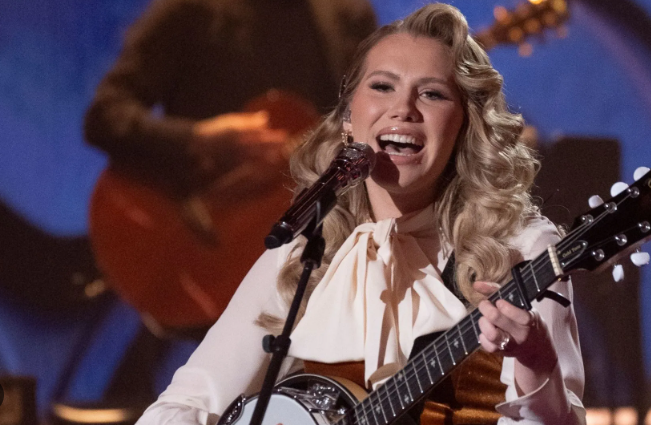
For many viewers, the most striking reaction came not just from the audience, but from the judging panel itself. Carrie Underwood’s visibly stunned response became part of the moment’s impact, reflecting a rare instance where even seasoned performers appeared caught off guard by what was unfolding.
That kind of reaction is not easily earned in a space where standout performances are expected weekly. It suggested that something had shifted beyond technical execution—that the emotional weight of the interpretation had broken through the usual framework of competition.
The narrative surrounding Hannah Harper has also added depth to the moment. As a stay-at-home mom stepping into a national spotlight, her presence alone already challenges traditional assumptions about who gets to be seen as a rising artist.
But what elevated this performance further was not her background—it was how that background seemed to inform every note. There was a sense of lived experience woven into the delivery, as if the lyrics were being filtered through years of unspoken reflection rather than performance preparation alone.
“Mean,” a song originally about resilience and self-worth, became in her hands something more introspective. It no longer felt like a message directed outward, but rather a conversation turned inward, reshaped by time, perspective, and emotional maturity.
This reinterpretation is often what separates memorable performances from forgettable ones. When a song stops belonging entirely to its original version and begins to reflect the identity of the person performing it, audiences tend to respond differently.
That response was immediate. Social reactions, live audience energy, and judge commentary all pointed toward a shared recognition that something uncommon had just occurred on stage—a reinterpretation that altered perception rather than simply repeating familiarity.
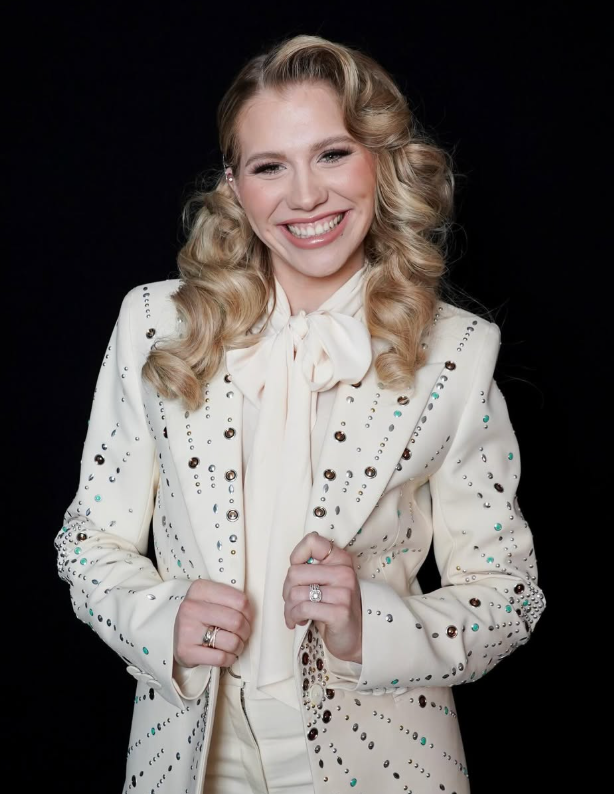
In a competition often driven by vocal range and performance polish, moments like this remind viewers that emotional truth can sometimes outweigh technical precision. The ability to make a well-known song feel newly written is a skill that cannot be easily taught or replicated.
As the performance ended, the atmosphere carried a kind of stillness that often follows unexpected impact. It was not loud or chaotic, but reflective, as if the audience needed a moment to process what had just shifted in front of them.
And as conversations continue to build around Hannah Harper’s rendition, one question quietly lingers beneath all the praise and surprise—was this simply a standout performance in a competition, or the first glimpse of an artist stepping into a space she was always meant to occupy?