There are musical legacies that feel so large they almost cast a shadow over anyone born into them. In rock and pop history, few names carry that weight more than Phil Collins—a drummer and performer whose influence reshaped an era. For his son, Nic Collins, that legacy wasn’t something he stepped into suddenly; it was something he grew up inside.
From an incredibly young age—around two or three years old—Nic was already drawn to the drums. What might look like early curiosity to others was, for him, the beginning of a lifelong language. Rhythm wasn’t learned later in life; it was something that seemed to exist alongside him from the start.
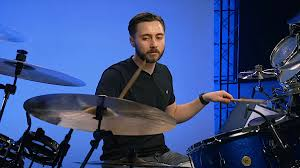
As his skills developed, so did the presence of expectation. Being the child of one of the most recognized drummers in the world meant comparisons were inevitable, even before he ever stepped onto a major stage. But the story of Nic Collins is not just about inheritance—it is about responsibility arriving earlier than most musicians ever experience it.
In 2014, when Phil Collins revealed that a nerve condition had affected his ability to grip drumsticks properly, the dynamic shifted within the family and on stage. It was a difficult turning point, not only personally, but professionally, as performance and health began to intersect in a very real way.
By 2017, that shift became visible to the world. Phil Collins, now needing to perform seated during vocals, required support behind the kit. It was at this moment that Nic stepped forward—not as a replacement, but as a continuation of a sound that audiences already knew and loved.
Taking on that role with Genesis was no small responsibility. These were songs tied to decades of global history, performed in front of audiences who knew every detail of their sound. Yet Nic approached the task with discipline rather than hesitation, focusing on precision, respect, and continuity.
What stood out during those performances was not just technical ability, but restraint. Rather than overwhelming the legacy, he supported it, allowing the music to remain recognizable while quietly adding his own stability to the foundation.
Now touring with Mike & the Mechanics, Nic Collins has moved further into his own space as a performing musician. It is here that he is no longer only associated with legacy, but with presence—actively shaping how he is perceived as an artist in real time.
During one recent performance, that identity became especially clear. A drum solo on stage with Mike & the Mechanics didn’t feel like a symbolic moment or tribute; it felt like an assertion. The kind that does not need explanation because it is heard rather than announced.
Fans responded immediately, not because of who his father is, but because of what they saw and heard in that moment. The control, timing, and confidence in his playing created a separation from expectation and placed focus firmly on execution.
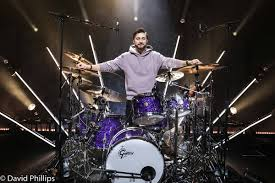
What makes Nic’s journey compelling is that it exists in two worlds at once: one defined by heritage, and one still being written through live performance. Few musicians get to operate in both spaces simultaneously, especially under such public attention.
And yet, through each stage—from Genesis to his current touring work—he continues to demonstrate that legacy is not only something inherited, but something actively interpreted and redefined through repetition and growth.
As the final echoes of his drum solo fade in the minds of those who witnessed it, one question naturally emerges—not about where he comes from, but where he will take the sound next now that he is no longer following the rhythm of a legacy, but creating his own within it.