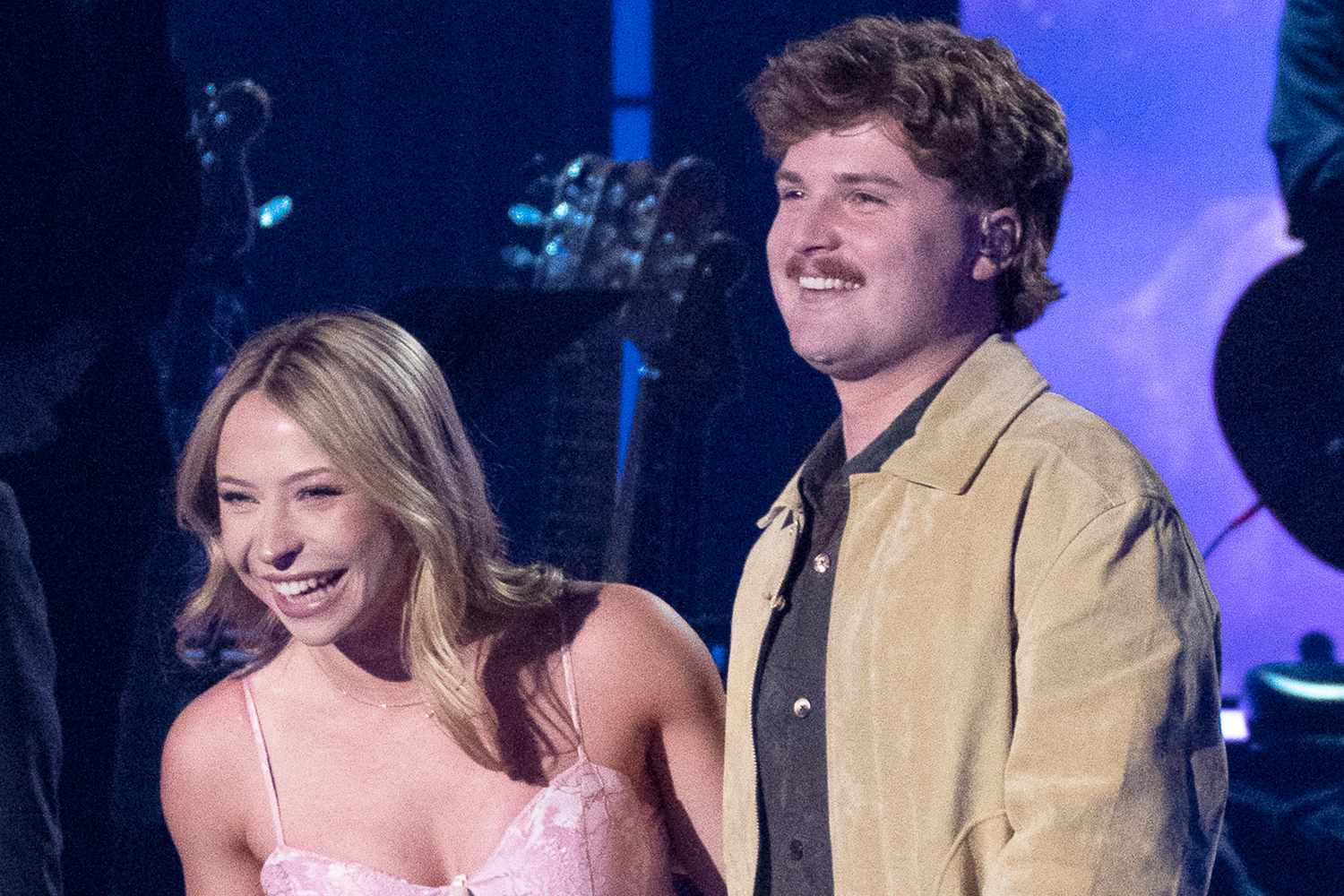
There are performances that stay within the boundaries of music, and then there are performances that quietly step beyond them. Brooks Rosser and Rae Boyd’s rendition of Elvis Presley’s “Can’t Help Falling in Love” belongs to the second category, where sound no longer feels like arrangement but like emotion unfolding in real time.
From the very first note, the atmosphere shifts.
It is not dramatic in the traditional sense. There is no sudden burst of energy or theatrical escalation. Instead, there is restraint, softness, and a sense of intimacy that immediately pulls the listener inward. It feels less like a stage performance and more like a shared space between two voices that understand each other without needing explanation.
That is where the transformation begins.

Elvis Presley’s original version carries a timeless simplicity, a kind of emotional purity that has allowed it to endure for generations. It is a song already deeply embedded in cultural memory, often associated with devotion, vulnerability, and enduring love. Any reinterpretation carries the weight of that legacy.
Yet Brooks and Rae do not attempt to compete with it.
Instead, they step into it carefully, almost respectfully, and allow their own emotional identities to reshape the experience from within. The result is not imitation, but translation—an emotional translation of something already universally understood.
Brooks Rosser’s voice anchors the performance.
There is a grounded depth in his tone that gives the song structure, as if each line is being held in place by quiet certainty. It does not overwhelm; it supports. It creates space for the emotional narrative to breathe without rushing it forward.
Rae Boyd enters like contrast and completion at once.
Her harmonies are soft, floating, and unforced, weaving through the melody in a way that feels instinctive rather than constructed. Where Brooks provides weight, Rae provides air. Together, they form a balance that feels less like two singers performing and more like two emotional perspectives converging.
And it is in that convergence that the song changes shape.
What was once a widely recognized love ballad begins to feel newly written—not because the lyrics have changed, but because the emotional context around them has. The delivery reframes every word, giving familiar lines a sense of immediacy and vulnerability that feels almost private.
At moments, the distinction between performance and reality begins to blur.
There is a quiet chemistry between them that cannot be easily staged. It is not loud or performative. It exists in the timing of their exchanges, in the way their voices meet and separate, and in the natural ease with which they share emotional space without overpowering one another.
That subtle connection is what audiences are responding to most strongly.
Fans describe the performance not as a cover, but as an experience—something that feels less like watching and more like witnessing. The difference is important. Watching implies distance. Witnessing implies presence, as if the audience has been allowed into something personal.
That sense of intimacy is rare in modern performance.
In an era where music is often shaped by production, editing, and spectacle, moments like this stand out precisely because they feel unprocessed. There is a fragility to it, an emotional transparency that makes it difficult to separate the art from the feeling behind it.
As the performance progresses, that fragility becomes its defining strength.
The song does not build toward a dramatic climax. Instead, it holds steady, allowing emotion to accumulate gradually, like something forming in real time rather than being delivered in a rehearsed arc. That choice gives the duet a sense of honesty that lingers beyond technical execution.
When the final notes arrive, they do not demand attention.
They release it.
Silence follows not as absence, but as continuation—the kind of silence that carries memory rather than emptiness. It is in that silence that the performance fully settles into the listener’s mind, long after the sound itself has ended.
This is why the response has been so strong.
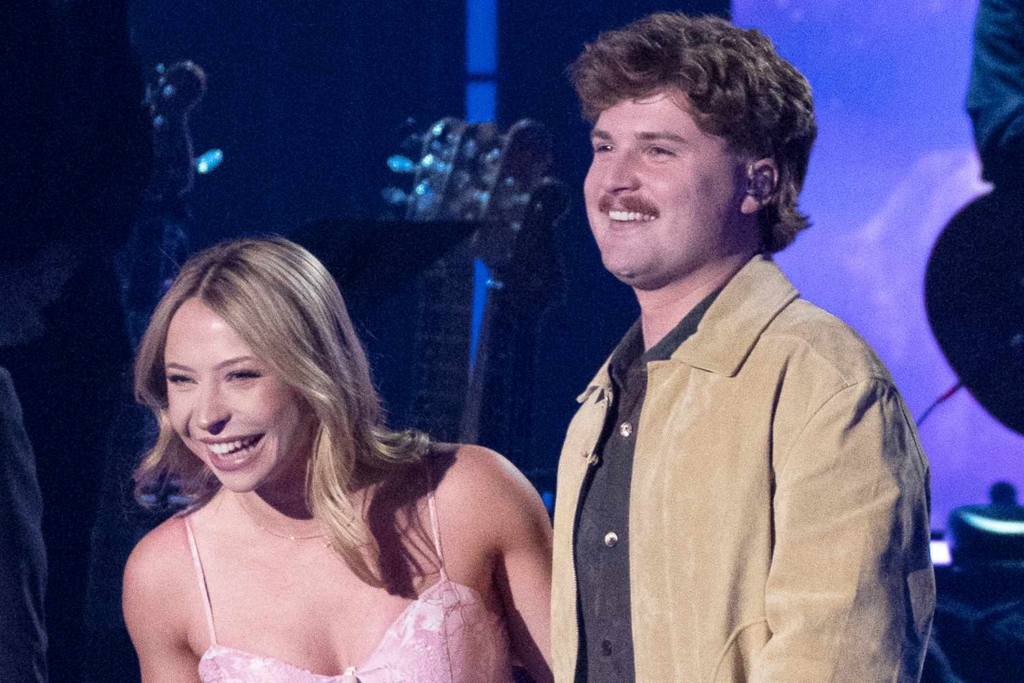
Listeners are not simply reacting to vocal talent or arrangement. They are responding to emotional clarity. The feeling that something genuine, unforced, and quietly human has been shared in a space that often prioritizes polish over presence.
Brooks Rosser and Rae Boyd have not rewritten a classic in a technical sense.
What they have done is more subtle, and arguably more powerful. They have re-expressed it through a shared emotional language that makes it feel newly alive, as if the song itself is being remembered rather than repeated.
And that is where its impact truly lies.
Not in how loudly it is sung, but in how deeply it is felt.
In the end, “Can’t Help Falling in Love” remains what it has always been—a song about devotion. But in this rendition, it becomes something even more intimate: a moment where devotion is not just described, but quietly lived in front of an audience willing to feel it.