
In country music, collisions rarely feel accidental. They feel like timing finally catching up with itself. The meeting point between established craftsmanship and rising narrative instincts is exactly where something new begins to breathe. That’s the space where Brad Paisley and Hannah Harper become more than two names on a lineup—they become a study in how country music evolves without forgetting where it came from.
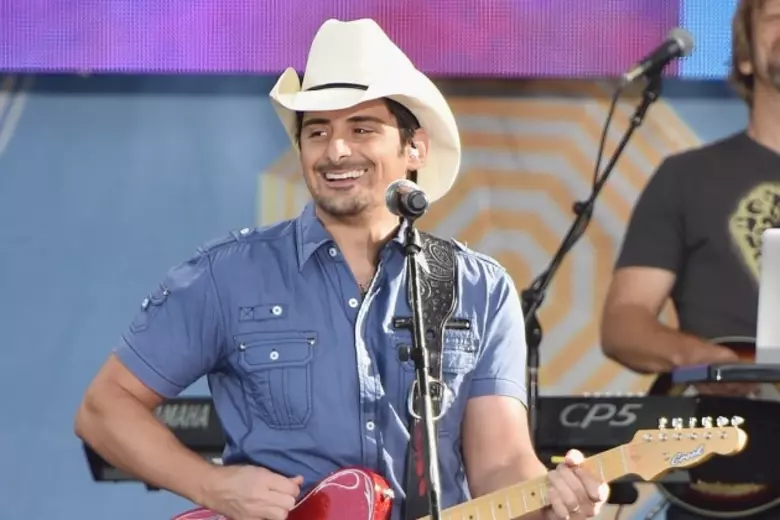
Paisley’s sound is built on precision disguised as ease. His guitar work carries a conversational fluency, as if every lick is speaking a sentence the listener already understands but hasn’t heard phrased that way before. He belongs to a lineage where storytelling is structured, rhythm is intentional, and humor often hides emotional weight. His catalog is not just music—it’s architectural country songwriting with polished edges and deep roots.
Harper, by contrast, represents a newer storytelling grammar—less bound by traditional verse discipline and more shaped by immediacy. Her approach leans into emotional transparency, where lyrics feel like captured moments rather than composed reflections. It’s a style born in the streaming era, where songs are consumed quickly but expected to feel personal instantly. Her strength lies in vulnerability that doesn’t wait for permission to be understood.
When these two approaches intersect, the result is not compromise—it is translation. Paisley’s structured musical intelligence becomes a frame, while Harper’s narrative instinct fills it with living, breathing detail. One builds the road, the other decides what scenery the listener sees while driving through it. This dynamic is where country music stops being generational contrast and starts becoming shared language.
Musically, the fusion reveals itself in arrangement choices. Paisley’s preference for clean guitar articulation, melodic clarity, and rhythmic patience creates a foundation that doesn’t compete for attention. Over that, Harper’s vocal phrasing introduces asymmetry—slightly unexpected pauses, emotional bends, and lyrical pacing that feels closer to spoken confession than traditional country delivery. The tension between control and spontaneity becomes the arrangement’s emotional engine.
Lyrically, the contrast deepens rather than softens. Paisley’s tradition often leans toward storytelling with structure—setup, conflict, resolution. Harper’s newer style bends that arc, sometimes leaving resolution open-ended, reflecting a generation more comfortable with ambiguity than closure. When combined, the songwriting becomes layered: one voice offering answers, the other questioning whether answers are necessary at all.
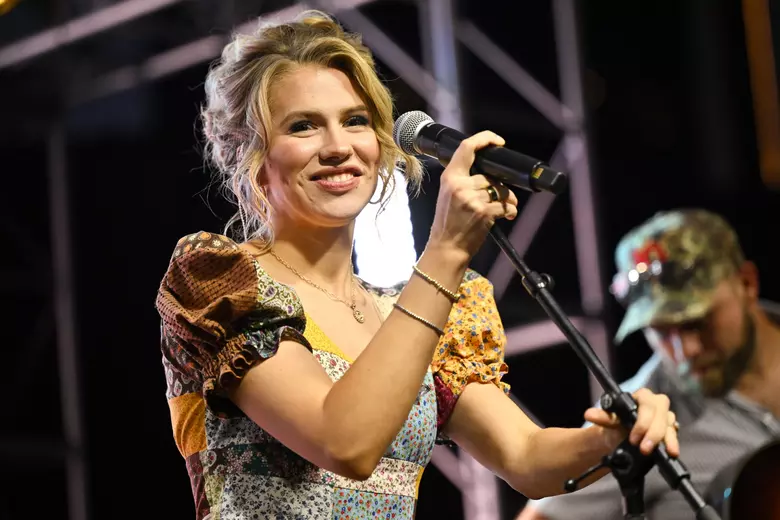
Production-wise, this intersection is where restraint meets texture. Paisley-era country production often values instrument separation and clarity—every instrument occupies its own space. Harper’s modern influence pushes toward atmospheric layering, subtle reverb, and emotionally driven sonic blending. The compromise is not dilution; it is dimensional expansion. The track becomes both radio-ready and emotionally immersive without sacrificing either identity.
The audience response to this kind of collaboration is rarely neutral. Traditional listeners hear familiarity in Paisley’s structure, while younger listeners find emotional relatability in Harper’s phrasing. What emerges is a shared listening ground where neither group feels displaced. Instead, they are invited to hear country music not as fixed categories, but as an evolving conversation between eras.
From an industry perspective, this kind of pairing signals a shift in how legacy artists remain culturally relevant. It is no longer about preserving sound in isolation, but about contextualizing it alongside emerging voices. Paisley’s involvement provides continuity, while Harper’s presence ensures forward momentum. Together, they form a bridge that does not ask either side to step backward.
On stage, the dynamic becomes even more pronounced. Paisley’s performance precision—timed solos, controlled transitions, and audience rapport built through musical storytelling—meets Harper’s instinctive emotional projection. Where he calibrates, she releases. Where he structures, she reacts. The result is a performance energy that feels less like execution and more like conversation unfolding in real time.
Of course, collaborations like this carry tension beneath their harmony. The challenge lies in balancing artistic identity without one voice becoming decorative to the other. If Paisley over-structures, the emotional spontaneity risks compression. If Harper dominates improvisationally, the compositional clarity may blur. The success of the collaboration depends on maintaining that delicate equilibrium where neither voice becomes background to the other.
Ultimately, what makes this intersection compelling is not that it blends old and new—but that it reveals how artificial that division really is. Country music has always been cyclical, reshaping itself through reinterpretation rather than replacement. In this moment, Paisley and Harper are not representing two eras colliding. They are demonstrating that the genre’s future is already speaking in multiple dialects—and learning how to listen to itself more closely.