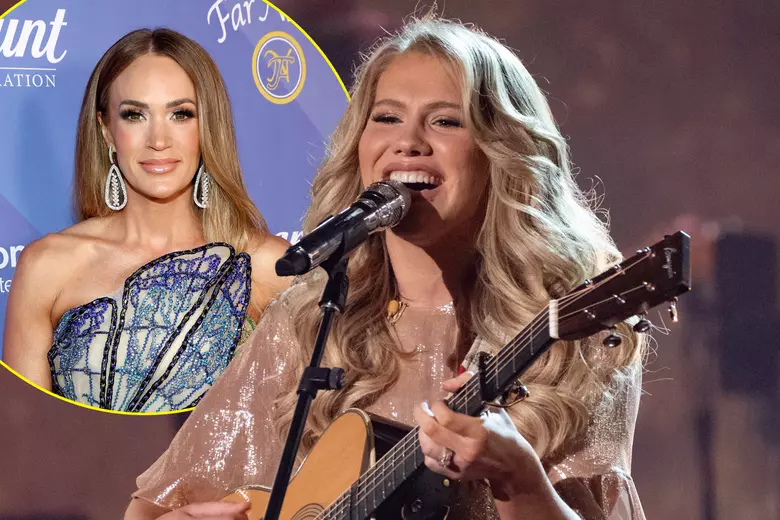
Nashville shimmered with a rare kind of electricity the night Hannah Harper stepped onto one of country music’s most sacred stages, the Grand Ole Opry. Fresh off her win in American Idol Season 24, she carried not just a trophy in spirit, but a story still unfolding in real time—one that felt larger than the spotlight itself.
Her victory on American Idol had already marked a turning point, but Nashville demanded something deeper than celebration. It asked for honesty, for voice, and for courage under lights that have witnessed generations of legends. Harper arrived not as someone trying to prove herself, but as an artist stepping into a calling she had long whispered about in private.
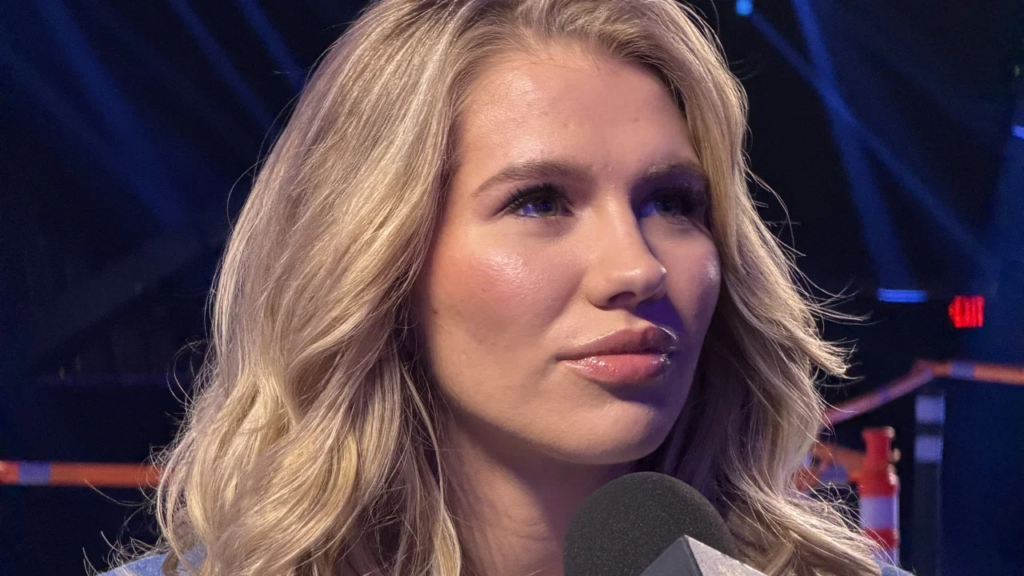
The Opry circle, known for its tradition and reverence, became the setting for a moment that felt suspended between history and destiny. When she was introduced to share the stage with Carrie Underwood, the atmosphere shifted instantly. Two generations of powerful voices meeting in one shared breath created an anticipation that the room could barely contain.
Together, they approached the emotional ballad “String Cheese,” a song rooted in personal struggle, faith, and the fragile process of healing. It was not designed as a spectacle but as a confession in melody form, carrying weight in every lyric. From the first note, the audience sensed this was not just performance—it was testimony.
As the duet unfolded, Harper’s voice carried a raw sincerity that felt unpolished in the most intentional way, while Underwood anchored the performance with seasoned strength and control. The contrast between them did not divide the song; instead, it deepened it, like two rivers converging into a single current of emotion and truth.
The audience reaction was immediate yet silent in a way that felt almost sacred. No loud interruptions, no distraction—just stillness. Even the most seasoned attendees at the Opry seemed caught between admiration and disbelief, as if witnessing something too intimate to applaud too quickly.
Inside the circle of the stage, Harper briefly spoke about faith, unanswered questions that later found answers, and the strange timing of moments that only make sense in hindsight. Her words were not rehearsed lines but fragments of lived experience, delivered with a calmness that contrasted the emotional intensity surrounding her.
Standing beside her, Underwood offered more than musical harmony; she offered presence. In the way she listened, responded, and supported, she turned the duet into a shared emotional space rather than a performance led by one voice. That balance gave the moment its quiet power.
What made the performance resonate so deeply was its vulnerability. There was no attempt to hide imperfection or soften the edges of emotion. Instead, both artists allowed the song to exist in its purest form—unfinished, human, and honest enough to feel almost fragile under the weight of the room’s attention.
For Harper, the night felt like more than a milestone; it felt like a threshold. The transition from competition winner to storytelling artist was no longer theoretical—it was unfolding in front of an audience that could sense the beginning of something larger than a single performance.
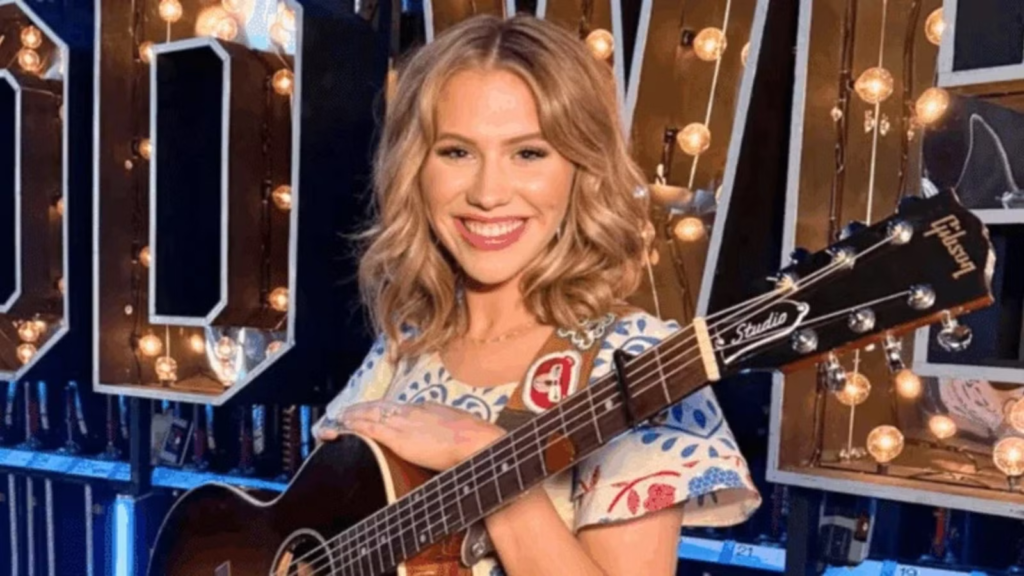
As the final notes faded inside the Grand Ole Opry, the silence that followed carried its own meaning. It was not emptiness, but acknowledgment. Something had been witnessed that could not be easily repeated or replicated, only remembered.
In the days that followed, the moment lingered in conversations and reflections, not because it was flawless, but because it was real. In that shared space between Hannah Harper and Carrie Underwood, music became more than performance—it became a mirror held up to faith, timing, and the quiet power of being fully seen.