
In today’s entertainment landscape, influence is often measured in numbers—followers, views, and engagement rates. Yet beneath those metrics lies something far less quantifiable but far more enduring: authenticity. For Hannah Harper, authenticity didn’t begin as a strategy. It began as a habit of showing up as herself, even when the industry encouraged polish over presence.
What sets her apart is not just visibility, but the way she uses it. While many public figures carefully curate distance between themselves and their audiences, Harper has leaned in the opposite direction. She has treated connection not as a marketing tool, but as a responsibility—one that grows stronger with every interaction she chooses not to overlook.
Early in her rise, fan interactions may have seemed like brief moments between larger milestones. But over time, those small exchanges began to shape her understanding of influence itself. Instead of viewing audiences as passive observers, she began to recognize them as participants in her journey.
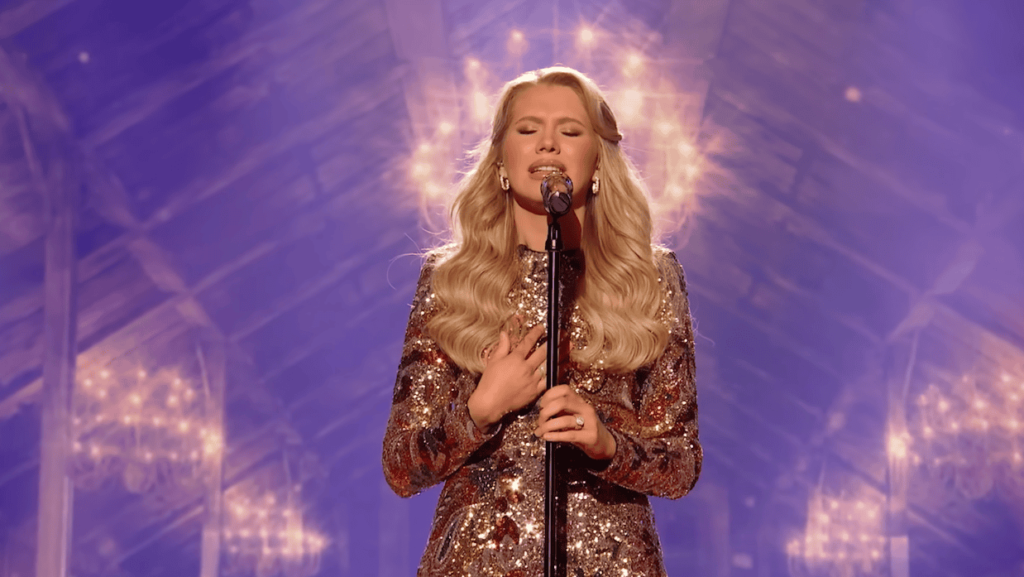
There was a shift in perspective that changed everything. Influence, she realized, was not just about being seen—it was about being felt. And being felt required something more than performance. It required consistency, honesty, and a willingness to engage without the protection of distance.
One of the most powerful aspects of her approach is that it does not rely on perfection. In fact, it leaves space for imperfection. Fans are not only witnessing highlights; they are also seeing growth, hesitation, and reflection. That transparency creates a sense of shared experience rather than one-sided admiration.
Over time, this approach builds a different kind of trust. It is not the fragile trust of curated images, but the steady trust of repeated honesty. Each interaction becomes a reminder that influence is not a single achievement but an ongoing relationship. Harper’s audience responds not just to what she does, but to how she shows up.
There is a subtle but important difference between attention and connection. Attention can be fleeting, driven by novelty or trend cycles. Connection, however, is built through continuity. It is sustained by moments that may seem small individually but become meaningful over time. Harper’s career illustrates how those moments accumulate.
Fan interactions, in her case, are not treated as interruptions to her work—they are part of it. A brief conversation, a shared message, or a simple acknowledgment can carry weight far beyond its duration. These exchanges reinforce the idea that influence is reciprocal rather than one-directional.
What makes this especially compelling is how rare it is in an industry that often prioritizes scale over intimacy. As public profiles grow, the temptation is to automate or distance engagement. Harper’s choice to remain present in these moments signals a different philosophy—one that values depth over efficiency.
This consistency has quietly reshaped how her influence operates. Rather than relying solely on visibility, she has built a foundation rooted in recognition and memory. Fans do not just see her; they feel seen. That emotional reciprocity is what transforms casual observers into lasting supporters.
There is also an element of emotional intelligence in how she navigates these interactions. Not every moment requires performance or amplification. Sometimes, simply listening is enough. That awareness allows her to maintain a sense of balance between public presence and personal boundaries.
As her career evolves, the importance of these interactions only becomes more apparent. Influence at scale often risks becoming impersonal. Yet Harper’s approach demonstrates that scale does not have to erase individuality. It can, instead, amplify the value of small, consistent gestures.
Her journey also highlights a broader shift in how audiences engage with public figures. Modern fans are not only interested in talent—they are interested in authenticity, relatability, and emotional transparency. Harper’s willingness to meet those expectations without manufacturing them has strengthened her position in an increasingly crowded space.
What stands out most is that she never frames these interactions as obligations. They appear to be understood as part of the relationship she has built with her audience. That framing matters, because it transforms engagement from performance into connection.
Over time, this has created a feedback loop of trust. Fans engage more deeply because they feel acknowledged. Harper, in turn, gains insight into the impact of her work beyond traditional metrics. That exchange strengthens both sides of the relationship in ways that numbers alone cannot capture.
There is a quiet discipline in maintaining authenticity under public scrutiny. It requires resisting the pressure to become overly polished or detached. It requires remembering that influence is not just about reach, but about resonance. Harper’s consistency in this area suggests that she understands that distinction deeply.
Perhaps the most important aspect of her approach is that it remains sustainable. Authenticity is not treated as a temporary phase or branding choice, but as an ongoing practice. That sustainability is what allows her influence to remain grounded even as it expands.

In many ways, Hannah Harper’s story is not just about turning authenticity into influence—it is about redefining what influence means in the first place. It is about shifting the focus from numbers to relationships, from reach to resonance, and from performance to presence.
In the end, the fan interactions she never takes for granted are not small moments in her career—they are the structure supporting it. And as her journey continues, one question remains quietly powerful: in a world that often rewards distance, how far can genuine connection really take an artist?