
There are performances that begin with confidence—and then there are performances that earn it, breath by breath. At just 23, Braden Rumfelt walked onto the stage not as a finished product, but as a story still unfolding. The tan suit felt intentional—simple, grounded, almost symbolic of where he stood in that moment: composed on the outside, quietly carrying something deeper within.
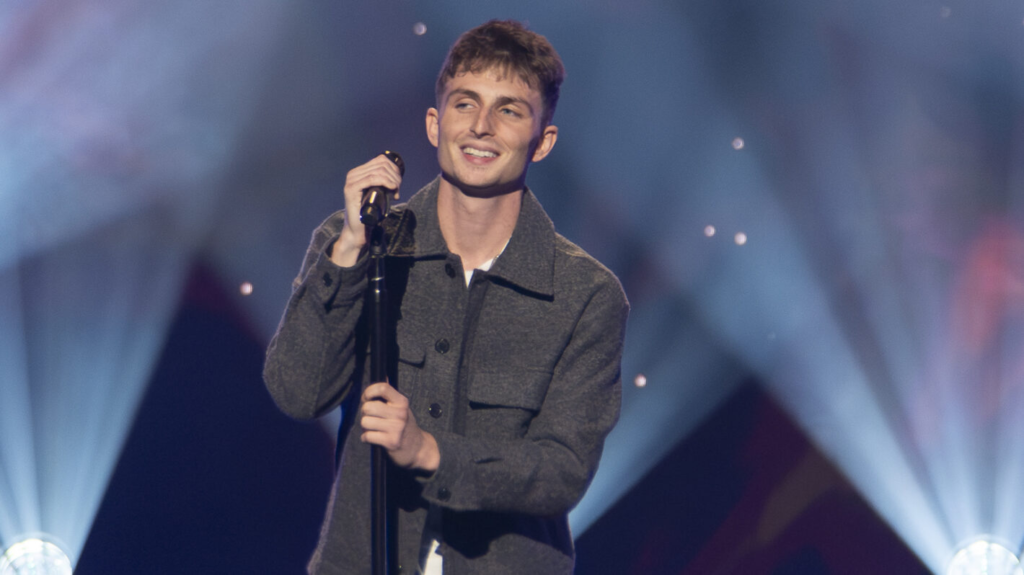
From the first note of Hard Fought Hallelujah by Brandon Lake, there was a flicker of hesitation. Not fear—but awareness. The kind that comes when a singer understands the weight of the song they’ve chosen. This wasn’t just a melody; it was a declaration. And declarations demand truth.
His opening lines didn’t rush to impress. They lingered, almost cautious, as if he was testing the emotional temperature of the room. For a moment, you could feel the audience leaning in—not because they were convinced yet, but because they sensed something was about to shift.
And then, it did.
It wasn’t sudden. There was no dramatic explosion, no theatrical pivot. Instead, his voice began to grow in a way that felt organic—like a flame catching just enough oxygen to rise. Each phrase carried a little more weight than the last. Each note, a little more conviction. And slowly, almost imperceptibly, the performance transformed.
This is where Braden separated himself.
Many contestants aim to control a song. Braden allowed the song to change him in real time. You could hear it in the way his tone deepened, in the way his phrasing stopped feeling rehearsed and started feeling lived-in. It was no longer about hitting the right notes—it was about revealing the right emotions.
There’s a rare kind of vulnerability that can’t be faked on a stage like American Idol. It’s the kind that doesn’t scream for attention but quietly commands it. Braden found that space somewhere between restraint and release. He didn’t oversell the moment; he let it arrive on its own terms.
And that restraint became his greatest strength.
As the performance progressed, his vocals didn’t just get louder—they became clearer. More certain. It was as if every line he sang was answering a question the previous line had asked. By the time he reached the emotional peak of the song, there was no trace of hesitation left. Only presence.
What made the moment powerful wasn’t perfection—it was progression.
In a competition where many arrive fully polished, Braden’s journey within a single performance felt more compelling than technical precision alone. He invited the audience into that journey. You didn’t just watch him sing—you watched him become the version of himself that the song demanded.
And that’s what lingers.
Long after the final note faded, what stayed wasn’t just the sound of his voice—it was the memory of how it evolved. The way it started with uncertainty and ended with something that felt undeniably earned. That arc, that quiet transformation, is what separates a good performance from a meaningful one.
Because at its core, “Hard Fought Hallelujah” isn’t about effortless praise—it’s about the kind that comes after struggle, after doubt, after searching. And Braden didn’t just sing that message.
For a few minutes on that stage, he lived it.

If there’s one thing this performance made clear, it’s this: Braden Rumfelt isn’t just competing for a spot in the Top 12—he’s building something far more dangerous for his competitors. Momentum rooted in authenticity.
And in a show where audiences don’t just vote for voices but for stories they believe in, that might be the most powerful advantage of all.