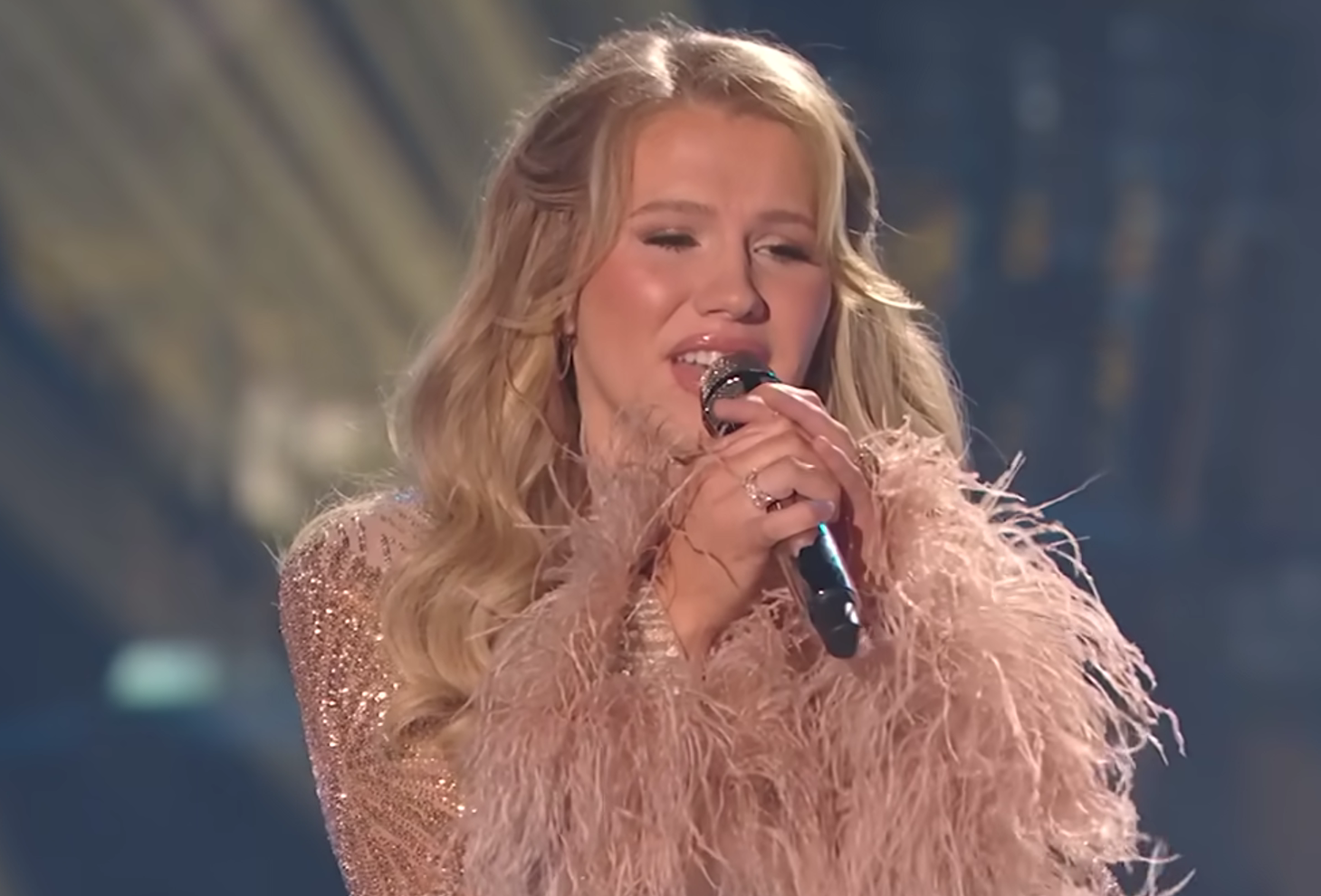
Something unusual happened during the American Idol finale.
The room changed before the winner was even announced.

At first, it looked like a normal finale night. Bright lights. Nervous contestants. Loud applause. The familiar tension of millions waiting to hear a name called on live television.
But somewhere in the middle of Hannah Harper’s final performance, the atmosphere quietly transformed into something else entirely.
You could feel it happening.
The judges suddenly looked emotional instead of analytical.
Audience members stopped reacting like fans and started reacting like witnesses.
Even the cameras seemed drawn toward the people crying in the crowd instead of the performance itself.
That’s when viewers began noticing something bigger unfolding inside the room.
Hannah’s father looked overwhelmed with emotion long before the final announcement arrived. Her husband stood frozen in the audience, visibly fighting back tears while watching her sing. Nearby audience members wiped their eyes as if they already understood what was about to happen.
And strangely, nobody looked surprised by the emotion anymore.
It felt inevitable.
That’s what made this finale feel different from typical reality television moments. Usually, finales are built around suspense. Around shocking outcomes and explosive reactions after the result is revealed.
But Hannah Harper’s finale didn’t feel driven by suspense.
It felt driven by emotional realization.
People weren’t waiting to discover who would win.
They were slowly realizing they were watching someone’s entire life change in real time.
That emotional shift spread through the room before Ryan Seacrest ever spoke the final result out loud. By the final chorus, the audience reaction no longer felt connected to competition.
It felt personal.

Because Hannah didn’t carry herself like a distant celebrity during that finale. She looked vulnerable. Overwhelmed. Almost stunned by the size of the moment unfolding around her.
And audiences emotionally followed her there.
That’s why social media instantly exploded with viewers saying the finale “felt different” long before the official announcement happened. Many described sensing an emotional heaviness inside the room that grew stronger with every camera shot of her family, the judges, and even Jordan McCullough quietly supporting her beside the stage.
The room itself became part of the story.
And ironically, that may be why Hannah Harper’s finale became more memorable than many technically bigger Idol moments from past seasons.
It didn’t feel manufactured.
It felt human.
Not because America crowned another winner.
But because millions of people collectively recognized the exact moment an ordinary woman stopped looking like a contestant and started looking like somebody stepping into the life she was always meant for.