
Most reality show winners look polished by the time the finale arrives.
Confident.
Prepared.
Untouchable.

But Hannah Harper walked onto the American Idol stage carrying something entirely different.
Real life.
And audiences felt it immediately.
There was something unusually emotional about watching a Missouri mom stand beneath those bright lights while visibly holding back tears. Not because she looked overwhelmed by fame — but because she looked like someone carrying years of exhaustion, sacrifice, pressure, and responsibility all at once.
That’s what made her different.
Hannah never felt manufactured.
She didn’t carry the energy of a perfectly polished celebrity carefully designed for television. She carried the emotional weight of someone who had lived through ordinary struggles long before America learned her name.
And ironically, that became her greatest strength.
As the finale unfolded, viewers watched her father break down in tears, her husband stand frozen with emotion, and audience members cry openly while she sang. But what truly connected with people wasn’t just the performance itself.
It was what Hannah represented.
She represented mothers who keep going even when they’re exhausted.
Women who quietly place everyone else first while their own dreams slowly drift into the background.
People carrying responsibilities so heavy that ambition eventually begins to feel unrealistic.
And yet somehow, Hannah stood there anyway.
Still dreaming.
Still fighting.
Still believing there might be room for her story too.
That emotional relatability completely transformed the finale from entertainment into something much more personal. Fans online quickly admitted they didn’t just see a contestant winning a television competition.
They saw resilience.
The kind that lives inside ordinary households every single day.
That’s why Hannah Harper’s victory felt different from many past Idol winners. It wasn’t built around celebrity glamour or perfect stage polish. It was built around emotional truth.
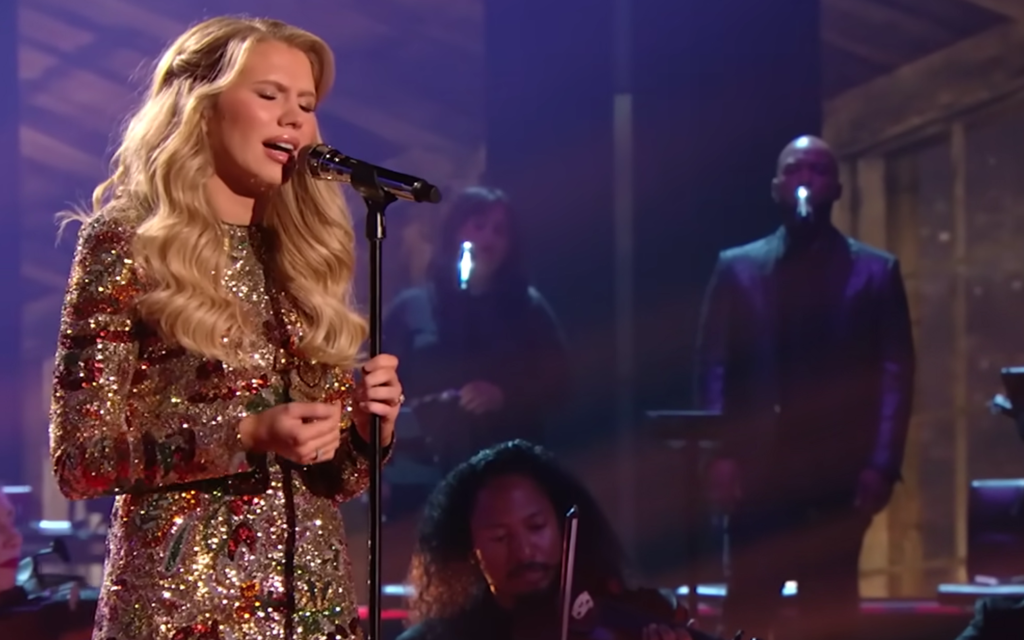
Every trembling lyric.
Every tearful glance toward her family.
Every moment where she looked almost shocked to even be standing there.
Nothing about it felt distant from real life.
And audiences connected to that immediately.
Because for many viewers, Hannah Harper wasn’t simply performing on stage. She was carrying every invisible burden that millions of women quietly carry every day — motherhood, pressure, sacrifice, exhaustion, and the fear that dreams may no longer belong to them.
Then suddenly, she won.
And in that moment, it felt like something bigger than television happened inside the room.
Not because America crowned another superstar.
But because an ordinary mother proved that responsibility and dreams do not have to destroy each other.
And that may be the exact reason Hannah Harper’s story continues to hit people so deeply long after the finale ended.